


Categories List
Recent Posts

Which Aluminum Profiles for Doors and Windows Work Best for Sliding, Casement, and Folding Systems?
Choosing the right aluminum profiles for doors and windows is critical when evaluating sliding, casement, and folding systems for performance, durability, and installation precision. For technical reviewers, the best solution depends on structural strength, thermal stability, hardware compatibility, and long-term reliability. At Weihai Gensheng Trading Co., Ltd., our advanced German equipment and skilled production team help deliver aluminum door and window solutions designed to meet demanding project requirements with consistent quality and attention to detail.
Different systems ask for different profiles
A common mistake is to treat all aluminum profiles as interchangeable. They are not. A sliding system needs smooth travel, stable rail geometry, and enough stiffness to keep panels aligned over time. A casement system usually asks more from the frame and sash because the opening hardware puts concentrated load on the profile corners. Folding systems raise the bar again: the profile must stay straight, tolerate repeated movement, and work cleanly with hinges, rollers, and seals without creating friction points.
That is why the selection process should start with the operating mode, not the color, not the finish, and not even the price. For a home project, the wrong profile may still look acceptable on day one. The problems usually appear later: difficult closing, air leakage, noise transfer, or visible deformation around the hardware zones.
Sliding systems: prioritize stability and low-friction performance
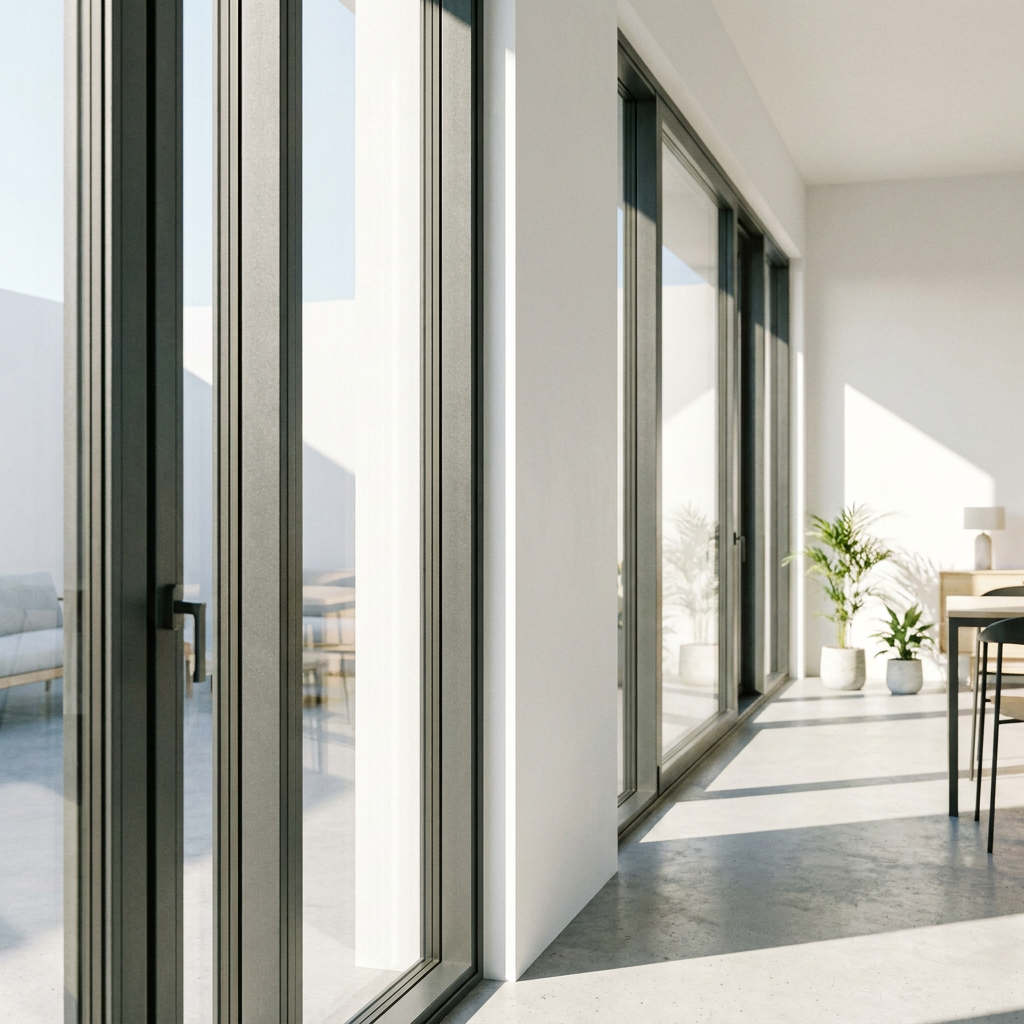
Sliding doors and windows work best with profiles that balance rigidity and practical weight. Too light, and the frame can feel unstable under large glass areas. Too heavy, and hardware wear increases. In residential spaces such as bedrooms, home offices, or exterior openings facing wind and dust, the profile should support airtightness and sound control without making operation difficult.
For this type of application, profiles paired with insulated glazing often make more sense than basic hollow sections. If the project also needs better thermal performance, the frame design should leave room for thermal break concepts, sealing lines, and compatible glazing depth. In one practical example, a product like Aluminum Sliding Doors S105 a reflects this direction: aluminum alloy construction, multiple glass options including insulated and Low-E configurations, and performance indicators such as AAMA 9 wind resistance, Level 9 heat insulation, and Security Rating A. Those are the kinds of reference points technical teams usually compare, even when final selection still depends on the full project spec.
Casement systems: focus on corner strength and hardware load
Casement profiles are often judged too narrowly by appearance. In practice, the corner structure and screw-holding capacity matter more. The sash carries the weight of the opening hardware, and repeated opening cycles can expose weak extrusion design very quickly. If the profile wall thickness, chamber layout, or reinforcement strategy is inadequate, alignment drift becomes a maintenance issue long before the end of the service life.
Technical reviewers should also ask how the profile handles sealing compression. A casement window that closes tightly on paper can still fail under wind load or seasonal movement. That is especially important in exterior-facing residential installations where airproofing and soundproofing are not optional but expected. Here, the profile choice should be judged together with hinge system, lock points, and glass package, not in isolation.
Folding systems: the profile must survive movement, not just load
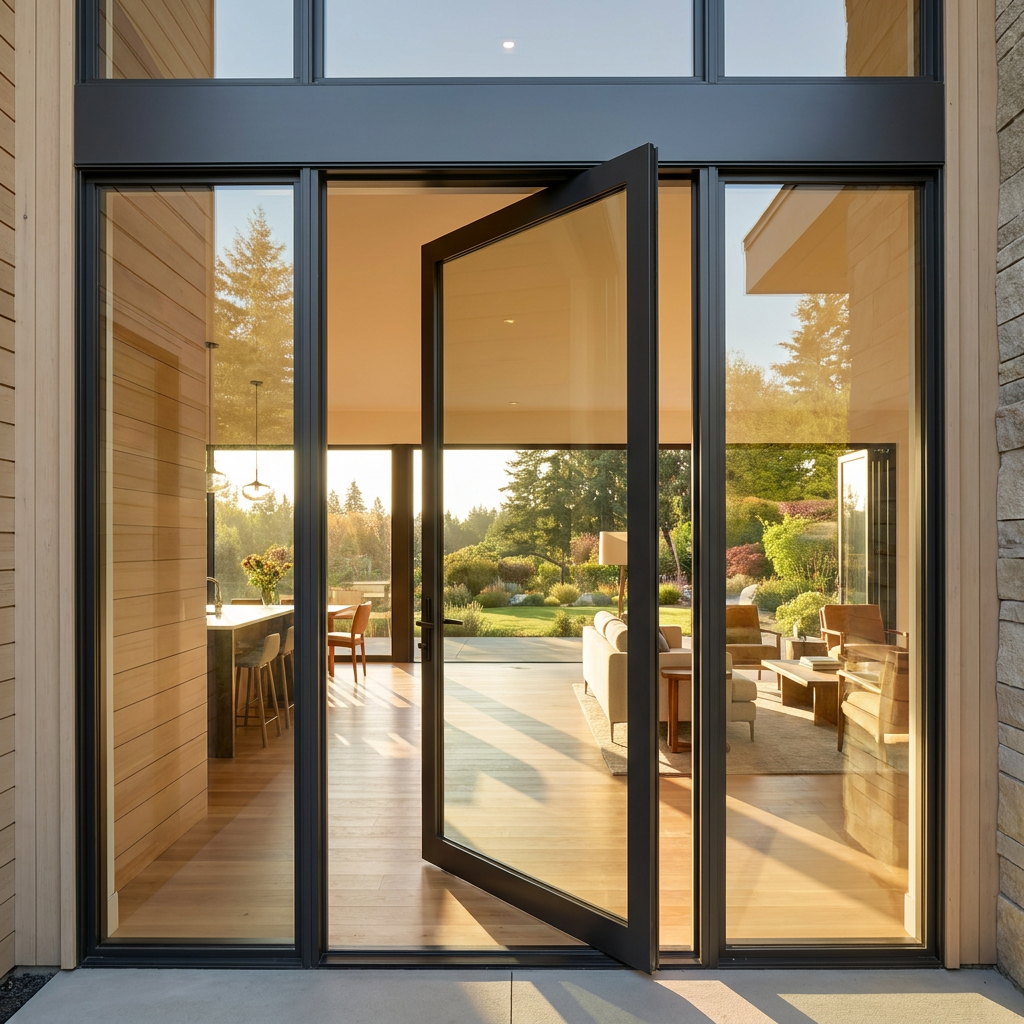
Folding doors are demanding because the profile is part of a moving chain. Panels must stack neatly, seals must remain functional, and the frame must resist twist when the system is partially open. This is where some profiles fail in real use: they look strong enough on a drawing, but the geometry is not friendly to repeated folding motion.
For folding applications, compatibility with stainless steel hardware, track precision, and finish consistency become especially important. If the opening is large, or if the project is exposed to outdoor conditions, the reviewer should pay attention to wind resistance, drainage design, and the quality of surface treatment. Customizable colors can be useful, but they should never override structural checks.
What technical reviewers should check before approving a profile
A useful review process is less about brand claims and more about asking whether the profile fits the real job. Three questions usually clarify the decision quickly: Will the profile carry the intended glass weight without distortion? Will the sealing system still perform after installation tolerances are absorbed on site? Will the hardware stay compatible after finish, color, and thermal requirements are added?
For home furniture and residential door-window projects, the answer often depends on the balance between comfort and durability. In warmer or noisier environments, thermal insulation and soundproofing may justify a more engineered profile. In simpler interior or utility openings, easy operation and cost control may matter more. The point is to match the profile to the function, not the catalog.
It also helps to confirm whether the supplier can handle project-level details such as onsite inspection, online technical support, and design coordination. That matters because profile selection is only one part of a working system. Fabrication accuracy, software-driven production, and the team’s consistency in execution all affect the final result. Weihai Gensheng Trading Co., Ltd. positions its production around advanced German equipment and window software, which is exactly the kind of manufacturing discipline technical reviewers usually look for when they want fewer surprises during installation.
A practical decision rule
If the project is sliding, choose a profile that stays rigid under load and supports smooth motion, airtightness, and glazing depth. If it is casement, put corner strength, hardware compatibility, and sealing compression at the center of the review. If it is folding, check movement tolerance, alignment stability, and the profile’s behavior after repeated cycles. In all three cases, the safest choice is the one that can be verified against the project’s real conditions, not the one that sounds strongest in a brochure.
That is why the best aluminum profiles for doors and windows are rarely the most generic ones. They are the ones that fit the opening type, the climate exposure, the glass package, and the expected service life. When those factors are clear, the decision becomes much easier—and much less risky.
Leave A Reply
Need More Details?
Contact me for details on creating and managing design projects, project features, and services and prices