


NEWS
Categories List
Recent Posts
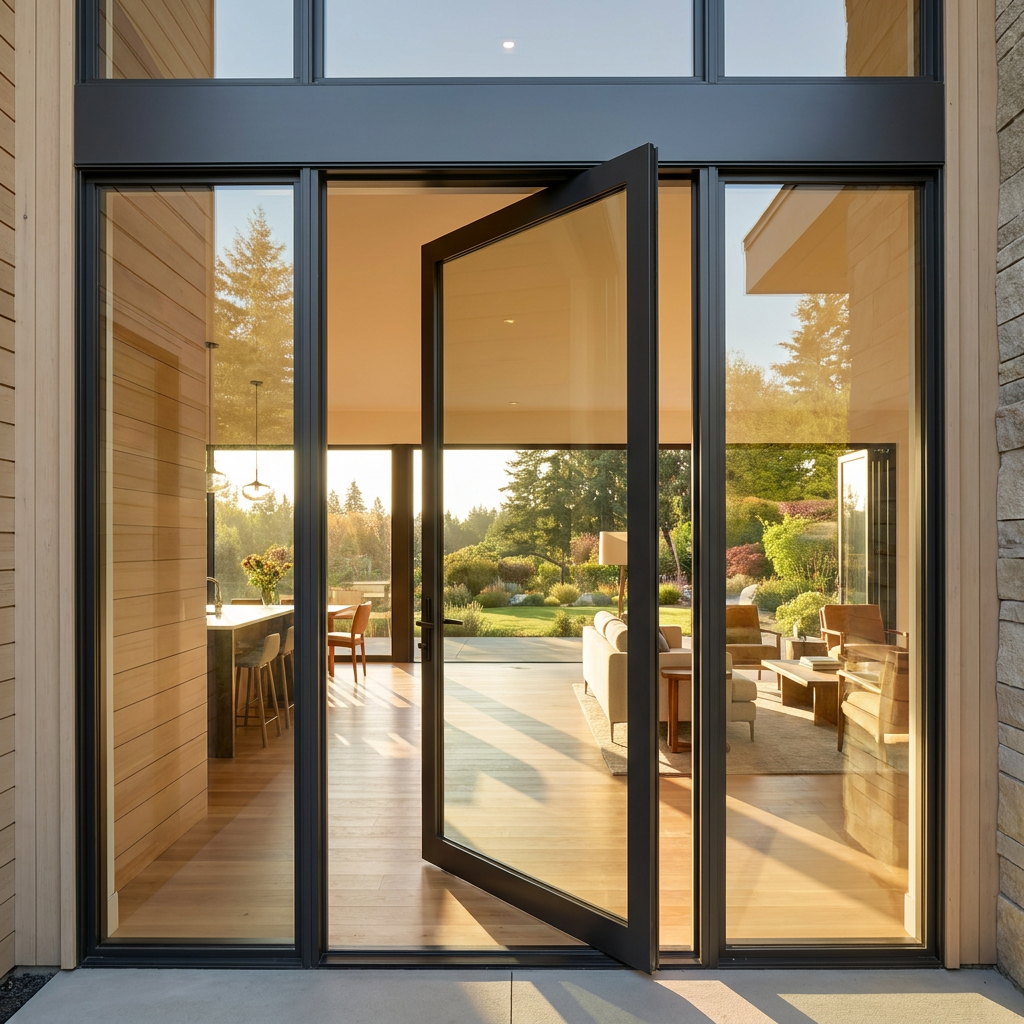
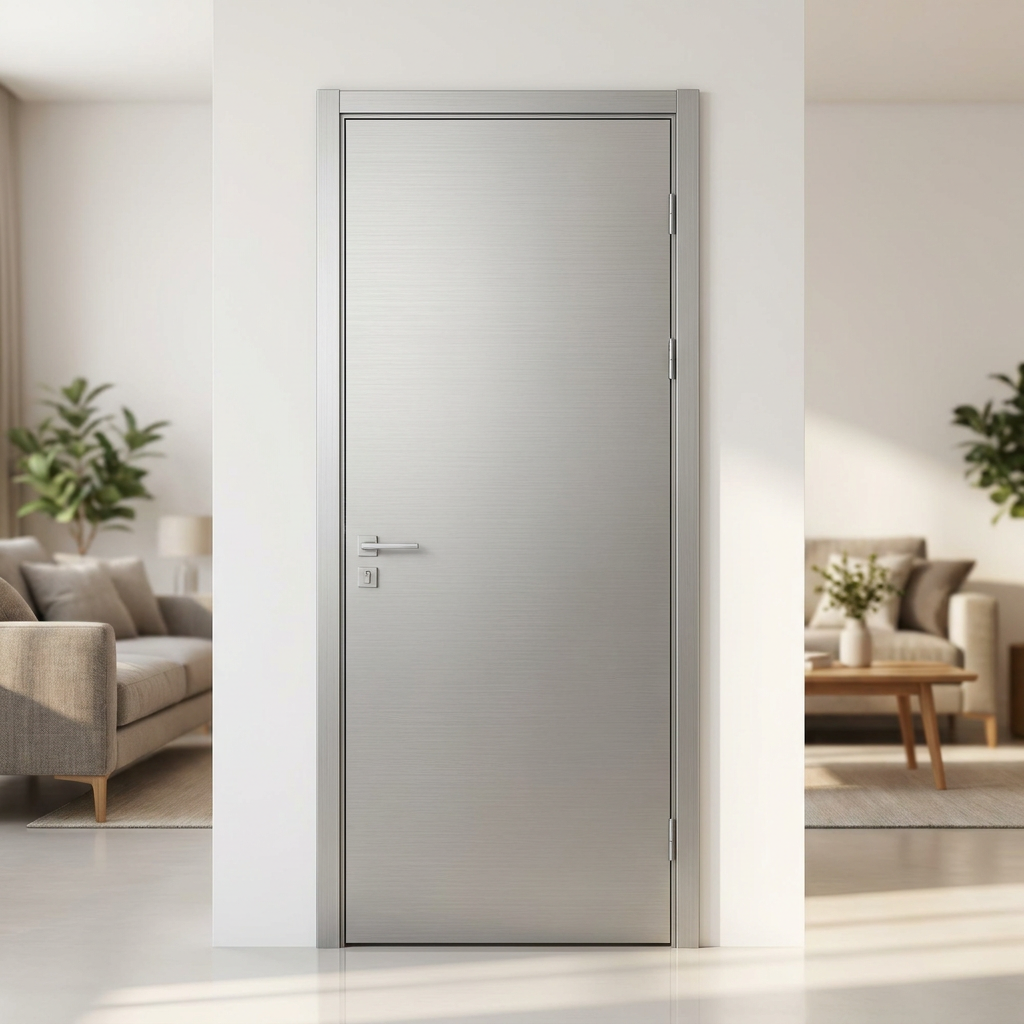

Where Premium Europe Market PVC and MDF Wood Doors Fit Best at Home
Choosing the wrong interior door usually does not look like a serious mistake on day one. The problem shows up six months later, when bathroom edges start to swell, a bedroom panel no longer closes quietly, or a kitchen-facing leaf becomes harder to keep clean than the wall beside it. That is where Premium Europe Market PVC and MDF Wood doors make sense: not as a generic replacement for every room, but as a practical answer to homes that need cleaner lines, stable daily performance, and finishes that hold up without constant attention.
In residential work, the most useful distinction is not “which door looks better,” but “which room asks more from the door.” Bedrooms ask for acoustic comfort and visual warmth. Bathrooms punish weak edges and poor surface sealing. Kitchens expose the door to vapor, grease, and repeated wiping. Open-plan living areas often need the door to sit quietly within a modern interior rather than dominate it. PVC-finished and MDF-based wood doors tend to fit these spaces well because they balance appearance with dimensional consistency, especially where solid wood can be more sensitive to humidity swings or more demanding on maintenance.
Bedrooms are often where people first notice the value of a well-made MDF wood door. A bedroom door is opened and closed more for privacy and quiet than for circulation speed, so surface feel, latch alignment, and sound behavior matter more than many buyers expect. MDF-core or engineered wood doors with a stable outer finish usually perform well here because they are less likely to show the seasonal movement that can affect fit in climates with dry winters and humid summers. That does not make them “soundproof,” which is a claim worth avoiding unless the full door set, seals, frame, and installation details are specified. Still, in normal household use, the heavier and more consistently built leaf often feels noticeably more solid than lightweight hollow options.
Bathrooms are a different conversation. Here, moisture resistance is not a selling phrase; it is the first filter. The weak point is rarely the broad face of the door alone. It is the bottom edge, the lock cutout, the hinge side, and any area where finishing has been interrupted during installation. Premium PVC-faced doors are usually a safer choice in these rooms because the surface is easier to wipe, less likely to stain from normal splashing, and better suited to environments where steam appears daily. Even then, the site condition decides the result. A bathroom with poor ventilation can shorten the life of almost any interior door, especially if water repeatedly sits at the threshold. Good extraction and a small clearance strategy matter as much as the panel material.
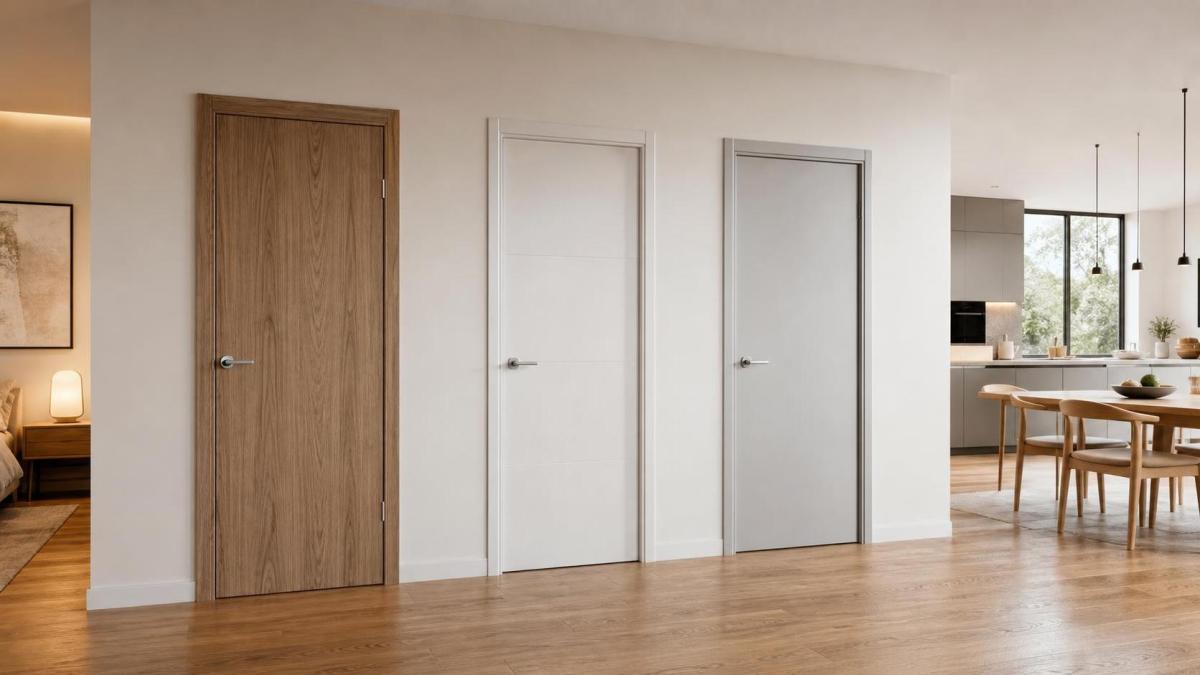
Kitchens sit somewhere between wet and dry zones, which is why they are often misjudged. The issue is usually not direct water exposure but airborne grease, frequent hand contact, and cleaning frequency. In family homes, a kitchen-adjacent door may be wiped more aggressively than any other interior door except the bathroom. Smooth PVC finishes tend to earn their place here because they are forgiving in day-to-day maintenance. Decorative surfaces that look refined in a showroom can become frustrating if they trap residue or show streaks after every clean. MDF wood doors can still work near kitchens, but finish quality and edge sealing deserve closer attention than color alone.
Modern living spaces need visual restraint, not just durability
In contemporary homes, especially apartments with open layouts, the door is part of the wall composition. That is why European-market preferences often lean toward flatter profiles, clean reveals, and finishes that do not fight with cabinetry, flooring, or aluminum-framed glazing. PVC and MDF wood doors fit well in these interiors because they can deliver a more controlled, uniform appearance across multiple rooms. Consistency matters when a hallway aligns bedroom, utility, and bathroom doors in one sightline. A finish that varies too much from leaf to leaf can make a new interior look pieced together.
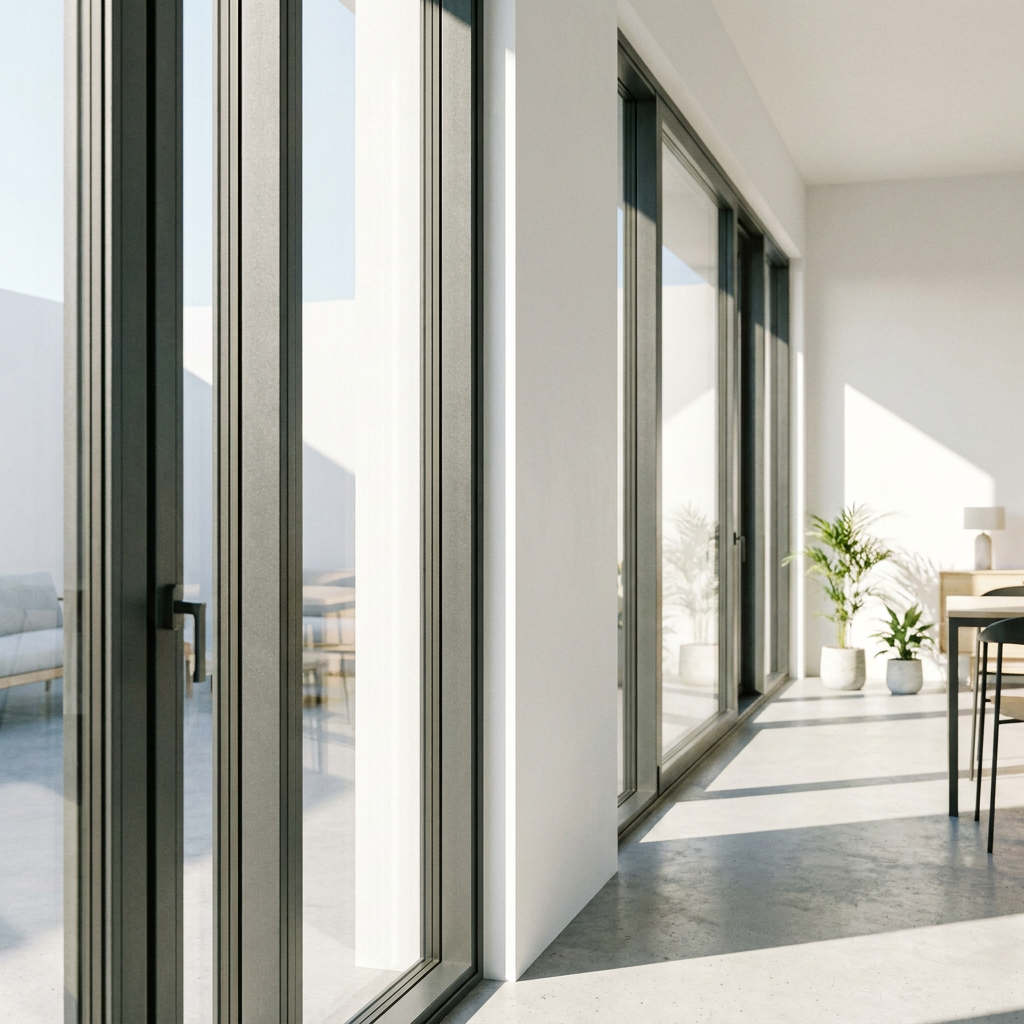
This is also the point where interior doors should be judged alongside neighboring systems. In some renovation and new-build projects, clients who prefer flush or minimal interior doors also choose slim aluminum openings for balconies, partitions, or large daylight-facing areas. In that context, products such as Factory Wholesale Aluminium Double Glazed Sliding Doors and Windows Extremely Narrow Aluminum Extrusion Profile are not direct substitutes for PVC or MDF wood room doors, but they show the same design logic: narrow sightlines, controlled detailing, and finishes that support a cleaner architectural read. The transition between interior door surfaces and aluminum window-door systems works best when both are selected with the same restraint.
That broader coordination is one reason manufacturers with experience across wooden doors, aluminum casement and sliding systems, louvers, and wood-aluminum window and door assemblies often make better recommendations than suppliers limited to one category. Weihai Gensheng Trading Co., Ltd. works across those product ranges, and that kind of cross-system familiarity matters in real homes. It helps avoid common mismatches such as a warm-toned door finish set against a cool brushed metal palette, or an interior specification that ignores how exterior openings affect indoor humidity and light.
What usually gets overlooked on site
Three things are often underestimated during selection. First is frame condition. A stable, well-finished leaf cannot compensate for a twisted frame or poor wall opening. Second is hardware compatibility. A premium-looking door with weak hinges or an unreliable latch quickly feels cheap in use. Third is post-installation protection. Many surface complaints begin during construction, when doors are exposed to wet trades, dust, and impact before the home is occupied.
Another common mistake is treating all “moisture-resistant” claims as equal. They are not. Some doors tolerate occasional humidity well but are not intended for constant wet exposure or poorly ventilated utility zones. Others look robust but fail at edges after careless trimming on site. The safer approach is to ask where the door will be installed, how often the room is cleaned, whether the room has natural or mechanical ventilation, and how much temperature swing the home sees across the year. Those answers narrow the choice faster than any catalog description.
For homeowners comparing options room by room, this short view is usually enough:
Where Premium Europe Market PVC and MDF Wood doors fit best, then, is not a mystery. They belong in homes where room-by-room performance is taken seriously: PVC where cleaning and moisture are persistent facts of life, MDF wood where stability and a refined interior finish are the priority, and both where the overall design asks for a modern, disciplined look. Before making the final choice, it is worth checking the frame condition, ventilation, edge treatment, and how the doors will sit beside windows, sliding openings, or aluminum systems such as Factory Wholesale Aluminium Double Glazed Sliding Doors and Windows Extremely Narrow Aluminum Extrusion Profile. That is usually where a good selection stops being a showroom decision and starts becoming a lasting one inside the home.
Leave A Reply
Need More Details?
Contact me for details on creating and managing design projects, project features, and services and prices