


NEWS
Categories List
Recent Posts

What thermal break details affect wood aluminum window performance
For Wood Aluminum Windows, the thermal break is not a small accessory detail. It is the part that decides whether the frame behaves like a stable insulated system or like a heat bridge with a nice finish on top. In renovation projects, technical evaluators usually find that the visible spec sheet looks fine, while the real performance depends on how the thermal barrier is designed, assembled, and tied into the rest of the frame.
That matters because wood-aluminum systems are expected to balance two things that do not always cooperate well: the warm appearance and stiffness of the interior wood side, and the weather resistance of the aluminum exterior. If the thermal break is too thin, poorly bonded, or interrupted at corners and joints, the frame can still transfer heat, create condensation zones, and shorten service life even when the glass unit is decent.
The thermal barrier is more than the material name
Many buyers focus on whether the break is nylon, fiberglass, or another insulating material. That is only the starting point. Material selection affects conductivity and long-term stability, but the shape, width, continuity, and locking method often decide the real outcome. A wider thermal barrier usually helps reduce heat flow, yet if the profile design creates weak clamping or distortion under load, the benefit can shrink in actual use.
In practice, evaluators should look at whether the break is continuous through the frame and sash, especially near meeting rails, corners, and hardware zones. These are the places where “almost continuous” is not enough. Thermal bridging often shows up where metal reinforcement, fasteners, or drainage details cut across the insulation path.
Width, geometry, and the hidden trade-off
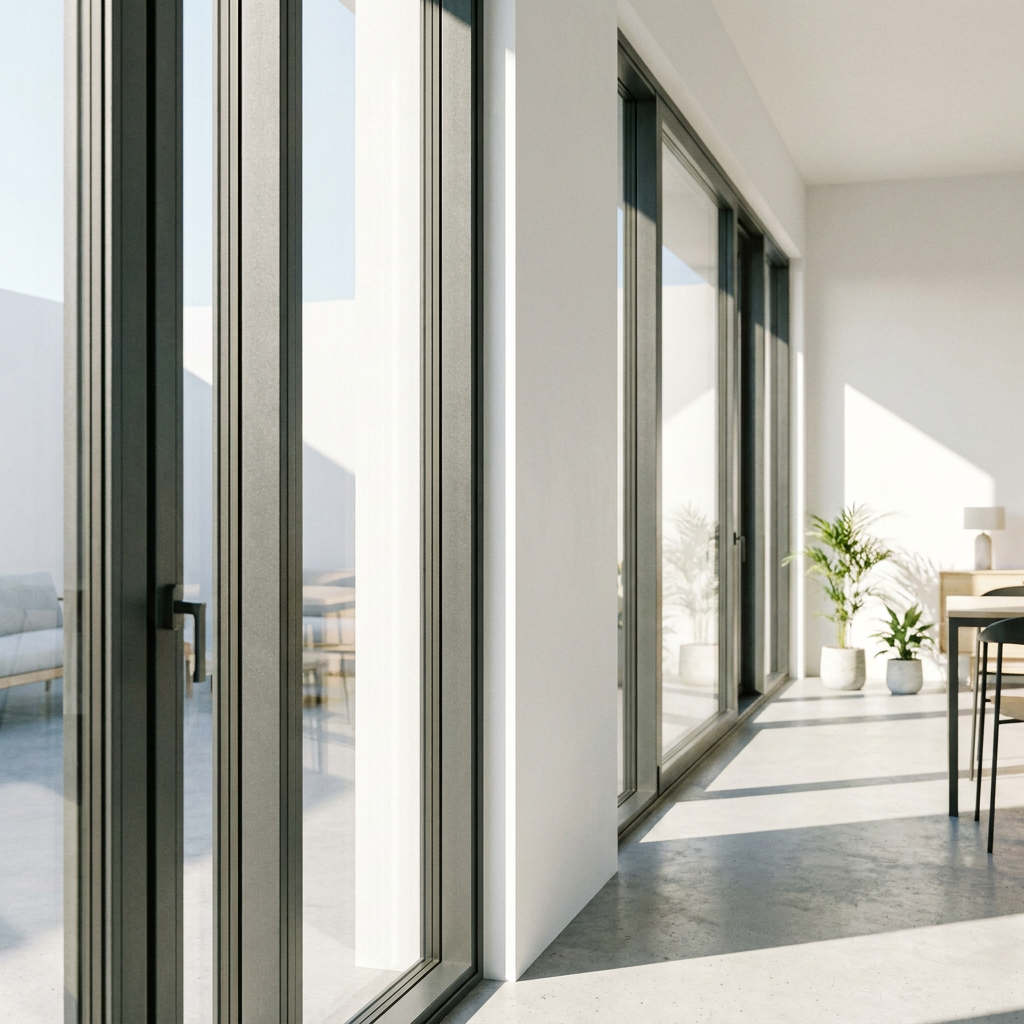
A thicker thermal break is not automatically better. If the profile becomes too bulky, it can affect frame stiffness, sash operation, and the space available for seals or drainage. For sliding systems, that balance is especially sensitive. A renovation window may need smooth movement and narrow visible lines, but not at the cost of an underbuilt insulation zone. This is why solutions such as Modern High Thermal Insulation Double Pane Sliding Window for Renovation are usually judged not only by the glass specification, but by the full frame section and how the thermal bridge is controlled across the moving parts.
Geometry also matters. Multi-chamber shapes, improved separation between inner and outer aluminum sections, and clean engagement surfaces can reduce heat transfer better than a simple thick insert. In other words, design quality often beats raw thickness.
Connection quality is where many systems fail
A thermal break can only perform as well as the connection between the barrier and the aluminum profile. If assembly tolerances are loose, or if the profile is not rolled, crimped, or bonded consistently, the barrier may shift slightly under thermal cycling. That movement is small, but in real buildings it can create air leakage, seal stress, or localized condensation. Technical evaluators should pay attention to corner joints, mechanical locking points, and whether the factory process is stable enough to keep the break aligned from batch to batch.
This is one reason production capability matters. A factory using advanced German equipment and window software can usually control profile processing and cut accuracy more tightly than a line that relies on rough manual adjustment. Still, equipment alone does not guarantee good output. The operator’s judgment, inspection routine, and willingness to reject marginal parts matter just as much. In window work, small errors accumulate quickly.
Glass, frame, and seal system need to work together
It is common to talk about frame thermal breaks as if they work independently, but the frame is only one part of the envelope. Double glazing, spacer design, edge seal quality, and installation gaps all affect the final result. A frame with a decent thermal barrier can still underperform if the glass edge becomes the coldest point in the assembly or if the perimeter seal is not tight. For that reason, frame-only claims should be treated carefully in technical review.
For renovation projects, this interaction is even more visible. Existing wall conditions are often uneven, old openings are rarely square, and installers may have limited tolerance to correct them. If the frame cannot accommodate proper sealing and anchoring without compressing the insulation path, the project can lose performance before the first winter arrives.
What to check before approving a wood-aluminum system
A practical review usually comes down to a few questions:
Does the thermal break run continuously through the key frame sections, or are there hidden metal shortcuts?
Is the barrier material appropriate for the profile load, climate, and service life expected in the project?
Are the sash and frame details compatible with air sealing, drainage, and hardware stress?
Can the manufacturer hold consistent profile thickness, cut accuracy, and assembly quality across the order?
Those points may sound basic, but they are exactly where many problems start. A product can look premium with powder coating, polished finishes, or decorative wood-aluminum integration, yet still fail the real test if the insulation path is poorly managed. For reference, common configurations such as 1.4mm to 3.0mm profile thickness and double-pane glass options like 5mm+12A+5mm or 6mm+12A+6mm should always be checked against the actual span, opening size, and local performance requirement rather than accepted as universal answers.
Durability is part of thermal performance
Thermal break details also affect durability, not just insulation. If the barrier is exposed to repeated expansion and contraction, poor material choice can lead to creep, loosening, or loss of fit. Once that happens, condensation control becomes harder, soundproofing can drop, and airtightness follows. In a household setting, the owner may only notice that the window feels drafty or that the frame edge sweats in cold weather. By then, the root issue is often structural rather than cosmetic.
That is why warranty length and hardware quality are worth mentioning, but they should never replace a technical review. A more than five-year warranty is useful only if the design and fabrication are solid enough to support it.
For evaluators, the real decision is usually straightforward: inspect the thermal break as a system detail, not a marketing feature. When the barrier material, profile geometry, assembly precision, and installation plan are aligned, Wood Aluminum Windows can deliver the kind of stable performance renovation projects actually need. When they are not, the frame may still look correct while the building tells a different story in winter.
Leave A Reply
Need More Details?
Contact me for details on creating and managing design projects, project features, and services and prices