


NEWS
Categories List
Recent Posts
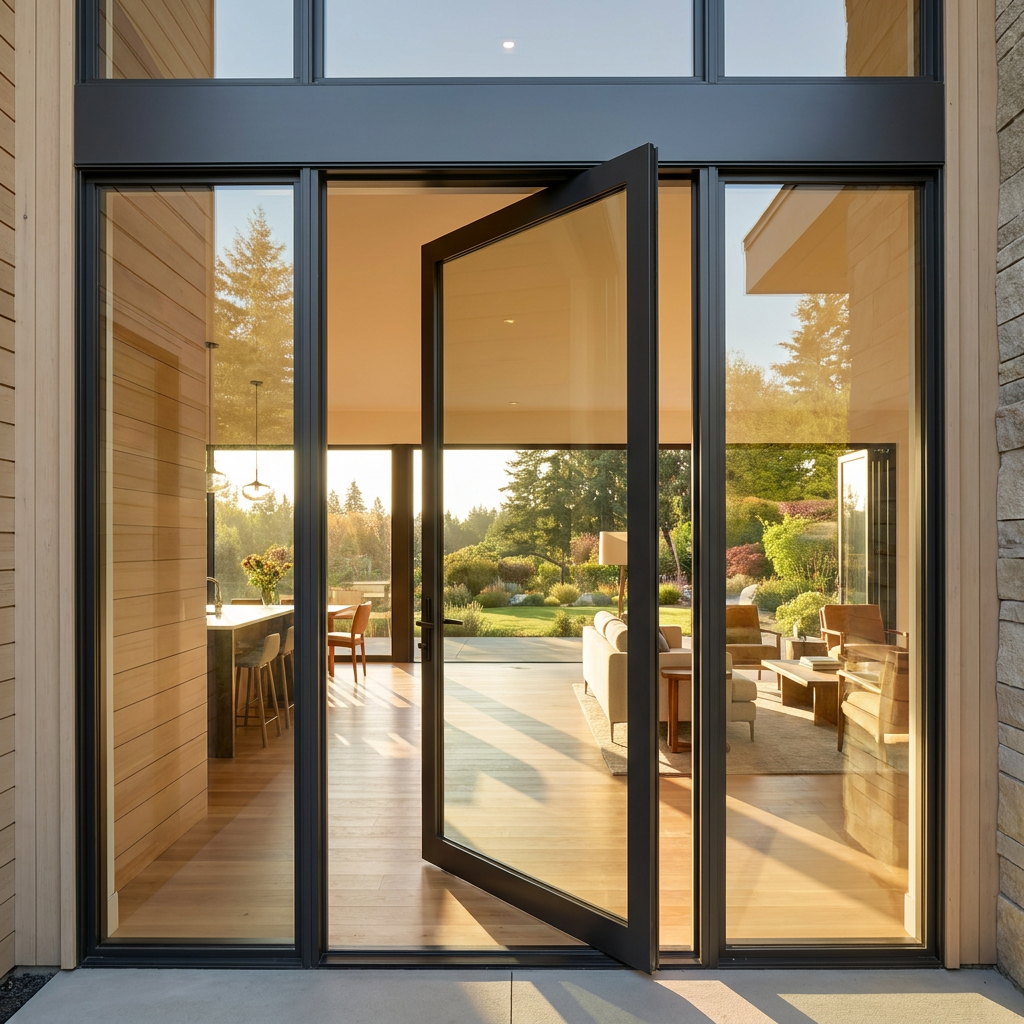

Spring doors offer a practical way to improve everyday home safety by ensuring doors close automatically after use. For anyone researching self-closing mechanisms, they can help reduce drafts, support fire-safety planning, and limit accidental access to certain rooms. Their value, however, depends far less on the word “spring” than on the hardware arrangement, door weight, opening pattern, and the risk a household is actually trying to manage.
In residential construction, “spring door” is an informal term. It may describe a door fitted with spring hinges, a concealed closer, a floor spring, or a conventional surface-mounted door closer. Some people also use it for double-acting swing doors that can open in either direction and return to center. These are related solutions, but they do not perform identically. Understanding the distinction prevents a common mistake: selecting a self-closing component simply because it is inexpensive or visually unobtrusive, then discovering that the door closes too weakly, slams too hard, or is incompatible with the intended opening.
What makes a door self-closing?
A self-closing door stores energy when opened and releases it to return the leaf to its closed position. The energy may come from a coil spring in a hinge, a hydraulic spring in a closer body, or a floor-mounted mechanism beneath a pivoting door. The hardware must do more than move the leaf: it must overcome the resistance created by hinges, seals, latches, air pressure differences, warped frames, and, in exterior applications, wind.
This is why a door that closes smoothly in a showroom can behave differently after installation. A heavy insulated door, a tall glass panel, or a tightly weather-stripped exterior door requires more closing force than a lightweight interior hollow-core door. At the same time, excessive force creates its own safety issue. Doors that close abruptly can catch fingers, startle children, damage frames, or make access difficult for people carrying items.
The practical objective is not simply “automatic closing.” It is controlled closing: sufficient force to bring the door fully into the latch, combined with a closing speed that remains safe and comfortable in normal household use.
Why self-closing matters in a home
The safety case for spring doors is usually built around small, repeated events rather than rare emergencies. A kitchen pantry may be left open after food is put away. A laundry room may contain detergents or cleaning products. A basement workshop may have tools that should not remain freely accessible. In these settings, a self-closing door can reduce the chance that a door stays open because someone was distracted, had both hands occupied, or assumed they would return immediately.
Automatic closing can also contribute to environmental comfort. Interior doors that close reliably help separate noise, cooking odors, conditioned air, and light between rooms. On exterior openings, a closing mechanism can reduce the period during which wind-driven rain, insects, or unconditioned outdoor air enter the building. This is a supporting benefit rather than a substitute for good sealing, proper drainage, and a correctly designed door system.
Fire safety is the most important reason to consider the feature carefully, but also the area with the greatest potential for misunderstanding. A closed door can slow the spread of smoke and heat within a home. Yet a spring mechanism alone does not turn an ordinary door into a fire-resistance-rated assembly. Where local building rules require a rated door, such as between a dwelling and an attached garage in some jurisdictions, the complete tested or approved assembly matters: door leaf, frame, hinges, closer, latch, seals, glazing, and installation details may all be relevant.
Replacing or adding hardware on a rated opening without checking the door manufacturer’s instructions and applicable local requirements can compromise the intended performance. The safer assumption is that fire-rated use is a system question, not a hardware-only question.
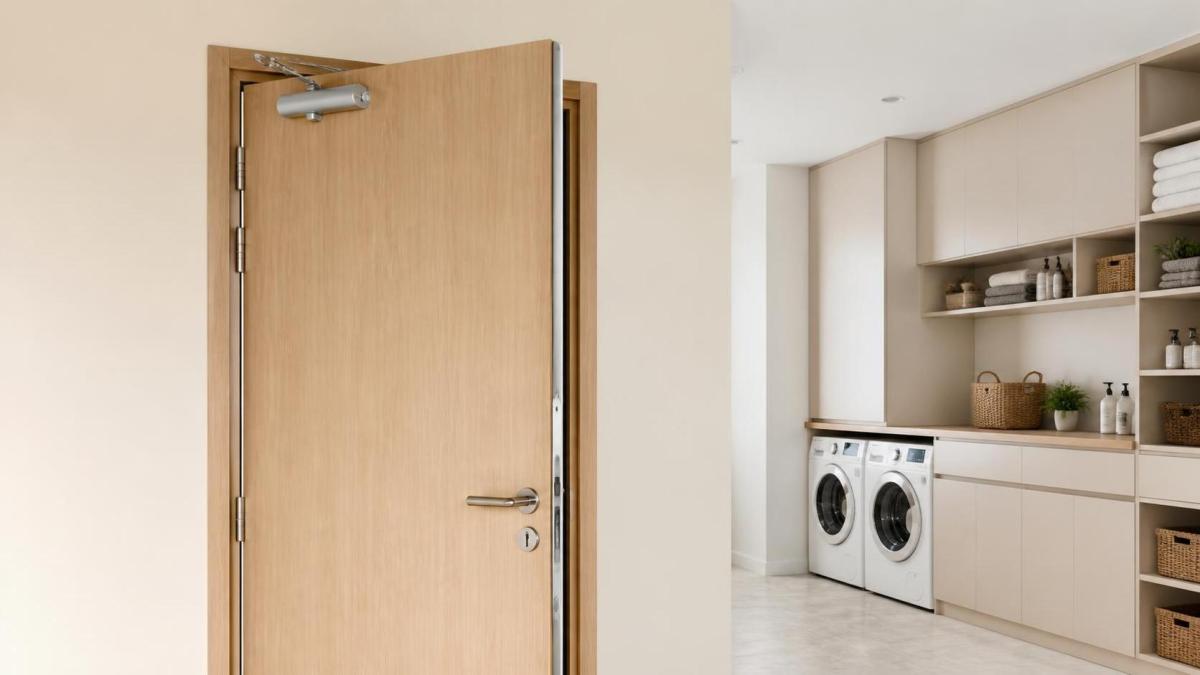
The main types of spring door mechanisms
Spring hinges are among the simplest options. One or more hinges contain adjustable springs that pull the door shut. They are commonly considered for light or medium-weight interior doors because they are relatively compact and preserve a conventional door appearance. Their limitations become clear on heavier doors: adjustment can be coarse, closing speed may be difficult to control, and a strong enough setting to latch the door may make the final swing too forceful.
Surface-mounted hydraulic closers provide more control. They typically allow adjustment of closing speed and, depending on the model, the final latching action. They are more visible than spring hinges, but their ability to manage larger or heavier leaves makes them suitable for many exterior, utility, and high-use openings. A closer should be selected according to the leaf width, weight, exposure, and mounting geometry rather than visual preference alone.
Concealed closers are fitted into the door or frame and are often chosen where appearance is a priority. They can provide controlled closing while keeping visible hardware to a minimum. The trade-off is that they require accurate machining and are less forgiving of poor door preparation. Repair or adjustment can also be more involved than with exposed hardware.
Floor springs and pivot systems are commonly used with larger glass, aluminum, or double-acting doors. A floor spring can carry substantial weight and allow a wide opening angle, but installation involves floor preparation, precise alignment, and protection from water ingress. These systems are generally better assessed as part of a complete door design, especially when used on exterior entrances.
Soft-close hardware should not be confused with a full self-closing system. Soft-close devices reduce impact near the end of travel. Some pull the door closed over a short final distance; others only cushion the movement. They improve user experience, but their ability to close and latch a door from a wide-open position varies considerably.
Where the mechanism is genuinely useful
Not every door needs to close automatically. In open-plan homes, frequently used passageways, and rooms where airflow is intentionally needed, a self-closing mechanism may be inconvenient. The strongest residential applications tend to be doors that divide a higher-risk or environmentally distinct area from the rest of the house.
- Garage-to-house and utility-area doors: These openings may benefit from reliable closing where fumes, dust, stored materials, or temperature differences are concerns. Any fire-safety requirement should be verified locally and matched with an appropriate tested door assembly.
- Laundry rooms and cleaning storage: Self-closing can provide an additional layer of everyday control, particularly where detergents, chemicals, or equipment need to remain behind a closed door.
- Home offices, studios, and media rooms: A door that returns to the closed position can support acoustic separation, although meaningful sound reduction depends primarily on door mass, perimeter seals, bottom seals, gaps, and glazing design.
- Exterior side doors and garden access: Controlled closing can help maintain weather protection and discourage a door from being left ajar. Wind exposure must be considered carefully because it can overwhelm or accelerate a standard closer.
- Wide internal openings: Folding or glazed systems may need purpose-designed soft-close and hold-open functions, rather than a conventional spring hinge intended for a narrow hinged leaf.
For exterior openings, the distinction between closing hardware and overall door performance becomes particularly important. A closer cannot compensate for a poorly fitted frame, inadequate drainage, weak locks, or incomplete sealing. It is one component within a broader system.
Door weight, seals, and geometry determine performance
The most frequent selection error is underestimating door weight. A solid timber door, laminated glass door, or thermally insulated aluminum system may weigh several times more than a basic interior leaf. Width matters as well: a wider door creates greater leverage against the closer. Hardware that works on a narrow bathroom door may be unsuitable for a wide entrance panel even if the total weight appears similar.
Seals add another variable. Weatherstripping is necessary for energy and water performance, but it increases resistance during the final part of closing. This can lead installers to increase spring tension. If the tension is increased without controlling speed, the door may slam. If it is left too low, the latch may not engage, leaving the opening technically “closed” but not secure against wind or casual pushing.
Frame alignment is equally decisive. A leaf that rubs on the threshold, strikes the frame, or has uneven hinge gaps creates resistance that no adjustment can solve elegantly. When a self-closing door fails, the correct response is not always to tighten the spring. Check plumb, level, hinge condition, latch alignment, seal compression, and clearance before increasing force.
Glazed folding doors need a different assessment
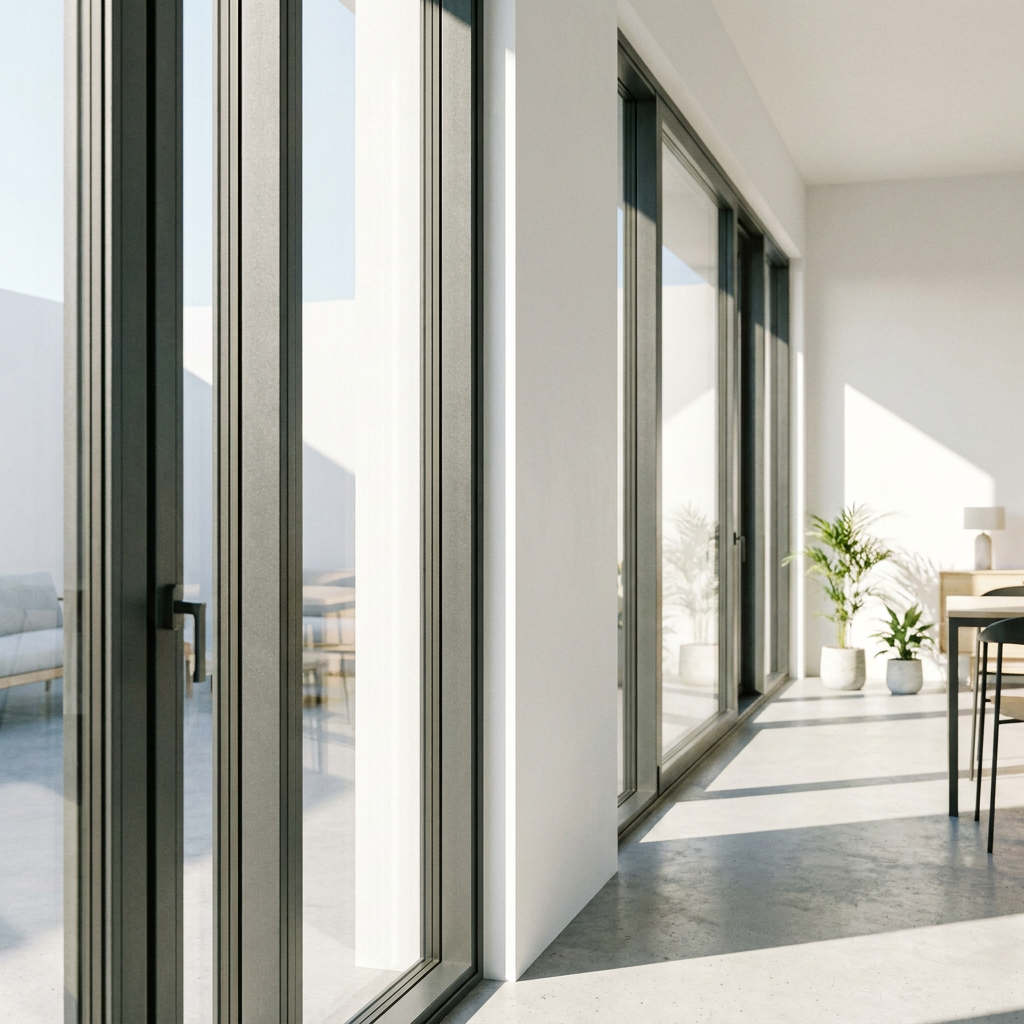
Large-format glazed doors are increasingly used to connect living spaces with terraces, balconies, and gardens. Their safety and performance requirements extend well beyond self-closing behavior. Panel weight, track design, anti-lift protection, locking points, glass specification, drainage, thermal movement, and wind load must be addressed as a coordinated system.
A folding door may incorporate soft-close hardware to reduce panel impact during operation, but that does not necessarily mean it should close automatically in the same manner as a hinged utility-room door. On an expansive opening, automatic return could be undesirable or unsafe if people are passing through, furniture is nearby, or panels are stacked. The useful question is whether controlled final closure, secure locking, and safe panel handling are needed—not whether every large door should be spring-loaded.
For projects where acoustic comfort and a refined closing action are priorities, systems such as the Premium Aluminum Folding Glass Door with Soft Close Hinges and Triple Glazed Argon Units for Noise Reduction illustrate how door design may combine folding operation, soft-close behavior, insulated glazing, and perimeter sealing. Specifications such as glass build-up, aluminum profile thickness, hardware capacity, and installation exposure should still be reviewed against the actual opening size and local project conditions. A quoted noise-reduction figure, for example, has limited meaning unless the complete installed assembly, including surrounding gaps and seals, is considered.
Safety concerns that are easy to overlook
Self-closing mechanisms solve one problem while potentially creating others. Finger entrapment is a concern at the hinge side and closing edge, particularly in homes used by young children. Closing speed should be set conservatively, and door guards or hinge-side protection may be appropriate in higher-risk areas. Doors should also be capable of opening readily from the occupied side where privacy or emergency egress is relevant.
Hold-open arrangements deserve special attention. A wedge, hook, or improvised restraint can defeat the very purpose of a self-closing door. In locations where a door needs to remain open for moving items or ventilation, use hardware designed for that purpose and ensure it can be released easily. For any opening associated with fire separation, hold-open solutions should be assessed against the requirements for that particular building and door assembly.
Another common misconception is that a stronger closer always improves security. It does not. Security comes mainly from the lock, cylinder, multipoint locking arrangement, hinge-side protection, frame anchorage, glazing choice, and resistance of the surrounding wall connection. A closer may ensure the lock has a chance to engage, but it is not a substitute for a properly engineered secure door set.
A practical way to evaluate a spring door solution
Before comparing hardware or door systems, define the specific failure that needs to be prevented. Is the concern a door being left open? Uncontrolled slamming? Escape of heated or cooled air? Noise migration? Access to a storage room? Separation from a garage or workshop? The answer determines whether the best solution is a spring hinge, hydraulic closer, soft-close device, upgraded seals, a lockable door, or a combination of these measures.
Then examine the physical conditions: leaf material and estimated weight, width and height, opening direction, expected daily cycles, floor finish, wind exposure, required opening angle, latch type, and whether the door must be accessible to people with limited strength or mobility. For exterior doors, water management and corrosion resistance should be part of the review. For coastal or humid environments, hardware finishes and maintenance requirements deserve more attention than they may in a dry interior location.
Finally, assess maintenance realistically. Springs and hydraulic closers are mechanical components. Fasteners can loosen, seals can change friction over time, and seasonal temperature changes may affect closing behavior. Periodic inspection should confirm that the door closes fully without slamming, latches consistently, does not drag, and has no oil leakage or visible damage around the closer body. Minor adjustment at the right time is usually preferable to waiting until a door stops functioning properly.
The right expectation for spring doors
Spring doors are most effective when treated as a controlled-closing strategy rather than a universal safety upgrade. On the right opening, they reduce reliance on memory and make everyday spaces more orderly, secure, and comfortable. On the wrong opening, or with mismatched hardware, they create resistance, noise, wear, and frustration.
The useful starting point is therefore not “Which spring door is best?” but “Which door needs to close reliably, why, and under what conditions?” Once that question is answered, the mechanism, door construction, seals, glazing, and installation details can be judged as one functioning system rather than as isolated product features.
Leave A Reply
Need More Details?
Contact me for details on creating and managing design projects, project features, and services and prices