


Categories List
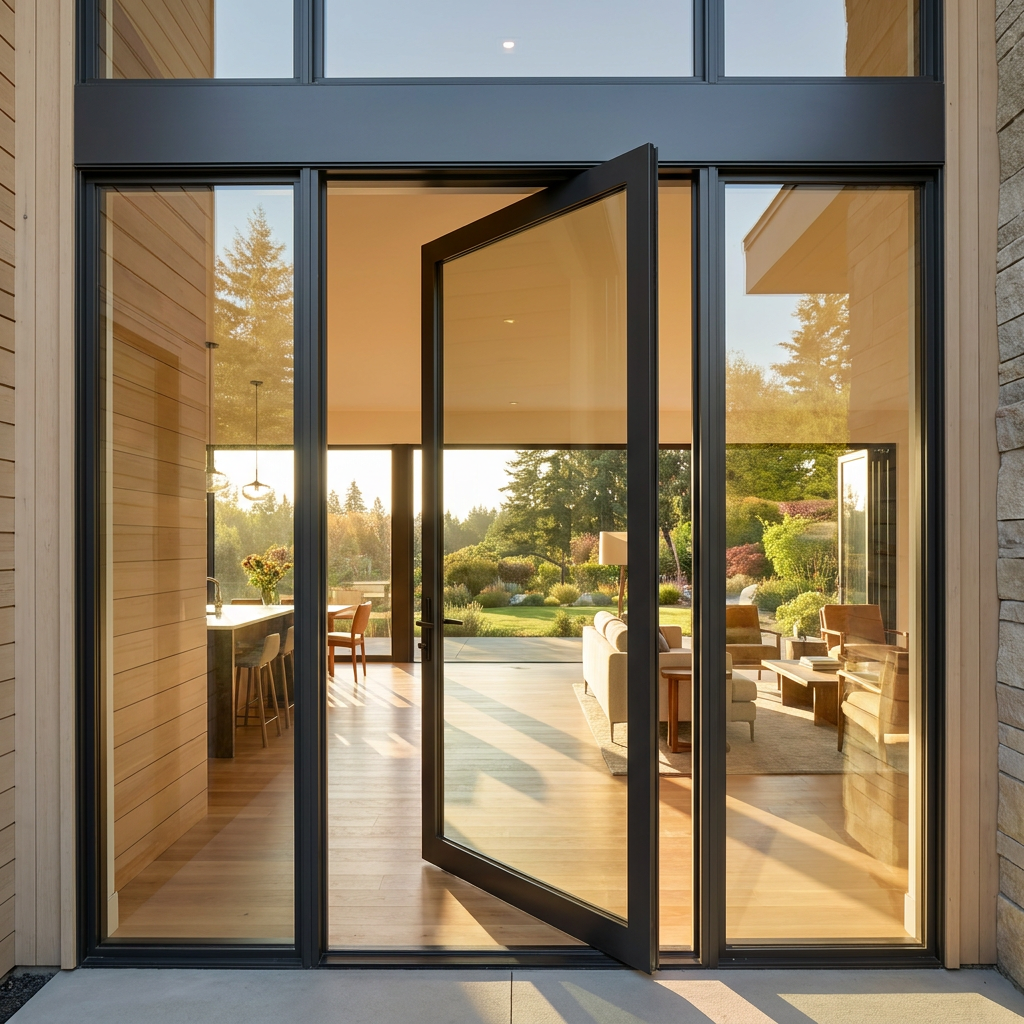
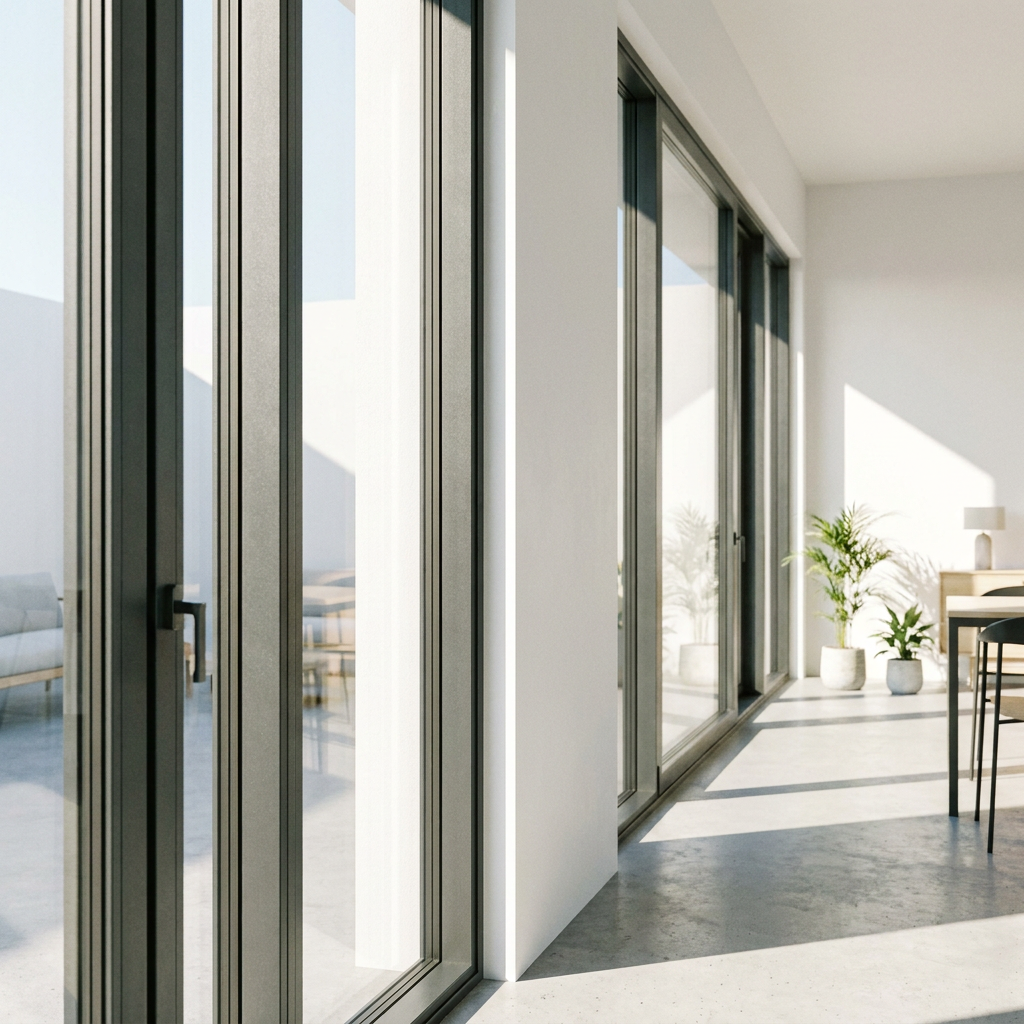
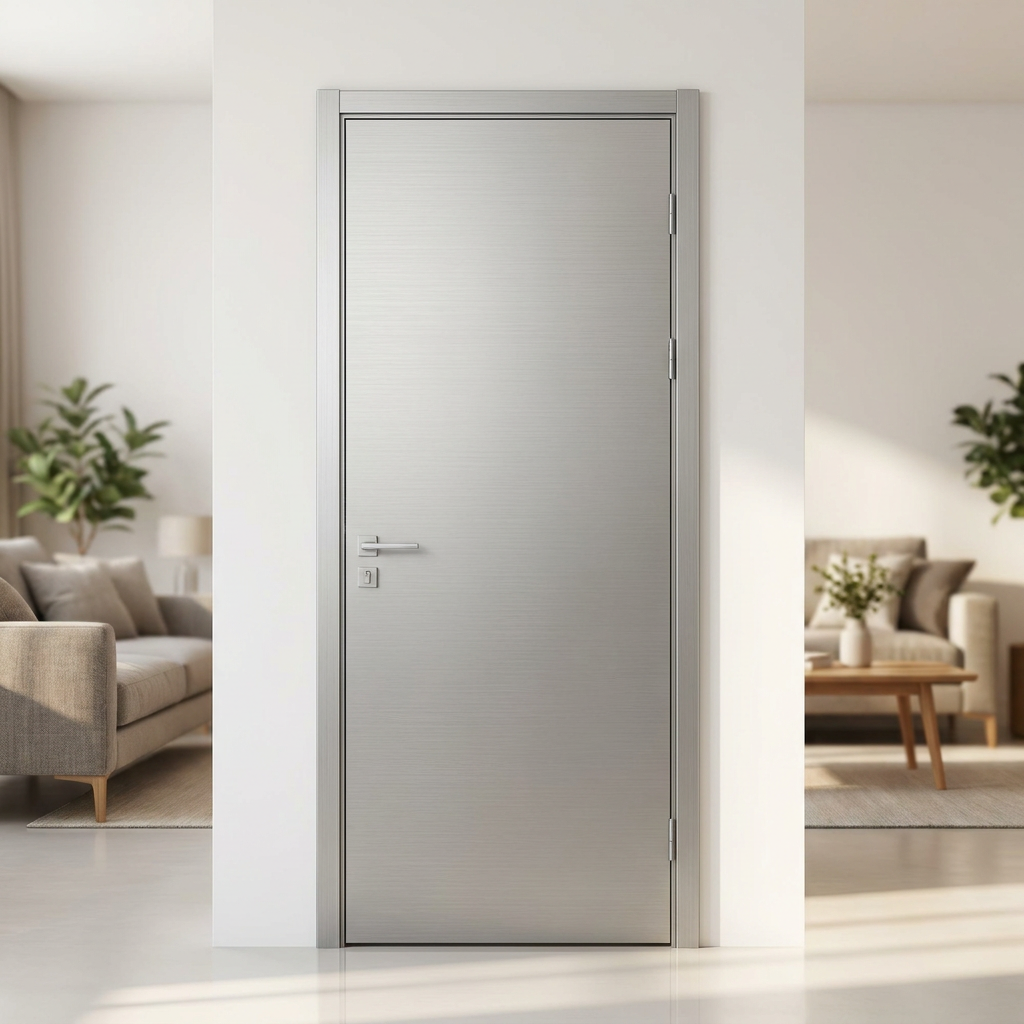
Smart Home Ready Doors are no longer a niche specification for premium residences. For business evaluators reviewing hotels, apartments, villas, schools, and mixed-use housing projects, the door is becoming part of the building’s connected security network. A well-finished leaf is still important, but it must also accept smart locks, door-position contacts, occupancy sensors, card readers, wiring routes, and access-control hardware without weakening safety, acoustic comfort, or long-term serviceability.
The key question is not whether a door can carry an electronic lock on the day of installation. The real issue is whether the complete door-and-frame assembly can support the device throughout its operating life: repeated opening cycles, battery changes, software upgrades, cable movement, alignment shifts, and the occasional replacement of one device with another.
Start with the door as an integrated assembly
A connected lock does not work in isolation. It depends on the leaf thickness, lock stile construction, frame profile, hinges, strike location, clearance gaps, and the available route for power or data. Specifiers who select the door first and the access-control package later often discover avoidable conflicts: a mortise body that is too deep, a reader that collides with decorative molding, a concealed cable that cannot pass through the hinge side, or a magnetic contact positioned where the door’s internal reinforcement is missing.
For this reason, Smart Home Ready Doors should be reviewed as an assembly rather than a decorative item. The door manufacturer, hardware supplier, electrical contractor, and access-control provider should agree on a coordinated hardware schedule before production drawings are released.
That schedule should identify:
- Lock type: mechanical cylinder, electronic mortise lock, tubular smart lock, electromagnetic lock, electric strike, or hotel card-lock system.
- Opening method: PIN code, RFID card, mobile credential, fingerprint, remote release, or a combined method.
- Power approach: replaceable batteries, hardwired low-voltage power, Power over Ethernet where applicable, or a hybrid arrangement.
- Required sensors, including door status, latch monitoring, tamper indication, or room occupancy detection.
- Fire, smoke, acoustic, moisture, and escape-route requirements for the intended location.
Lock preparation is more than a cut-out
The lock pocket must be sized for the selected hardware, but its location is equally important. Electronic mortise locks may need more depth than standard mechanical cases and can require a protected internal cavity for cables or battery modules. In timber doors, the lock area should retain sufficient structural material around the preparation. In aluminum doors, the profile may need reinforcement or a purpose-designed lock chamber. Wood-aluminum systems require special attention because the visible cladding and structural core may respond differently to drilling and fixing loads.
For high-traffic properties, it is sensible to request a lock-side reinforcement plan. This may involve solid timber blocking, engineered-core reinforcement, metal plates, or dedicated aluminum sections, depending on the door construction. The goal is to prevent loosening around escutcheons, handles, readers, and strike plates after thousands of daily interactions.
Door thickness should also be confirmed early. A lock designed for one thickness range may not fit a thicker sound-insulated leaf without longer spindles, extension kits, or custom screws. Conversely, oversized hardware can look awkward and create leverage on a thin interior door. “Compatible” should mean properly engineered for the leaf, not merely capable of being installed.
Wiring routes: plan for access, not just concealment
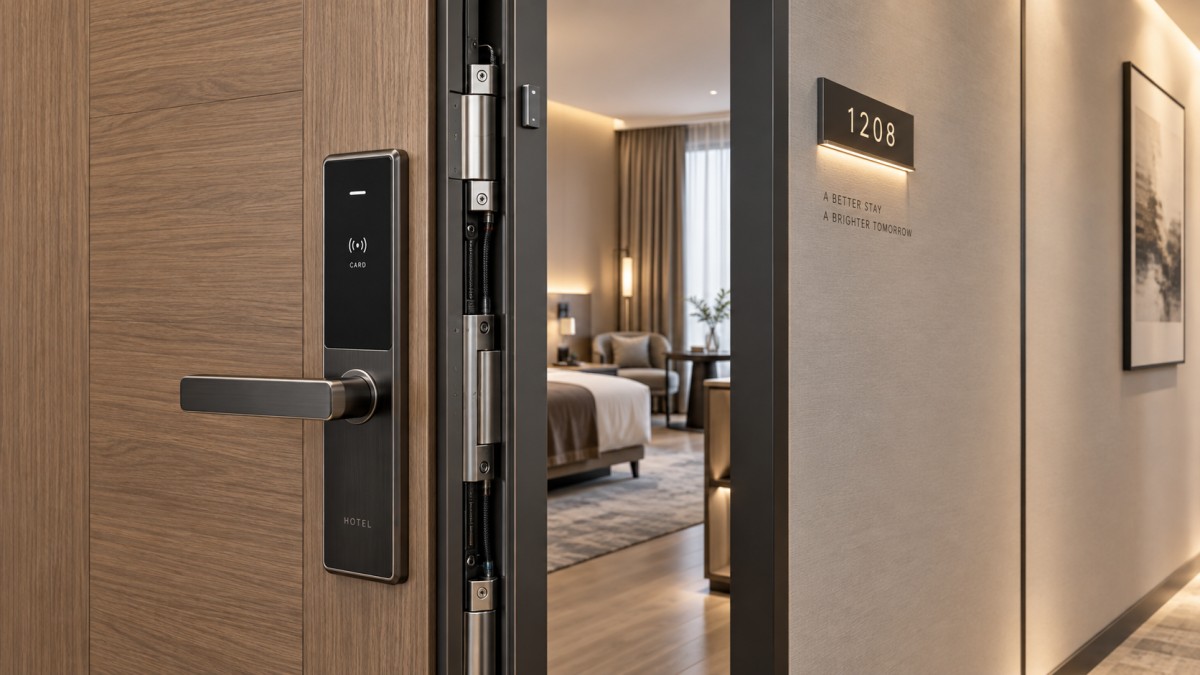
Hardwired access control can provide stable power and reduce dependence on batteries, especially at common entrances, staff-only doors, and hotel circulation areas. Yet concealed wiring must remain serviceable. A cable routed through a door leaf, hinge, or frame needs protection from pinching, abrasion, moisture, and repeated flexing.
Common approaches include electrified hinges, flexible door loops, and concealed transfer devices. Each has trade-offs. Electrified hinges offer a clean appearance but require compatible hinge geometry and careful alignment. Door loops are easier to inspect and replace but remain visible. Concealed transfer devices can be attractive in refined interiors, though they demand accurate coordination between the leaf and frame.
Specify spare conduit capacity whenever possible. Technology changes faster than a door’s decorative finish, and an empty pathway can make a future reader, sensor, or power upgrade far less disruptive. The same principle applies to frame preparation: a frame designed only for a passive strike may be difficult to retrofit for an electric strike or monitored latch later.
Sensor placement affects both security and user experience
Door-position sensors are often treated as minor accessories, but they play a central role in automation and security reporting. A contact sensor can inform a smart-home platform whether the door is open, closed, or forced open; it can also trigger lighting, HVAC setbacks, alarms, or housekeeping notifications in hospitality settings.
Recessed contacts create a cleaner visual result, but they require precise drilling and adequate material at the chosen location. Surface-mounted contacts are more adaptable for retrofits and maintenance, although their appearance may not suit every interior. For aluminum frames, sensor selection must account for metal proximity, which can affect some magnetic sensing arrangements. A compatible sensor type and mounting position should be confirmed with the access-control supplier rather than assumed.
Evaluators should also consider tolerances. A sensor that performs perfectly in a showroom may become unreliable if seasonal movement, hinge wear, or installation variation increases the leaf-to-frame gap. Adjustable strikes, stable hinges, and accurate frame squareness are not simply workmanship details; they contribute directly to the reliability of connected functions.
Fire, acoustic, and access control requirements must coexist
Doors in hotels, hospitals, schools, and apartment corridors often serve multiple purposes at once. They may need sound insulation for privacy, moisture resistance for demanding environments, and fire performance where the project requires it. Adding smart hardware must not undermine these characteristics.
For example, drilling additional holes, changing a lock body, or routing unapproved cables through a fire-rated assembly can compromise the tested configuration. Similarly, poor sealing around hardware preparations may reduce acoustic performance. The correct procurement question is not “Is the lock fire-rated?” alone, but “Is this lock, frame, closer, seal, cable transfer, and door construction approved or suitable as a complete assembly for the required application?” Project teams should verify relevant local code requirements and the applicable test documentation.
Interior timber doors can offer a practical platform for smart hardware when their construction is selected with the use case in mind. For projects seeking customized room doors with options for solid wood, MDF, HDF, plywood, composite structures, or soundproof boards, the Hot Sale Modern Interior Entrance Door Fireproof Wooden Room Door Sound Insulated MDF Timber Solid Wood Doors for Hotel can be considered as a starting point for coordinated discussions on dimensions, finishes, lock preparation, and application-specific hardware. Any fire, acoustic, or access-control requirement should be confirmed for the final configured assembly rather than inferred from the door name alone.
Material choice changes the integration conversation
Aluminum casement, folding, and sliding doors are often selected where slim sightlines, weather resistance, or large glazed openings are priorities. Their smart-home considerations may include multi-point locking, motorized opening, perimeter contacts, and secure cabling within profiles. Sliding and folding systems deserve particular scrutiny because lock alignment and sensor positioning differ from conventional swing doors.
Wooden doors bring warmth and broad finishing options, but their core construction matters. A solid or reinforced lock stile is preferable where electronic hardware and frequent use are expected. Wood-aluminum doors can balance interior comfort with durable exterior-facing performance, provided the fixing method respects both materials and avoids unplanned penetration of weather barriers or thermal elements.
Manufacturing capability also affects outcomes. Accurate machining, repeatable hardware preparation, and coordinated production drawings are valuable when a project includes many door types and credential technologies. Weihai Gensheng Trading Co., Ltd. produces aluminum door systems, wooden doors, wood-aluminum windows and doors, louvers, spring doors, and related architectural components, using German production equipment and window software. For evaluators, this kind of production coordination is relevant because smart-ready preparation benefits from dimensional consistency long before devices arrive on site.
A practical review before purchase approval
Before approving a door package, request a sample or detailed shop drawing that shows the lock case, handle, reader, sensor, hinge/transfer solution, strike, closer, and clear opening dimensions together. Confirm handing, emergency egress behavior, manual override provisions, and what happens during a power loss or network interruption. A smart entry point should never leave residents, guests, or staff uncertain about how to enter or exit safely.
Finally, distinguish between “smart-lock compatible” and genuinely future-ready. The stronger specification allows for service access, replacement hardware, stable alignment, reserved wiring capacity, and documented coordination. That approach may require more attention during procurement, but it protects the value of the door system long after the first generation of smart devices has changed.
Leave A Reply
Need More Details?
Contact me for details on creating and managing design projects, project features, and services and prices