


NEWS
Categories List


A sliding glass door that becomes hard to move is rarely just an inconvenience. Increased operating force can encourage users to pull on handles, push against glass, or force a partially derailed panel back into place. For quality control and safety managers, the useful question is not simply whether the door still opens. It is whether the track, rollers, frame, drainage path, and panel alignment are still working as one controlled system.
Most track problems develop gradually. Dirt first causes a rough glide; roller wear then increases the load on the frame; minor misalignment starts to damage track surfaces. By the time occupants report that a door is “stuck,” the original cause may have already created secondary damage. A practical maintenance program therefore needs to identify early symptoms, distinguish cleaning issues from component failures, and define when adjustment is no longer an adequate remedy.
Track debris: the most common issue, but not always a simple cleaning job
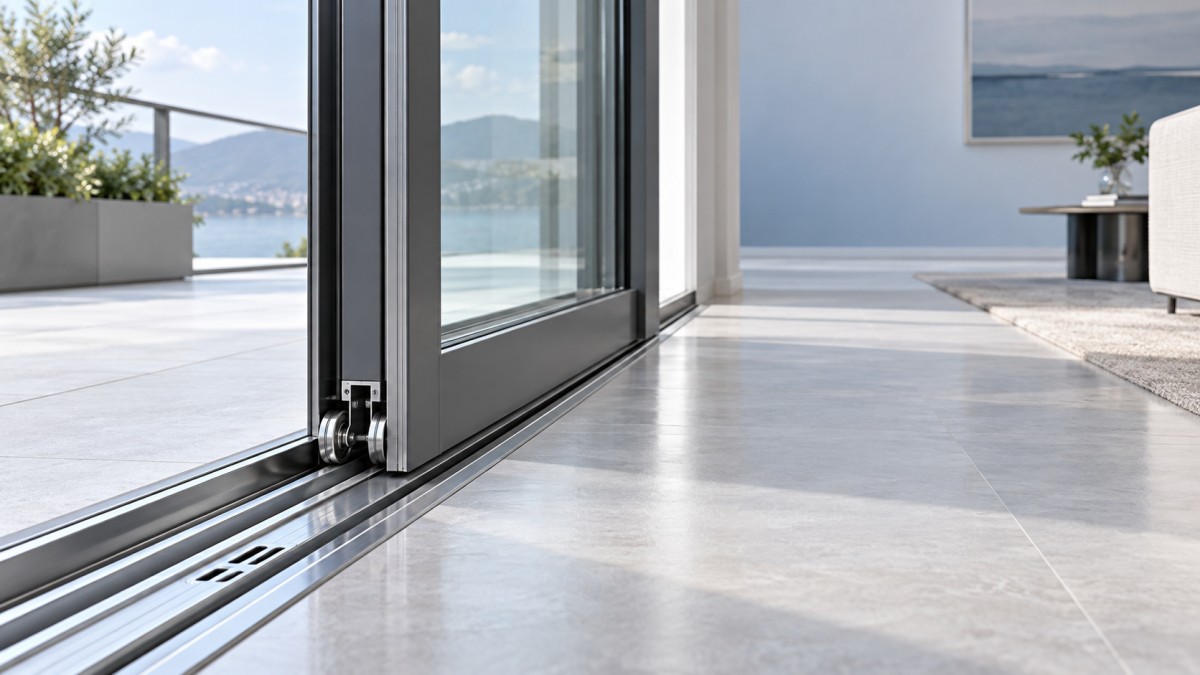
Dust, sand, pet hair, construction residue, and small fragments from damaged brushes or seals often collect in the lower track. These contaminants are especially abrasive when mixed with moisture. As the panel moves, grit can score the running surface and place uneven stress on the rollers. A door may still slide after cleaning, yet remain noisy or resistant because the rollers have already been damaged.
Routine cleaning should begin with vacuuming loose material from the entire track, including corners, drainage openings, and the area behind removable covers where applicable. A soft brush can loosen compacted debris, followed by wiping with a damp cloth and a cleaner compatible with the frame finish. The objective is to remove residue without introducing excessive water into the sill assembly.
Lubricant should not be used as a substitute for cleaning. Heavy oils and sticky sprays can trap more dirt and turn a short-term improvement into recurring abrasion. Where lubrication is suitable, use the roller or track manufacturer’s recommended dry or low-residue product, and apply it sparingly after the track is clean. If operation remains rough immediately after cleaning, inspection should move to rollers, track damage, or alignment rather than adding more lubricant.
Roller wear and adjustment: where difficult movement often begins
Rollers carry the panel weight and keep the sash at the correct height in relation to the track. Worn, cracked, seized, or flattened rollers can cause a door to drag even when the visible track looks clean. In many cases, operators compensate by increasing force, which accelerates wear on handles, locks, frame joints, and glazing seals.
During inspection, look for uneven panel height, scraping marks along one side of the track, a rhythmic bump during travel, or resistance concentrated at one point in the opening. These symptoms can indicate a roller that no longer turns smoothly or a panel that is sitting too low. A door that rolls freely in one direction but binds in the other may also have an alignment issue rather than a uniformly dirty track.
Adjustment screws can restore clearance when the roller assembly is still sound. The adjustment should be made gradually and checked across the full travel range. Raising one side excessively to clear a damaged area can create another problem: poor lock engagement, seal compression, or contact between the panel and upper frame. After any adjustment, confirm that the panel slides without scraping, closes fully, locks correctly, and does not show excessive movement when gently pushed at the meeting stile.
Adjustment has limits. A roller that has lost its wheel surface, developed corrosion, or become difficult to rotate should be replaced. Repeated adjustments to compensate for failed rollers or a worn track can leave the door operating in an unstable condition. For heavy panels, replacement work may require controlled support or removal of the sash, so maintenance teams should follow the door system’s service procedure and avoid unsupported handling of glazed panels.
Track deformation and surface damage require a different response
Not every visible mark on a track calls for replacement, but deformation deserves close attention. A dented rail, flattened running ridge, distorted sill, or locally raised screw can repeatedly strike the roller and create a concentrated load. This is more serious than ordinary surface discoloration because it changes how the panel is supported.
Common sources include impact during delivery or installation, dropped tools, forced operation after derailment, inadequate support below the threshold, and panel weight that is not appropriate for the selected hardware. In residential settings, a door can also be damaged when occupants repeatedly slide it against an obstructed track or use the panel as a support point.
A visual inspection should be combined with a movement check. Run the door slowly through its full opening and listen for clicking, grinding, or a sudden increase in force. Examine the corresponding section of the track rather than assuming the noise originates at the handle side. If damage is localized and the system manufacturer permits repair, a qualified technician may be able to replace an insert or running rail. Bending a damaged aluminum track back into shape without confirming the profile geometry can leave sharp edges, poor roller contact, or a weakened section.
For quality records, distinguish between cosmetic scratches and defects that affect travel, drainage, locking, or panel retention. This prevents minor finish issues from being treated as safety failures while ensuring that structural or functional damage receives an appropriate response.
Drainage failures can quietly damage the whole lower assembly
Sliding glass doors are exposed to water at the sill, whether from weather, cleaning, condensation, or moisture carried in from an exterior threshold. Drainage channels and weep holes are designed to move water away from the frame assembly. When they are blocked, water can retain debris, promote corrosion in susceptible hardware, stain finishes, and increase friction in the track.
A blocked weep path is often missed because the door may still move normally in dry conditions. Inspection should include checking that drainage openings are clear and that water is not held in the sill after cleaning or rainfall. It is also important to verify that sealant, paint, flooring material, insect screens, or installation debris has not obstructed the intended drainage route.
Do not assume that adding sealant around every opening improves performance. Some visible gaps are functional drainage paths. Sealing them can redirect water into the frame or interior finish. Maintenance instructions should clearly identify which openings must remain clear, particularly where several door configurations are used across a property portfolio.
Misalignment is a safety and quality issue when it affects engagement
A panel can appear visually acceptable while being out of alignment enough to compromise closing and locking. Signs include uneven reveal gaps, a latch that requires lifting or pulling to engage, seals that compress heavily on one end, or a panel that rubs against the jamb. These conditions may stem from roller adjustment, loose hardware, frame movement, installation tolerance, or settlement around the opening.
The inspection should not stop after confirming that the door can be closed. Check that the lock engages without forcing the panel into position, that the anti-lift or retention features are correctly seated where fitted, and that the sash cannot be lifted or displaced unusually during normal handling. A door with poor lock alignment may be more likely to be left unsecured because users avoid a closure that feels difficult or unreliable.
When the panel has derailed, treat it as more than a reset task. Inspect the rollers, upper guide, track edges, stops, glazing condition, locking hardware, and surrounding frame before returning the door to service. A recurrence can indicate that a component has been bent, worn, incorrectly adjusted, or selected outside its intended load range.
Build maintenance around operating symptoms, not a fixed calendar alone
A fixed inspection interval is useful, but the environment should determine how frequently Sliding Glass Doors are checked. Doors near gardens, beaches, workshops, building entrances, or active construction areas are exposed to more grit and may need closer attention. High-use openings also reveal roller and alignment problems faster than a door that is rarely operated.
- Clean the track and confirm drainage paths remain open.
- Operate the panel across its full travel range and note noise, drag, vibration, or intermittent binding.
- Inspect track surfaces for scoring, dents, loose fasteners, and damage at high-contact areas.
- Check roller adjustment only after the track is clean and the cause of resistance is understood.
- Confirm that closing, locking, seals, and retention features work without excessive force.
- Escalate repeated derailment, cracked glass, distorted frames, failed rollers, or damaged track profiles for qualified repair.
The most reliable approach is to record the symptom, location, corrective action, and whether the door passed a post-maintenance operating check. That record helps distinguish isolated contamination from a recurring failure pattern linked to installation, usage, hardware selection, or environmental exposure. Smooth movement matters, but the more meaningful maintenance outcome is a panel that travels predictably, drains correctly, closes securely, and does not require occupants to force it into use.
Leave A Reply
Need More Details?
Contact me for details on creating and managing design projects, project features, and services and prices