


Categories List
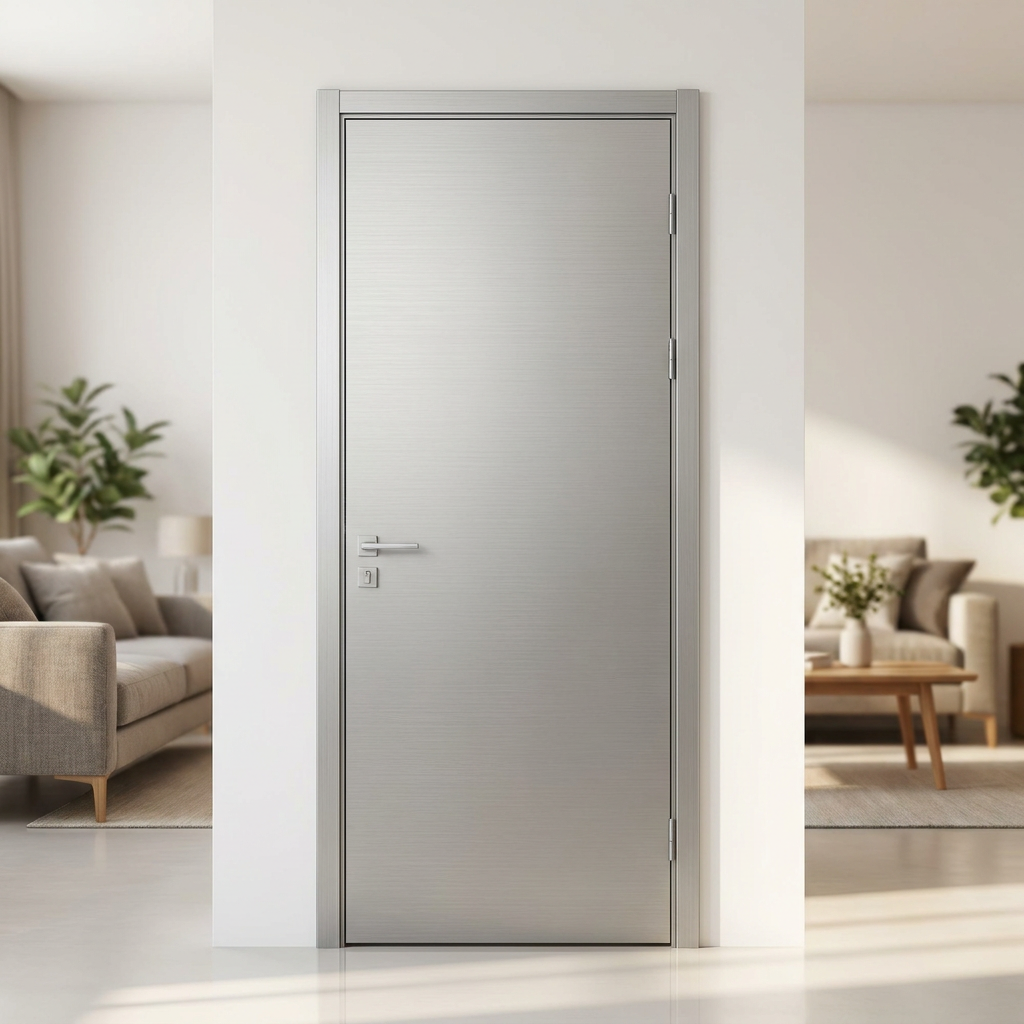
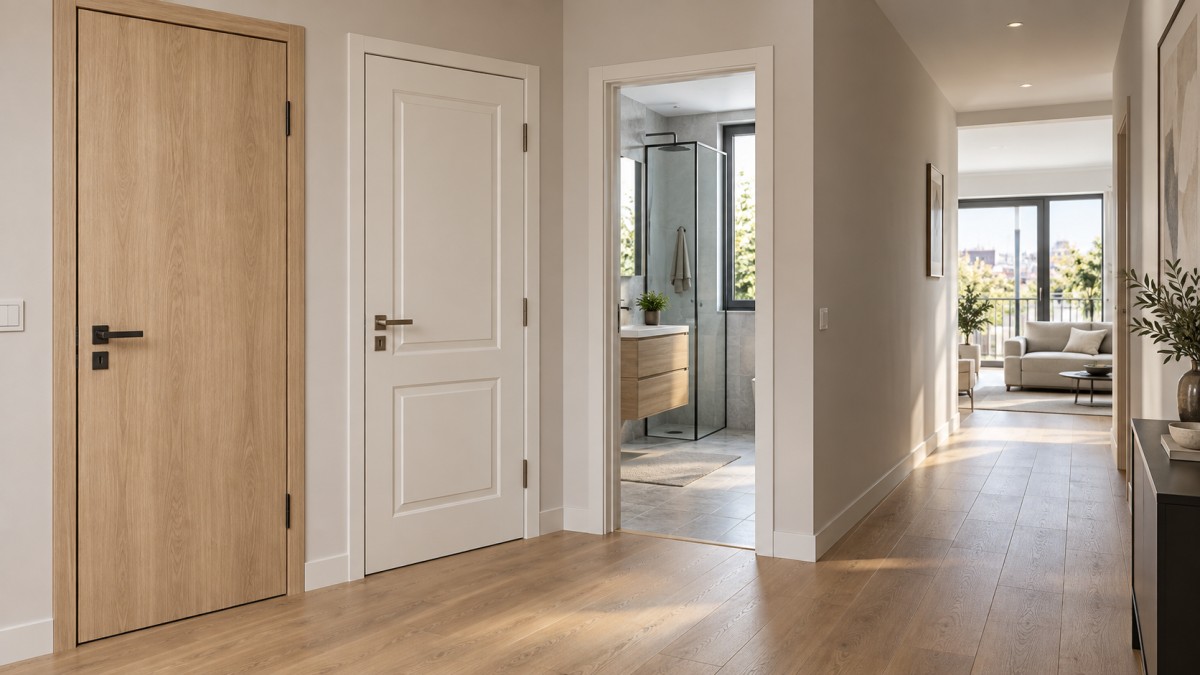
For distributors and agents serving European interior-fitout customers, PVC and MDF wood doors should be treated as two different portfolio tools rather than interchangeable low- and mid-price options. PVC-faced doors tend to be the more forgiving choice where cleaning, humidity exposure, and repeatable appearance matter most. MDF-based doors are often the stronger option where buyers expect a more substantial painted finish, routed detail, or a design language closer to traditional timber joinery.
The better material depends less on a catalogue description and more on where the door will be installed, how the finish will be judged after handover, and how much variation a distributor can control across batches. A door that performs well in a dry bedroom corridor may be a poor choice for an apartment entry to a frequently used bathroom, even when both are sold as “moisture-resistant.”
Start with the finish expectation, then assess the room conditions
PVC doors are commonly selected for interiors that need a practical, uniform surface. The PVC film or sheet provides a closed, easy-clean face that can reproduce woodgrain, solid colours, or contemporary neutral finishes. For rental housing, serviced apartments, utility rooms, and cost-sensitive residential developments, that consistency can simplify both display selection and replacement ordering.
MDF wood doors usually appeal to a different buyer expectation. MDF provides a smooth and stable substrate for painted finishes, shallow grooves, panel profiles, and decorative machining. When a project specification calls for crisp shaker-style lines, lacquered solid colours, or a door that visually aligns with painted wall panelling and built-in furniture, MDF can produce a more tailored result than a standard PVC surface.
Neither material should be judged by face appearance alone. PVC quality depends on the film thickness, adhesive system, edge wrapping, pressing process, and the stability of the core beneath it. MDF door quality depends on board density, sealing of cut edges and lock areas, frame construction, surface preparation, and the paint or foil system applied over the panel. A good sample is useful, but distributors should also inspect the door edge, hinge side, lock preparation, top and bottom edges, and the consistency of finish across multiple units.
Moisture resistance has limits in both categories
PVC is often described as the moisture-resistant choice, and that is generally reasonable for normal indoor exposure: occasional splashes, regular cleaning, and rooms with managed ventilation. Its surface is less likely than an unprotected painted board to absorb moisture from routine contact. That makes it a sensible option for bathrooms, kitchens, laundry areas, and secondary spaces when the door construction itself is suitable for those rooms.
However, a PVC face does not make every door waterproof. Moisture can still enter through poorly sealed edges, drilled hardware locations, damaged film, gaps at joints, or an unprotected bottom edge. A swollen core or frame can distort the leaf and place stress on the PVC finish. Distributors should avoid presenting a standard PVC interior door as suitable for persistently wet rooms, direct shower-zone exposure, or locations with unresolved condensation problems.
MDF requires a more careful distinction. Standard MDF is better suited to dry, conditioned interiors. Moisture-resistant MDF can support use in rooms with intermittent humidity, provided that the door is correctly sealed, installed with suitable clearances, and kept away from standing water. The phrase “moisture-resistant” should not be translated into “waterproof” in sales materials or specification discussions. That gap between product language and site conditions is a common source of avoidable claims.
- For dry bedrooms, living areas, and hallways, PVC and MDF can both be appropriate when the desired finish leads the decision.
- For kitchens, guest bathrooms, and utility areas, PVC-faced doors can reduce surface-maintenance concerns, but edge protection and ventilation still need review.
- For high-humidity rooms, assess the full door set: leaf, frame, architrave, sealants, threshold detail, hardware cut-outs, and room ventilation.
- For design-led painted interiors, specify the MDF grade and sealing requirements rather than relying on a generic “wood door” description.
Durability is usually decided at the edges and hardware points
In daily use, door faces receive attention, but the first visible failures often appear elsewhere. Hinge recesses, latch cut-outs, bottom rails, and exposed corners take repeated mechanical load. In lower-quality PVC doors, film lifting at corners or along edges can quickly change a clean installation into a service issue. With MDF doors, inadequate edge sealing can lead to local swelling, paint cracking, or a roughened surface around machining.
For the Premium Europe Market PVC and MDF Wood segment, a distributor should ask suppliers for a construction description that goes beyond surface name. Is the leaf hollow-core, solid-core, or engineered timber-core? What reinforcement is used at hinges and locks? Are the vertical edges wrapped, painted, or fitted with separate lippings? How is the bottom edge protected? Can the same construction accept fire, acoustic, or heavier hardware requirements where a project needs them?
These questions also affect installation economics. A heavier, better-supported leaf may cost more to transport and fit, but can reduce alignment problems and hardware failures. Conversely, a lightweight door may be entirely suitable for low-traffic apartments, provided the frame system, hinges, and closing action are matched to it. The material label does not answer these issues on its own.
Design range is valuable only when it can be supplied consistently
PVC gives distributors a practical way to offer wood-look and solid-colour finishes without committing to the finishing variability associated with natural veneer. It can work especially well in broad programmes where customers need repeat orders across several properties. Yet visual consistency should be checked under realistic lighting. Some wood-effect films look convincing on a small swatch but reveal repetitive grain patterns or an overly glossy appearance across a full corridor installation.
MDF offers more flexibility for painted styles, recessed lines, and customised profiles. That flexibility can be commercially useful for dealers supplying renovation specialists, interior designers, and higher-finish residential projects. It also creates more points of control: colour matching, gloss level, profile accuracy, edge smoothness, and touch-up procedures should be agreed before bulk production.
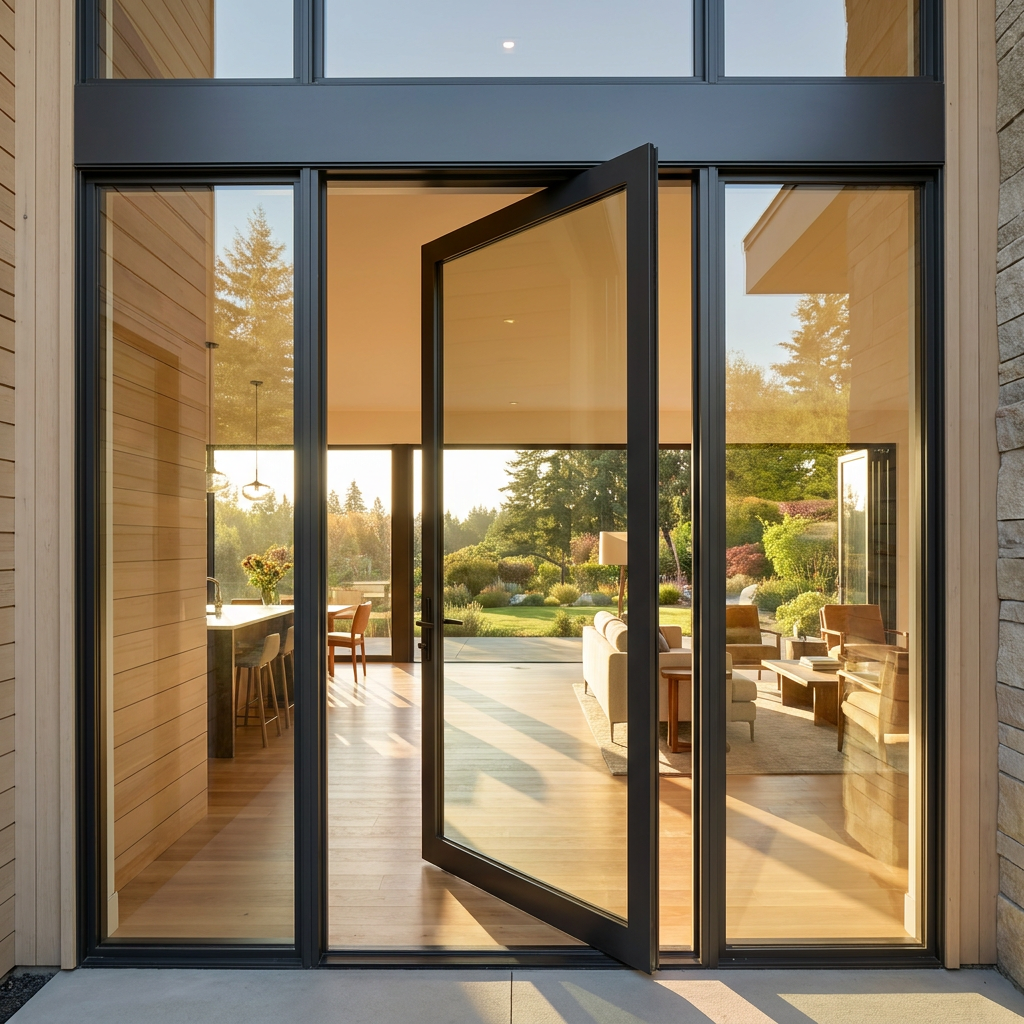
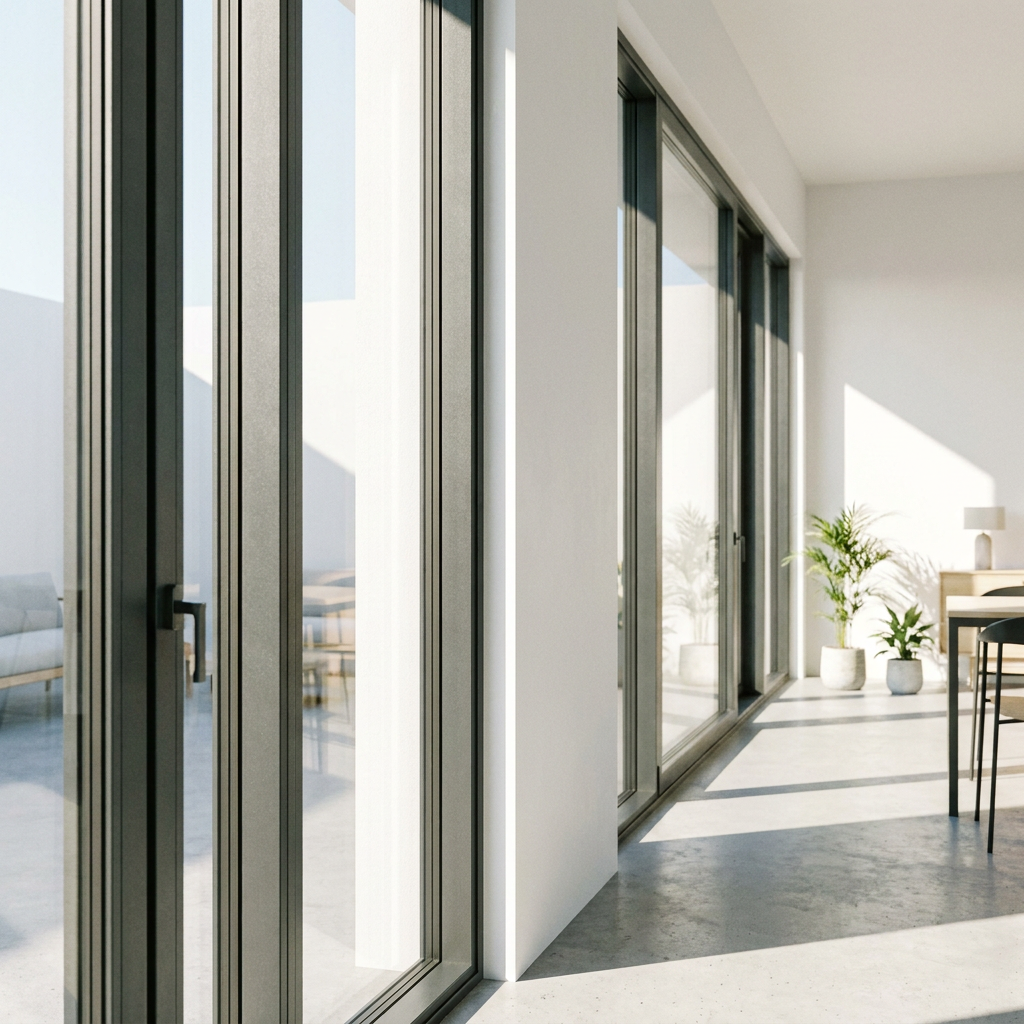
Door selection should also be coordinated with adjacent openings. Where an interior scheme includes large glazed exterior elements, frame colour and sightline proportions can influence how a painted MDF door or wood-look PVC door reads in the room. For projects requiring a coordinated building-envelope package, an Aluminum EPDM Sealing System Double Triple Glass Casement Window may be relevant as a reference point for matching colours, glazing performance expectations, and finish approval procedures. The window and interior door remain separate specifications, but their visual relationship is often visible in completed homes.
Build the range around clear decision routes
A distributor does not need to position one material as universally superior. A cleaner sales structure is to define two or three routes that reflect actual use. PVC can anchor a durable, easy-maintenance interior range with carefully chosen woodgrain and solid finishes. MDF can sit in a painted or profiled range where finish quality and design options justify closer specification control. A higher-risk wet-area category may require a separate construction rather than a relabelled version of either standard door.
Before placing a programme order, request full-size finish samples, corner and edge details, hardware preparation information, packaging specifications, and sample doors where the project is sensitive to finish quality. Review tolerances for leaf size, frame compatibility, and gap allowances, particularly when doors will be installed in buildings with varying wall conditions. Clarify which finish defects are acceptable, how replacement orders will be colour-matched, and whether components can be supplied separately for service work.
The durable choice is therefore rarely determined by PVC versus MDF alone. PVC is often the more resilient surface-led answer for practical interiors; MDF is often the more adaptable substrate-led answer for painted and detailed schemes. The commercial advantage comes from matching each construction to the room, the finish expectation, and the after-sales responsibility the distributor is prepared to carry.
Leave A Reply
Need More Details?
Contact me for details on creating and managing design projects, project features, and services and prices