


NEWS
Categories List
Recent Posts

PVC MDF Swing Doors: Which Finish Fits a Modern Interior and Daily Use?
A swing door is one of the few interior elements that is touched, seen, and heard every day. It closes off a bedroom after a long day, separates a work corner from a living area, and affects how a hallway feels when several doors are visible at once. For that reason, choosing between a PVC-finished door and an MDF-based painted or veneered door is not simply a question of colour. The finish influences cleaning routines, visual depth, resistance to everyday marks, repair options, and how well the door continues to suit the room after furniture or wall colours change.
Elegant Swing Opening PVC MDF WoodenInterior Doors for Modern Spaces can work across minimalist apartments, family homes, renovated townhouses, and compact private rooms. The better choice depends less on trend language and more on where the door will be used, how much handling it receives, and whether the interior calls for a crisp uniform surface or a more tactile wood-like character.
The finish is not the same as the door construction
Homeowners often compare “PVC doors” with “MDF doors” as if each term describes one complete construction. In practice, MDF is commonly used as a stable engineered wood component in door panels, while PVC may refer to a decorative film or surface layer applied over a substrate. A door can therefore combine MDF elements with a PVC finish. Other doors may use MDF with sprayed paint, laminate, natural veneer, or another surface treatment.
That distinction matters because the appearance you choose is only one part of long-term performance. Ask what sits under the visible skin, how the edges are treated, whether the leaf is solid-core or hollow-core, how the frame is constructed, and what hardware is included. A convincing wood grain cannot compensate for poor edge sealing, while an attractive painted panel can become frustrating if its profile is too delicate for a busy family corridor.
For a modern interior, a door should also be evaluated as part of a system: leaf, frame, architrave, hinges, latch, seals, and the reveal around the opening. A clean door slab can look unexpectedly heavy if the frame profile is oversized, or appear unfinished when the surrounding trim does not match the flooring and wall palette.
What a PVC finish does well in real homes
PVC finishes are often selected for their consistent appearance and straightforward care. A quality film-wrapped or PVC-faced surface can reproduce pale oak, walnut, ash, concrete tones, or solid contemporary colours without the natural variation that comes with real veneer. That predictability is useful when several room doors need to align visually, especially in an open-plan home where doors are seen together.
Daily maintenance is usually uncomplicated. Fingerprints, light dust, and ordinary household splashes can generally be wiped away with a soft damp cloth and mild cleaner. This makes PVC-finished swing doors practical near children’s rooms, utility areas, and frequently used bedrooms. It is still wise to avoid abrasive pads, strong solvents, and prolonged standing moisture around the lower edge. “Easy to clean” should not be mistaken for waterproof in every part of the assembly.
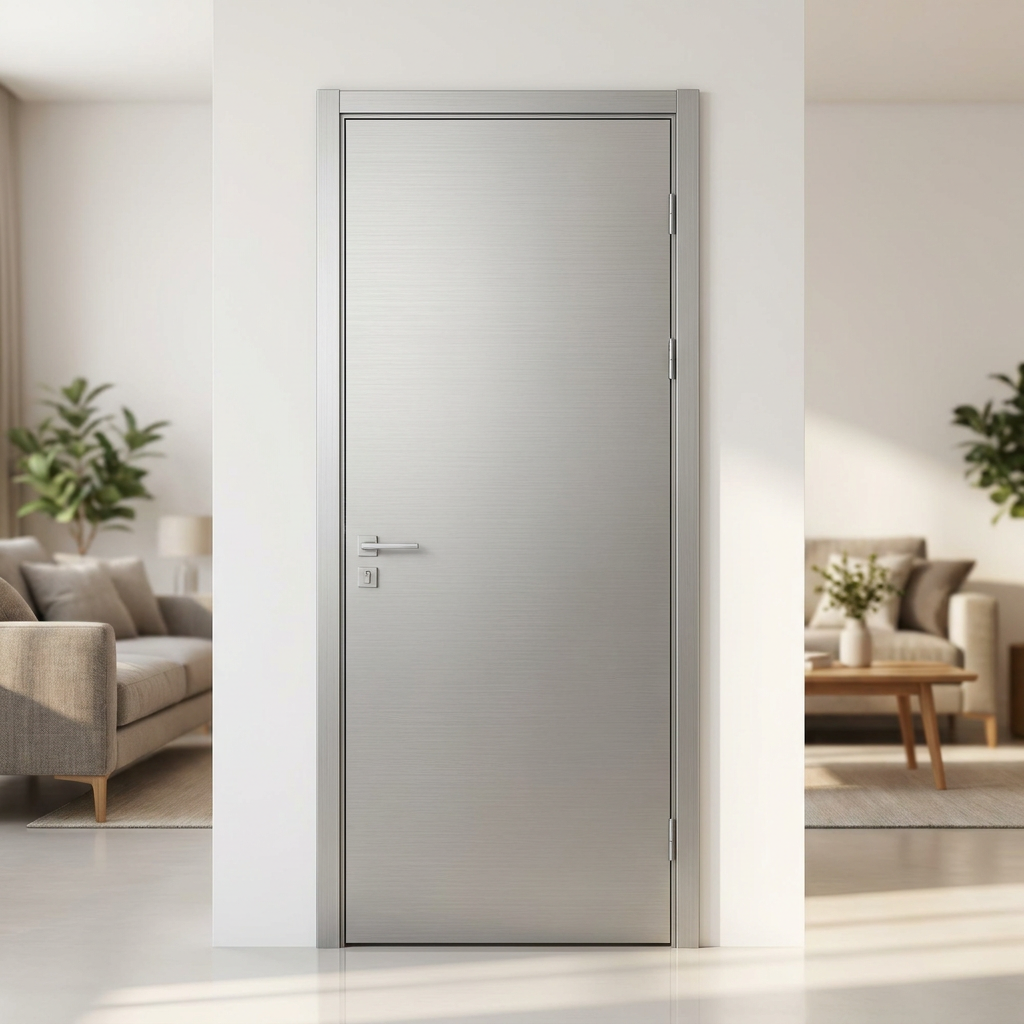
Visually, PVC is especially effective when the design direction is calm and coordinated: a matte greige door beside plaster walls, a light wood texture in a Scandinavian-style interior, or a dark linear grain paired with black handles. Matte surfaces tend to feel more contemporary and are less likely to highlight minor smudges than high-gloss finishes. Texture also deserves a close look. A shallow embossed grain may add warmth, but an overly repetitive pattern can look artificial across a large run of doors.
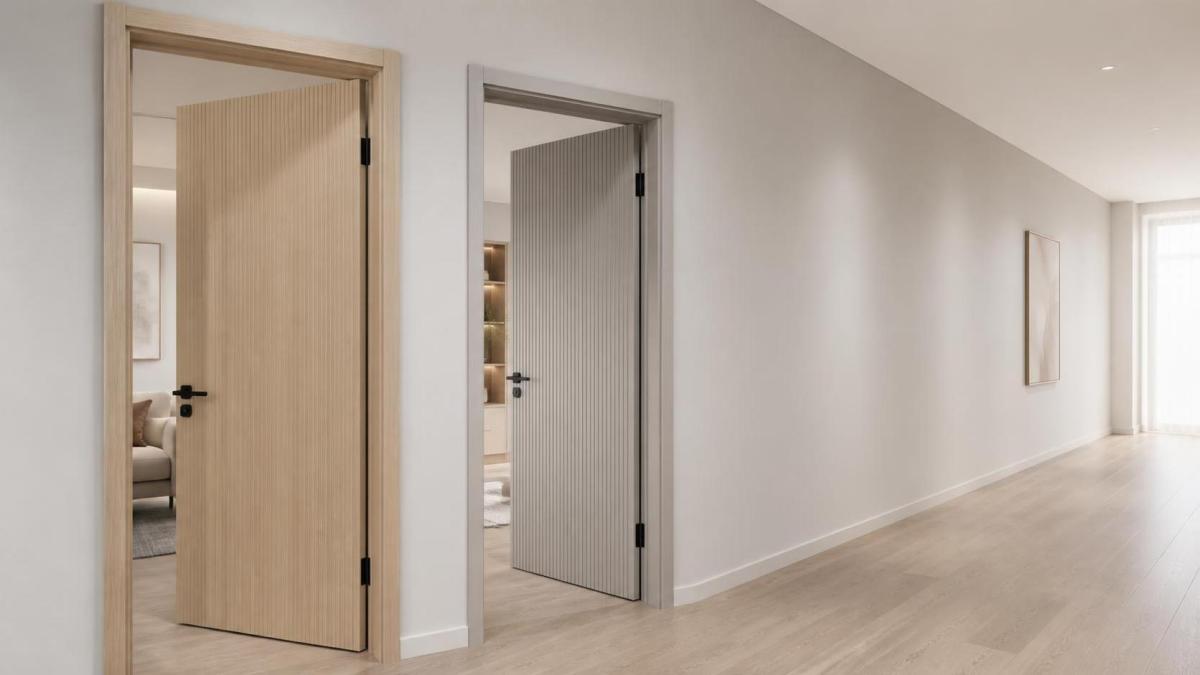
The main limitation is repairability. If a PVC face is deeply gouged, melted, or lifted at an edge, an invisible spot repair is usually harder than on a painted surface. This does not rule it out for active households; it simply means that edge quality, installation care, and realistic expectations matter more. Check corners, lock cut-outs, hinge recesses, and the bottom of the leaf rather than judging only the showroom-facing panel.
Where MDF brings a different kind of flexibility
MDF is valued in interior joinery because it can create smooth, precise faces and routed details. When used in a well-designed door leaf with an appropriate finish, it supports the sharp lines that many modern interiors need: narrow shaker grooves, flush painted planes, subtle shadow gaps, and neatly shaped profiles. It is particularly suited to painted doors, where the aim is a seamless colour rather than a printed wood effect.
A painted MDF door can be a strong choice when the door is intended to disappear into the wall colour, or when a homeowner wants a custom tone that aligns with cabinetry. It can also feel more architectural than a film finish, particularly on panelled designs. If the surface is damaged, repainting or professional touch-up may be more feasible than repairing a torn decorative film, although the success of any repair depends on the paint system and the extent of the damage.
Moisture is the point that needs the most honest discussion. Standard MDF is not a carefree material for persistently wet environments. A bathroom door may be appropriate if the room is properly ventilated and the selected construction, edges, coating, and frame are intended for that use. But a door exposed to repeated soaking, poor ventilation, or water collecting at the threshold needs a more carefully specified solution. Do not rely on a finish name alone; ask how the bottom edge and all cut edges are protected.
A practical comparison before choosing
Neither column automatically wins. A PVC finish is often the more relaxed choice for a standard bedroom door that needs a consistent, low-maintenance look. MDF is worth considering when the interior design depends on a particular paint colour, a detailed panel profile, or a finish that can be renewed over time. For a main suite, a quiet office, or a formal living room, appearance may carry more weight. For a playroom passage or a door beside a laundry zone, resilient detailing may matter more.
The details that determine whether a swing door feels good to use
Finish selection should not distract from operation. A door that drags, rattles, or closes with a sharp impact will make even an expensive surface feel disappointing. Confirm the opening direction early, including whether the leaf will interfere with furniture, wardrobes, radiators, or another door. In tighter rooms, a few centimetres of clearance can decide whether a swing arrangement is comfortable.
Hinges should be selected for the leaf weight and expected use, not merely for their visible finish. Soft-close hinges or damping solutions can improve the daily experience, but they should be compatible with the chosen leaf and frame construction. Privacy locks, magnetic latches, drop seals, and perimeter gaskets may be relevant for bedrooms or home offices where sound and light leakage are concerns. Sound reduction is a system issue: gaps around the door, frame installation, and the door core all affect the result.
Measure the finished opening rather than relying only on a plan dimension. Flooring buildup, wall finish thickness, uneven jambs, and skirting details can all affect the final fit. This is also the right moment to decide whether frames should match the leaf, contrast with it, or blend into the wall. A dark PVC wood grain with a crisp black lever can look intentional; the same leaf with an unrelated glossy frame can look assembled rather than designed.
Coordinating doors with wood, aluminium, and adjacent finishes
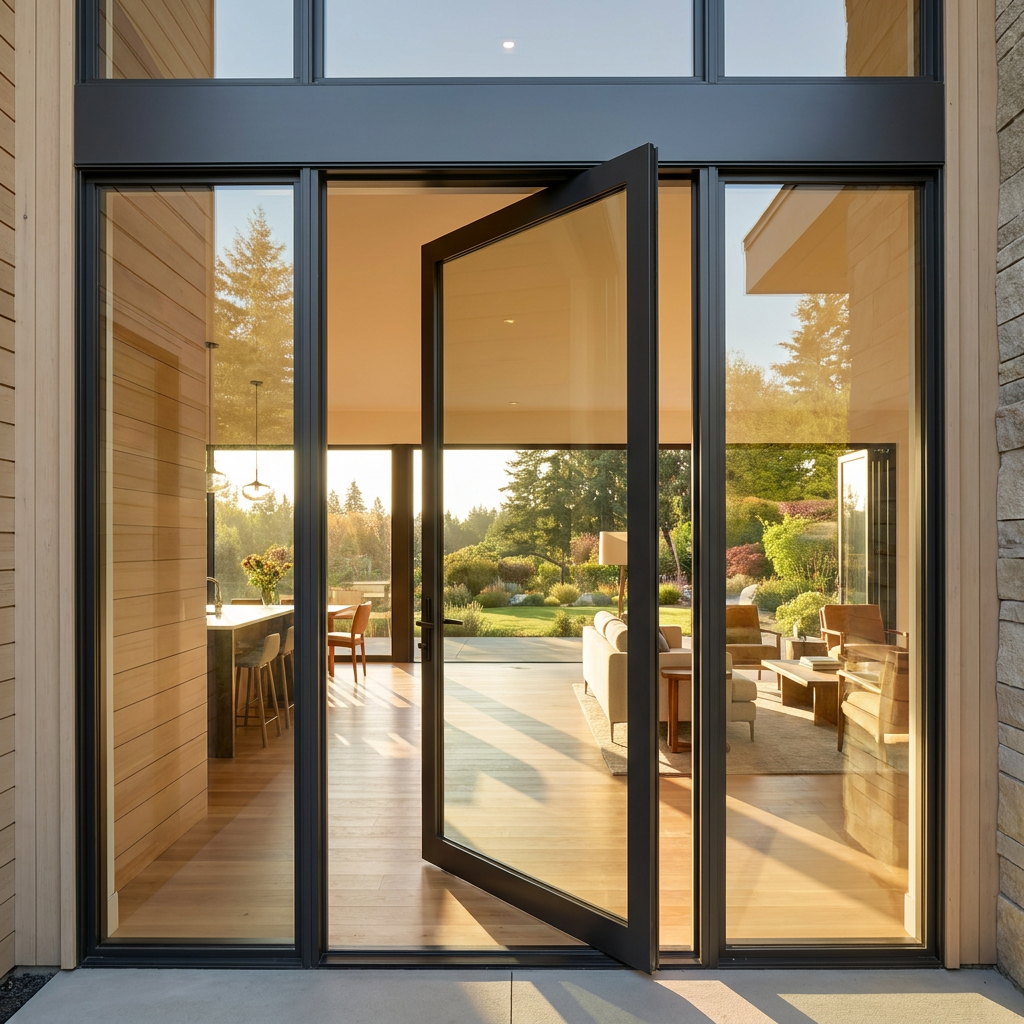
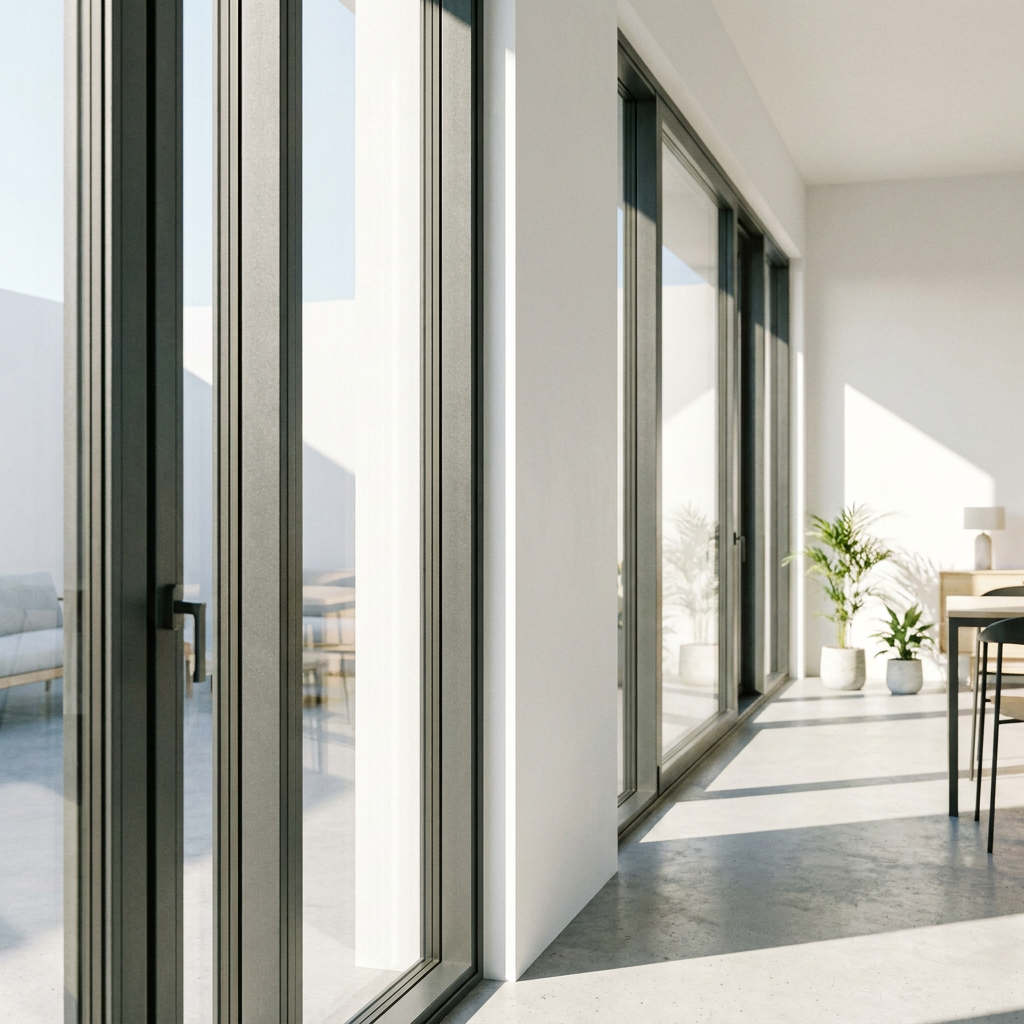
Modern homes often combine several materials rather than committing to one. An interior may include aluminium-framed glazing, timber furniture, painted built-ins, and PVC or MDF swing doors. The goal is not to make every wood tone identical. It is better to align undertones: warm oak with warm off-white walls, cooler ash with soft grey, or deep walnut with neutral stone and restrained metal accents.
For furniture panels, shelving, wall features, or joinery that needs genuine timber character, material specifications should be assessed separately from a door finish. For example, Custom Aromatic Cedar Edge Glued Boards are available for interior and exterior furniture, construction, and decoration applications in specified thicknesses from 3 to 45 mm. The listed E0 formaldehyde-emission level and 8–10% moisture content are useful starting parameters, but suitability still depends on the intended exposure, coating, and local requirements. A natural cedar element can add depth beside a simple matte door without forcing the door itself to imitate solid wood.
This mixed-material approach is familiar to suppliers working across wood doors, aluminium casement, folding and sliding door systems, louvers, handrails, and wood-aluminium window and door assemblies. At Weihai Gensheng Trading Co., Ltd., production is supported by German equipment and window software, which is relevant because accurate processing and coordination are especially important where different opening systems meet in one home. A consistent design depends on dimensions and interfaces as much as it does on finish samples.
Avoid choosing from a small sample alone
A hand-sized swatch is useful, but it cannot show how a finish behaves across a full-height door under daylight and evening lighting. View the sample vertically if possible. Place it next to the floor, wall paint, and hardware colour. Dark doors can make a narrow corridor feel more enclosed, while pale finishes may reveal scuffs more readily around handles. A strong grain may look inviting on one leaf yet become visually busy across six identical doors in a small hall.
Also ask for a clear written specification before ordering: door size and handing, leaf construction, visible finish, frame type, edge treatment, hinge and lock preparation, glazing if any, and the expected delivery schedule. If indoor air quality is a priority, request the relevant substrate or adhesive documentation for the exact door construction rather than assuming that one material label applies to every component.
The most dependable decision is usually simple: choose PVC when you want a uniform, easy-care surface and inspect the edge details closely; choose MDF-based painted or veneered construction when custom colour, profiling, or finish renewal has greater value. Then verify the core, frame, hardware, and moisture conditions before the finish is approved. That is how a modern swing door remains pleasing not only on installation day, but through the ordinary movements of daily life.
Leave A Reply
Need More Details?
Contact me for details on creating and managing design projects, project features, and services and prices