


NEWS
Categories List
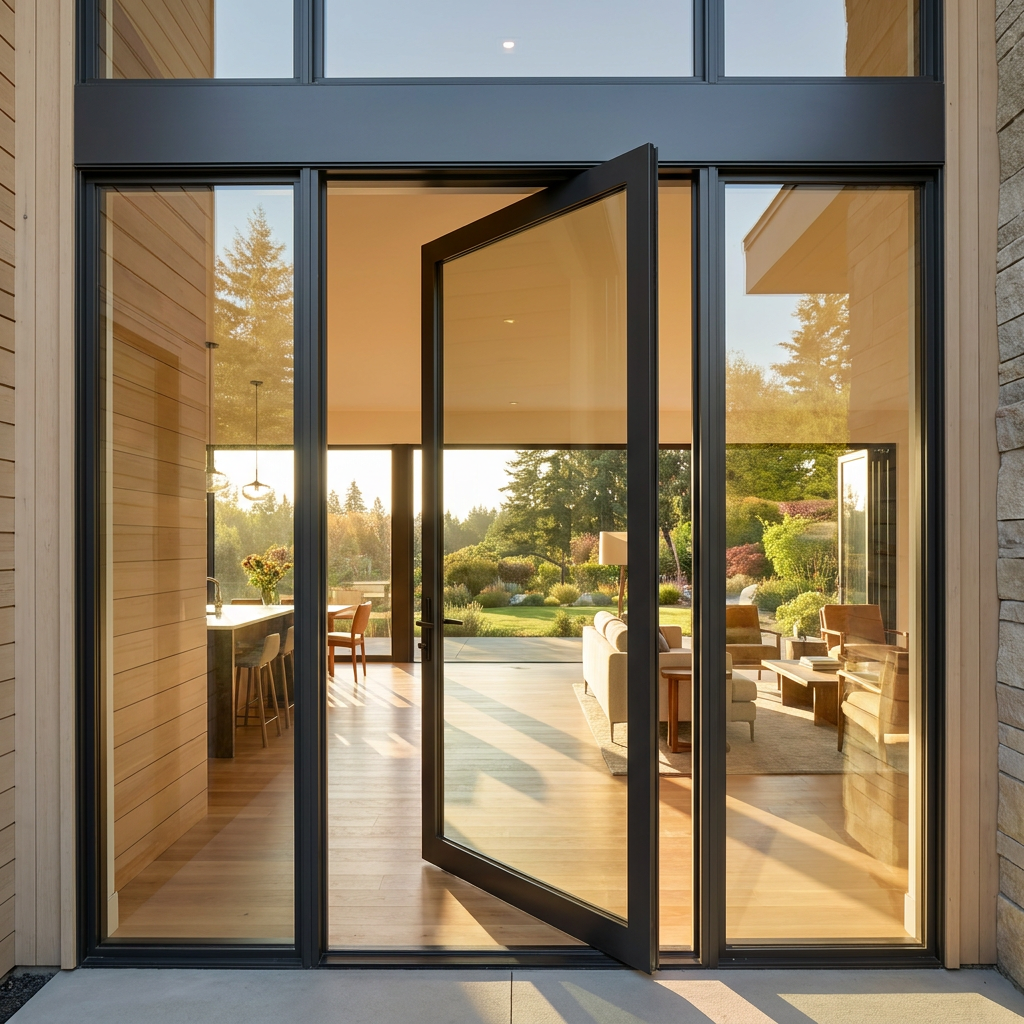
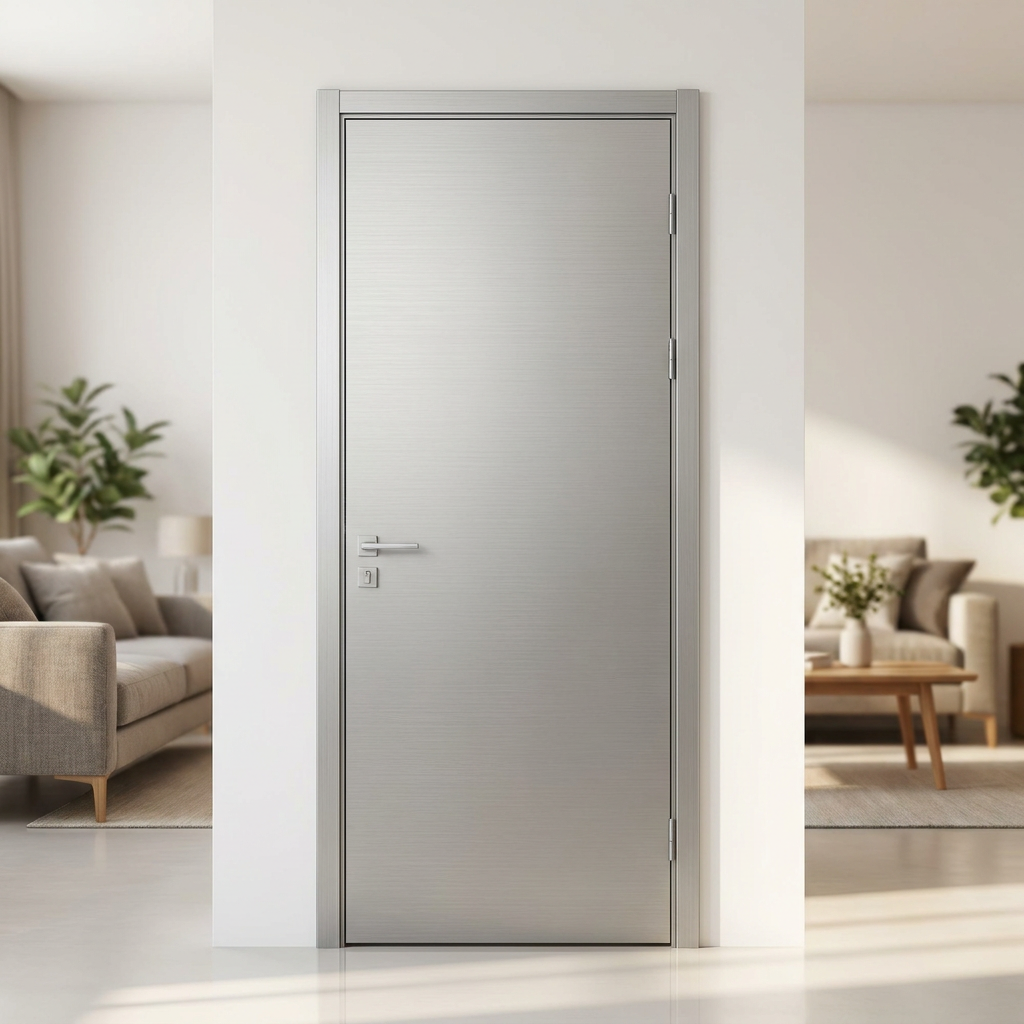
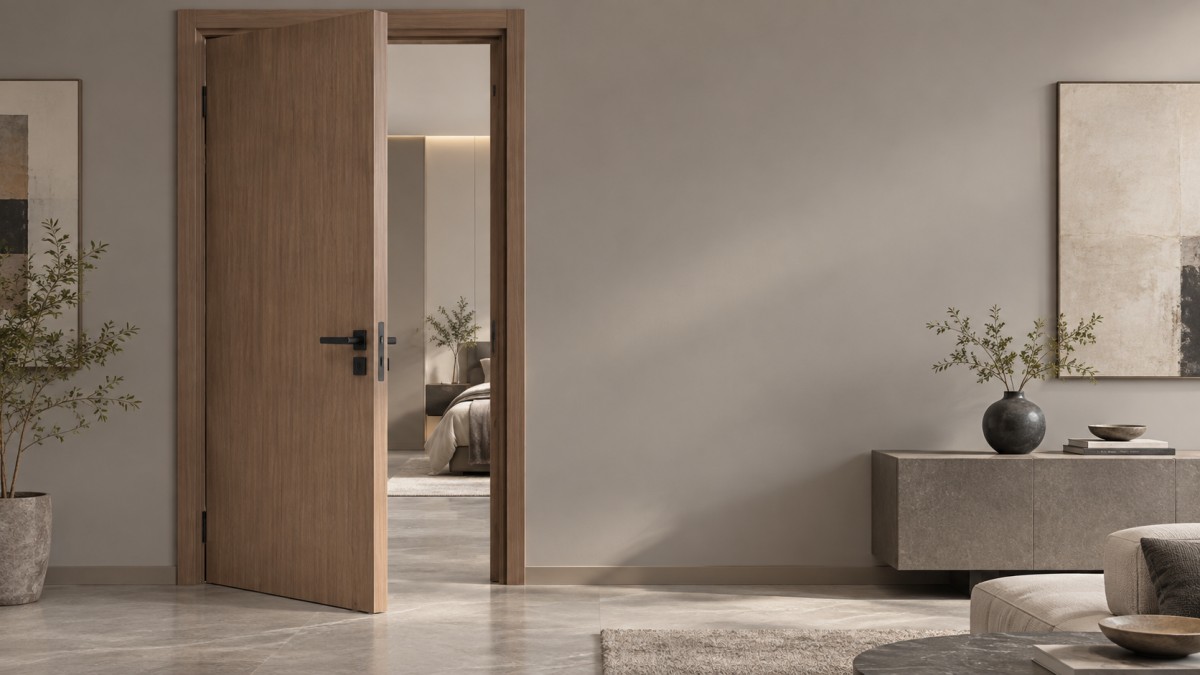
A premium interior door is not defined by a fashionable veneer or a heavy-looking panel alone. In apartments, hospitality rooms, offices, and renovated homes, the weak point often appears after installation: the leaf begins to bow, the latch no longer meets the strike plate cleanly, edge bands loosen, or the finish shows marks around handles and lower corners. For a distributor evaluating a Modern Wooden Interior Room Door with Stylish Design, the practical question is whether the construction can remain stable through transport, seasonal humidity changes, repeated opening, and normal daily contact.
The core judgment is straightforward: durable premium construction combines a stable engineered core, balanced face materials, protected edges, accurate machining, compatible hardware, and a finish system suited to the intended use. A decorative surface can improve appearance, but it cannot compensate for poor core structure or loose manufacturing tolerances.
Start with the door leaf, not the surface pattern
Modern wooden doors may use solid timber components, engineered wood cores, particleboard, MDF, plywood, honeycomb structures, or combinations of these materials. None is automatically premium in every application. The better choice depends on door size, opening frequency, acoustic expectations, hardware type, and exposure to humidity.
A solid-core or engineered solid-core leaf is usually the stronger option where users expect a substantial feel, improved sound reduction, and dependable support for locks, closers, or heavier lever sets. Engineered materials can offer good dimensional consistency because their construction reduces the natural movement found in a wide, single piece of timber. The important detail is not simply whether the brochure says “solid core,” but what the core actually contains and whether it provides continuous support at the hardware zones.
Hollow-core and honeycomb doors can be suitable for low-demand internal partitions where weight and cost are priorities. However, they need careful evaluation when the design includes tall leaves, deep routing, concealed hinges, large glazed cut-outs, or frequent public use. A light leaf may be practical, but it should not be presented as equivalent to a dense construction intended for more demanding rooms.
Balanced construction prevents many visible failures
Door faces should be balanced across both sides of the leaf. When one face has a different material build-up, coating load, or moisture response from the other, the leaf may gradually cup or twist. This risk becomes more noticeable with wide panels, dark finishes exposed to uneven sunlight, or rooms where heating and air-conditioning create differing conditions on each side of the door.
Ask suppliers how they control face balancing, core moisture condition, pressing, and post-press conditioning. These production details are less visible than veneer selection, yet they strongly influence whether a door remains flat after it leaves the warehouse.
Edges reveal the real quality level
Door edges take more impact than broad faces. They contact frames, walls, vacuum cleaners, luggage, and furniture; they also carry hinges, locks, and latches. A premium construction treats the edge as a structural and finishing zone rather than an afterthought.
- Hinge-side reinforcement: The hinge edge needs enough dense, secure material for screws to hold under repeated loading. This is especially important for tall doors, concealed hinges, and heavier leaves.
- Lock-block support: The lock area should be reinforced so that boring, routing, and handle operation do not crush a weak internal structure.
- Clean edge treatment: Veneer wraps, solid lippings, lacquered edges, or durable edge bands should be continuous and properly bonded, without visible gaps or abrupt transitions.
- Bottom-edge protection: In cleaning-prone areas or rooms near balconies and bathrooms, the lower edge deserves attention because accidental moisture exposure often begins there.
During sample review, inspect corners closely and run a hand along the vertical edges. Sharp irregularities, uneven coating build-up, open joints, or a different color tone between face and edge can indicate rushed finishing. These details affect both service life and how the product is perceived at handover.
Veneer, laminate, and painted finishes serve different expectations
A natural wood veneer gives a modern interior door warmth and variation that printed surfaces cannot fully replicate. Yet veneer quality depends on thickness, substrate preparation, matching, pressing, stain absorption, and topcoat protection. A thin or poorly bonded veneer can telegraph substrate imperfections or become vulnerable at edges and routed profiles.
High-pressure laminates, durable decorative films, and melamine-faced panels can provide consistent color and easier repeatability across larger orders. They may be appropriate for developments that need matching doors across many units, provided the specified surface has adequate scratch, stain, and heat resistance for the use environment. A painted door offers flexible color options and clean contemporary lines, but the coating system must remain elastic enough to tolerate minor substrate movement and resist chipping at edges.
Finish selection should also account for lighting. Dark colors and high-gloss surfaces can make flatness variations, dust marks, and minor handling damage more visible. A premium product is not necessarily the glossiest one; it is the one whose surface quality remains appropriate after packing, installation, and routine use.
Flatness is only useful when the frame and hardware are equally precise
A well-made leaf can still perform poorly in a poorly matched frame system. The door, frame, hinges, seals, lock, latch, threshold condition, and site opening must be considered as one operating assembly. Small dimensional inaccuracies become obvious when reveals are narrow or when a modern design uses flush panels and concealed hardware.
Before confirming a specification, request the nominal leaf size, finished leaf thickness, frame depth, recommended installation clearance, hinge preparation details, lock preparation, and permitted dimensional tolerances. These points help prevent a familiar installation problem: a door that looked correct in the sample room but binds after the frame is fixed into an uneven wall opening.
Hinges should be selected according to leaf weight, height, width, and expected use frequency. Concealed hinges offer a clean appearance, but they require accurate routing and a stable door edge. Standard butt hinges are more visible but can be easier to adjust and service. Soft-close mechanisms and magnetic latches can improve the user experience, yet they do not correct an unstable leaf or a misaligned frame.
Assess durability through the conditions that create complaints
Rather than asking only for a catalogue description, evaluate the construction against foreseeable problems. In a dry, conditioned bedroom, the key priorities may be finish consistency, quiet closing, and clean visual alignment. Near kitchens, balconies, utility rooms, or entrances where air and temperature conditions change more often, dimensional stability and lower-edge protection deserve greater weight.
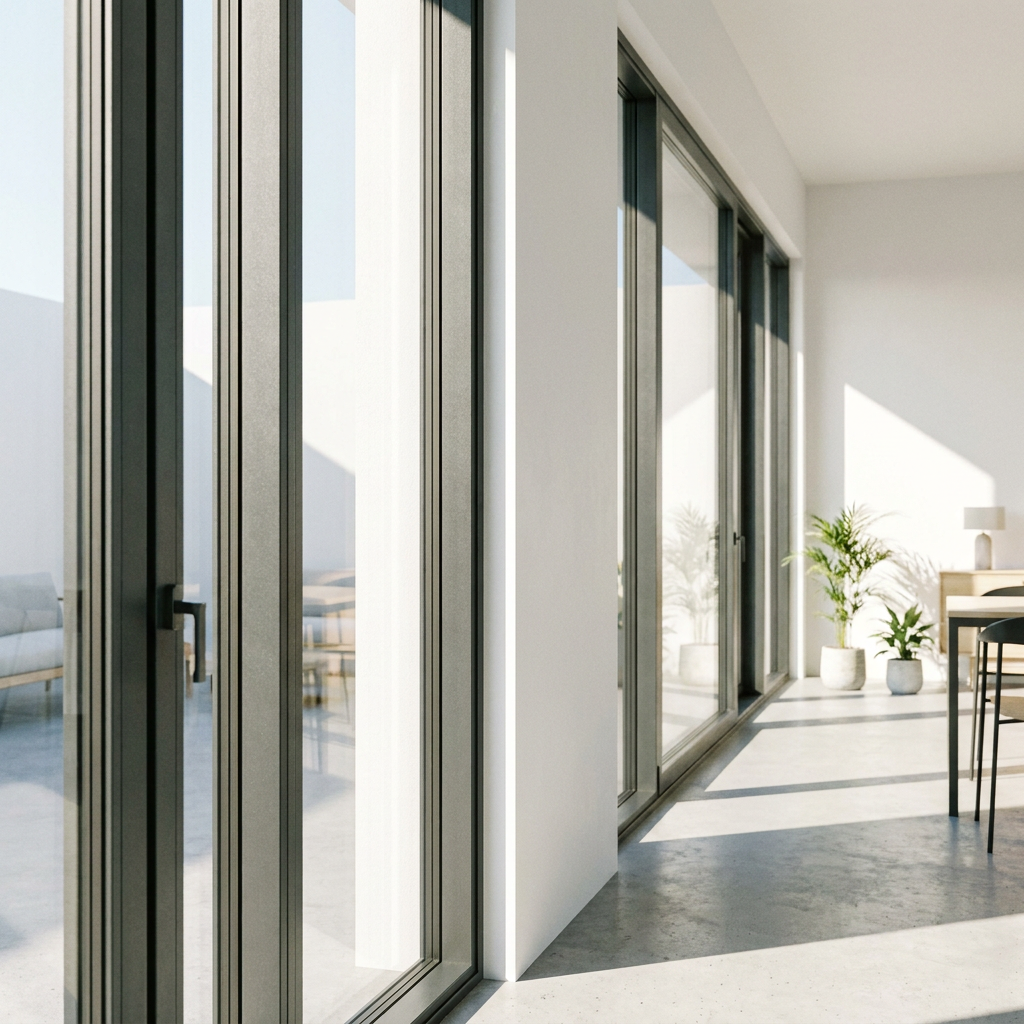
For projects combining wood doors with glazed exterior openings, it is useful to coordinate sightlines, color direction, and performance expectations without confusing the roles of each product. For example, a balcony opening may require thermal, acoustic, and weather-related performance that an interior wood door does not provide. Where a package includes exterior fenestration, specifications such as those associated with Latest Simple Design Aluminium Profile Soundproof Balcony Glass Casement Windows should be reviewed separately from interior door construction, while ensuring that finishes and installation interfaces are visually compatible.
Questions that expose weak specifications
Useful technical discussions tend to be specific. Ask whether the door leaf has a full perimeter lipping or reinforcement only in selected areas; whether the same finish is used on all edges; whether lock and hinge zones are pre-reinforced; and whether the supplier provides machining drawings before production. For veneered doors, ask how face matching is controlled across pairs and whether the veneer direction is consistent. For painted models, clarify the accepted visual inspection distance and how touch-up is handled after site work.
It is also sensible to review packing as part of the construction decision. A well-finished leaf can be damaged by inadequate corner protection, rubbing between panels, or poor moisture shielding during storage. Packaging does not make a door structurally stronger, but it protects the quality that was manufactured.
Do not confuse weight with quality
Heavier doors often feel more substantial, and weight may support better acoustic performance when paired with suitable seals and installation. But weight alone does not prove that a door is well built. An overly heavy leaf with insufficient hinge support can sag; a dense but poorly balanced board can still warp; and a thick coating can conceal substrate defects until the door is in use.
The stronger purchasing decision is based on the relationship between core design, leaf thickness, edge reinforcement, hardware capacity, frame accuracy, and finish requirements. Samples should be viewed not only from the face side but also from the lock edge, hinge edge, bottom edge, and machined areas. That inspection approach helps distinguish a door designed merely to look modern from one built to retain its appearance and operation over time.
Leave A Reply
Need More Details?
Contact me for details on creating and managing design projects, project features, and services and prices