


NEWS
Categories List
Start with the cost that actually matters
When buyers compare Aluminum Doors, the sticker price gets too much attention and the service life gets too little. For long-term home use, the real question is simple: what will this door cost to keep operating well over the next ten or fifteen years? That matters even more for decision-makers responsible for property value, warranty exposure, and after-sales maintenance budgets.
In most residential settings, aluminum is chosen because it does not rot, it handles moisture better than many traditional materials, and it generally asks for less routine work. But “low maintenance” is not the same as “no maintenance.” The long-term cost depends on how the frame is built, what hardware is used, how the glazing and seals are specified, and whether replacement parts will still be available when something wears out.
A practical checklist before you approve a purchase
If you are buying for a home project, staff housing, developer stock, or a managed property portfolio, use this checklist to estimate maintenance costs more realistically.
- Check the finish before you check the color. A door may look good on delivery and still become expensive later if the surface finish is weak for the environment. Coastal air, strong sun exposure, and dusty outdoor conditions all change the maintenance burden. The point is not whether the finish is dark, light, matte, or textured. The point is whether it keeps its surface integrity with regular cleaning rather than frequent touch-up work.
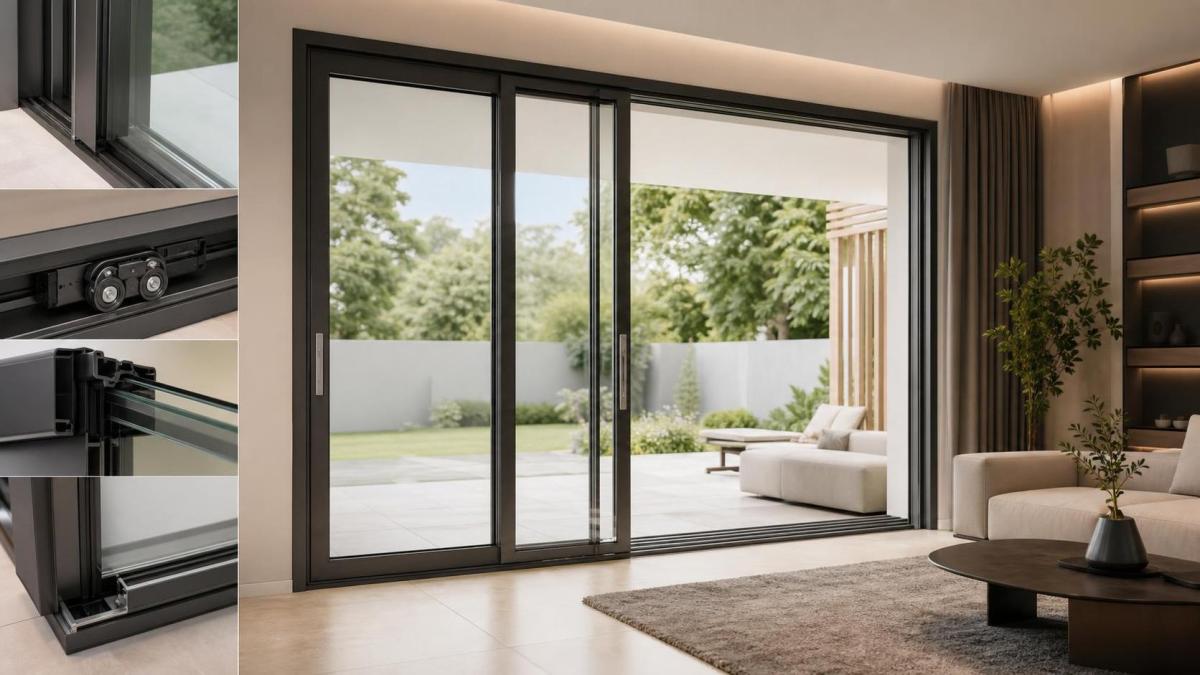
- Look closely at rollers, tracks, hinges, and locks. On many aluminum door systems, the frame outlasts the moving parts. That is where maintenance budgets usually start. Sliding systems need smooth track design and accessible rollers. Folding and casement systems put more pressure on hinges and lock points. Ask which parts are expected to wear first and whether they can be replaced individually without removing the whole unit.
- Separate cleaning cost from repair cost. Basic cleaning is not a major issue. A repair visit is. A door that needs occasional wiping but rarely needs adjustment is cheaper in practice than one that stays visually clean but develops alignment problems or hardware failure.
One common mistake in procurement is assuming all aluminum systems age in roughly the same way. They do not. Two doors can both be sold as aluminum, but one may need little more than cleaning and lubrication, while the other becomes a source of recurring service calls because of lower-grade components or poor fit between sash, frame, and hardware.
Where maintenance costs usually come from
For long-term home use, cost pressure usually shows up in four places.
- Seal and gasket aging. When seals harden or shrink, you get air leakage, water entry risk, noise complaints, and a drop in thermal performance. The maintenance issue is not just the seal itself. It is the labor needed to diagnose and replace it.
- Track contamination and roller wear. This is especially relevant for sliding doors in exterior or dusty applications. If the track is difficult to clean or drains poorly, wear accelerates and operating force increases.
- Glass-related service work. Double-pane, tempered, Low-E, or insulating glass can improve comfort and energy performance, but damaged seals, handling impact, or replacement complexity can raise service cost depending on the door design.
- Adjustment calls after installation. A well-made system still becomes expensive if it is badly installed. Misalignment causes dragging, lock issues, and premature hardware wear. This is one of the most preventable long-term costs.
What to ask the supplier, not just the sales team
You want answers tied to the actual product configuration, not general claims about Aluminum Doors. Ask for the maintenance points that apply to the specific opening type, hardware set, and glass package you are considering.
If a supplier cannot explain which component is likely to require service first, that is useful information by itself.
Match the door system to the maintenance environment
A bedroom opening, an exterior patio opening, and a warehouse-side access point do not create the same maintenance pattern. Interior use usually stresses operation and hardware cycles. Exterior use adds water, wind, dust, and thermal movement. In high-exposure settings, better sealing and stronger performance ratings can save money later even if the initial purchase price is higher.
That is why model-level information matters. For example, Aluminum Sliding Doors S105 a is presented with AAMA 9 wind resistance, Level 9 heat insulation performance, and Security Rating A, along with options such as tempered glass, Low-E glass, and insulating glass. Those details do not automatically make it the right choice for every project, but they are the kind of specifics a buyer should use when estimating how the system may perform in exposed residential applications and how often it may need adjustment or weather-related service.
Do not ignore serviceability
This is where experienced buyers save money. A door that is difficult to service can become expensive even when the replacement part itself is cheap. Check whether rollers can be accessed without removing major assemblies, whether lock hardware is standard within the system, and whether glass replacement requires excessive dismantling. Serviceability has a direct labor cost impact.
Also look at customization carefully. Custom sizes and finishes are often necessary, especially in higher-end homes. But very customized configurations can lengthen future parts sourcing. That does not mean avoid customization. It means record the exact model, finish, glass build-up, and hardware specification at handover so maintenance teams are not starting from zero later.
A few cost signals that deserve extra attention
- Doors in coastal or wet environments should be reviewed with corrosion resistance and hardware durability in mind, not just frame material.
- Large sliding panels may reduce visual obstruction and improve access, but they put more demand on rollers, alignment, and track quality.
- Better acoustic and thermal glazing can lower occupancy complaints, but buyers should still check how replacement would be handled if one pane is damaged.
- Color choice is usually a design issue first, yet some textured or specialty finishes may have different cleaning behavior in dusty outdoor conditions.
For companies sourcing from manufacturers with established production systems, it is worth paying attention to how the product is engineered and documented. A factory using advanced equipment and dedicated production software may support tighter consistency, which often helps reduce fit-related maintenance issues over time. The value is not the equipment by itself. The value is whether the delivered door arrives with repeatable quality, complete specification records, and parts that remain identifiable later.
The smart buying sequence
When evaluating Aluminum Doors for long-term residential use, work in this order: confirm the exposure conditions, review the operating type, verify the hardware and sealing details, then examine serviceability and parts continuity. Only after that should you compare price across quotes.
That sequence tends to produce better decisions because it treats maintenance cost as a design and procurement issue, not just a repair issue. In practice, the lowest long-term cost usually comes from a door system that is well matched to the site, well documented, and easy to maintain when normal wear eventually shows up.
Leave A Reply
Need More Details?
Contact me for details on creating and managing design projects, project features, and services and prices