


NEWS
Categories List
Recent Posts
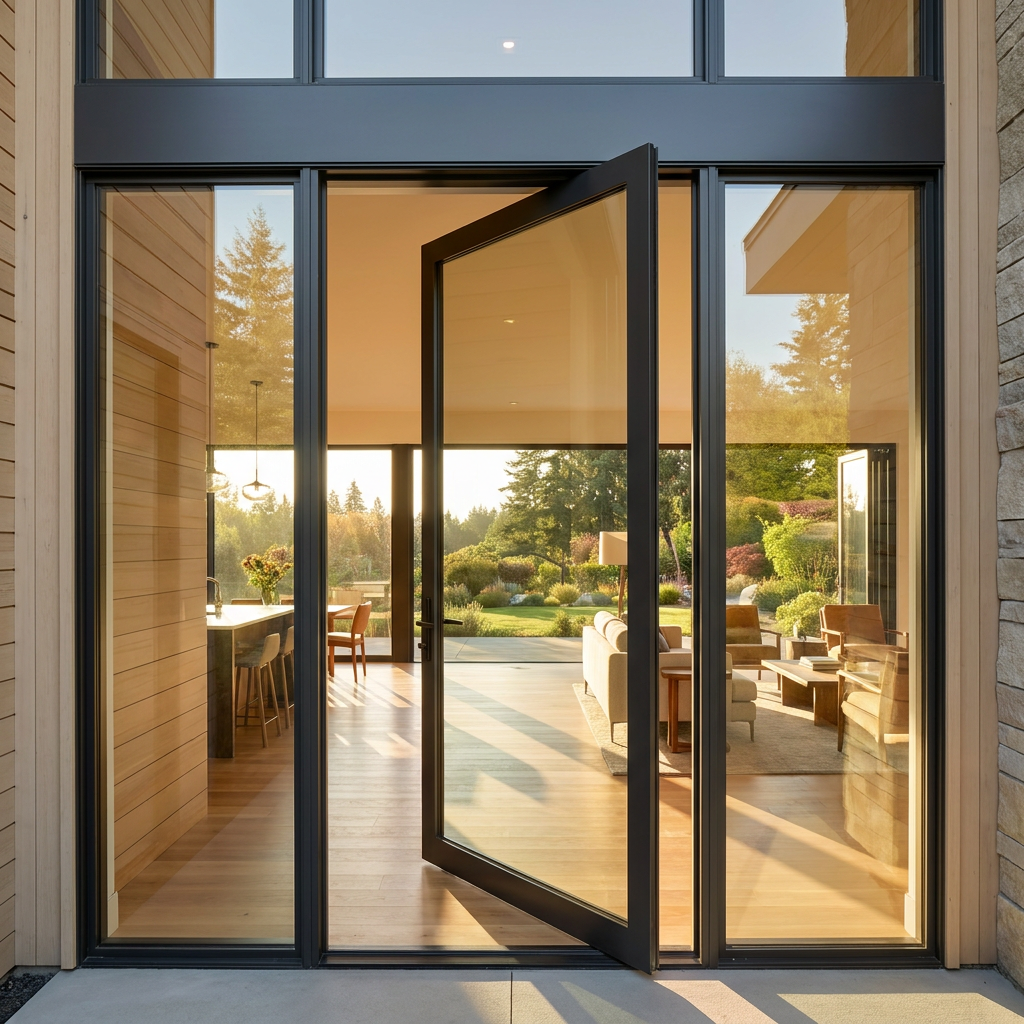
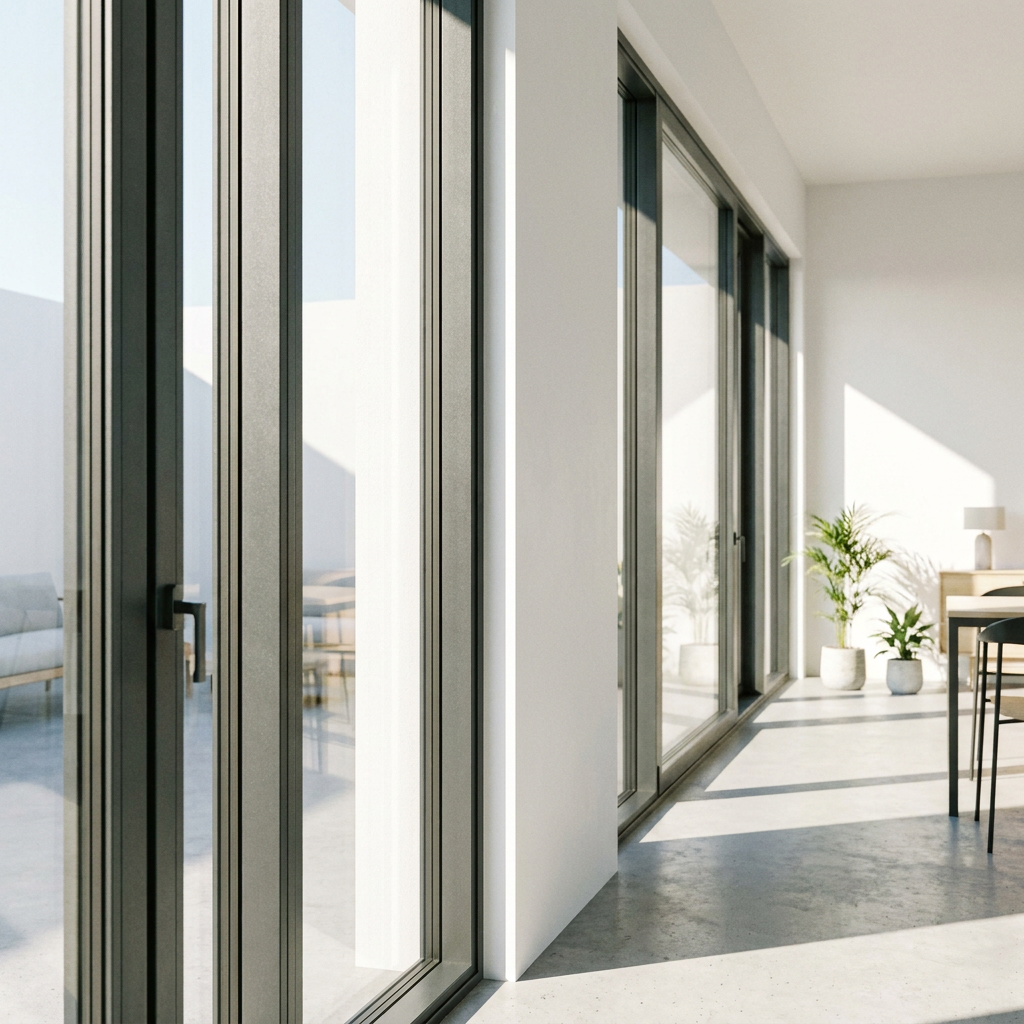

How wood aluminum window and door systems manage condensation
Condensation can reveal weaknesses in a window or door assembly before visible damage appears. Understanding how Wood Aluminum Window and Door Systems manage surface temperatures, moisture migration, and drainage is essential to assessing long-term performance. These systems combine interior wood with exterior aluminum, but condensation control depends on the complete assembly—not material choice alone. Glazing, thermal separation, airtight seals, installation details, and indoor humidity all influence whether moisture becomes a recurring problem.
Start with the moisture location, not the frame material
Condensation forms when a surface falls below the dew-point temperature of the air touching it. As an illustrative calculation, indoor air at 20°C and 50% relative humidity has a dew point of approximately 9.3°C. Any accessible frame or glass surface below that temperature can collect moisture. Raising indoor humidity raises the dew point, leaving less tolerance for cold surfaces.
The location changes the diagnosis. Room-side condensation commonly points to cold surfaces, elevated humidity, restricted airflow, or some combination of these. Persistent fogging between panes in a sealed insulating glass unit suggests a different issue: failure of its moisture-control or edge-seal system. Exterior glass condensation can occur when the outer pane cools below the outdoor dew point, including through nighttime radiative cooling; it does not by itself establish a defect.
Moisture concealed behind cladding or within the installation joint deserves particular attention. A dry interior face does not prove that the assembly is dry internally.
Wood helps, but thermal continuity decides the result
Wood conducts heat much less readily than aluminum, helping the interior frame remain warmer in cold weather. Exterior aluminum provides weather protection. However, “wood-aluminum” describes several constructions: a timber frame with aluminum cladding is not thermally equivalent to an aluminum structural frame with an interior wood finish.
Review section drawings to establish which material carries the frame and how the exterior metal connects to interior components. Clips, screws, reinforcing members, corners, and door thresholds can create localized thermal bridges. Where an aluminum structural path crosses the assembly, an appropriately designed thermal break is important. Decorative wood covering cannot compensate for a continuous metal bridge.
The weakest location is often away from the broad frame face. A meeting stile, sash corner, or low threshold may become cold enough to condense while adjacent wood remains dry. Surface-temperature assessment should therefore cover these junctions rather than relying on a single frame section.
Check the glass edge, not just the center
Low-emissivity coatings, suitable gas fills, and additional glazing cavities can reduce heat loss through the glass. Yet a favorable center-of-glass value does not describe the perimeter, where the spacer, edge seal, glazing rebate, and frame interact.
Warm-edge spacers can reduce heat transfer around the glass perimeter compared with conventional highly conductive spacers. Their effect still depends on the complete glazing-and-frame configuration. Ask for glass-edge temperatures or relevant thermal modeling, especially for large glazed doors and cold-climate applications. Triple glazing alone does not resolve a poorly insulated threshold or installation joint.
Airtightness and drainage solve different problems
In heating conditions, leaking indoor air can carry moisture into colder cavities and condense there. Gasket continuity, corner joints, hardware adjustment, and consistent seal compression help limit this transport. Sliding tracks and folding-door junctions warrant close review because their movement and multiple interfaces complicate sealing.
Drainage addresses water that reaches designated wet zones, whether from rain penetration or localized condensation. Glazing rebates and exterior cladding cavities need drainage and ventilation paths appropriate to the system design. Weep openings must remain unobstructed after installation; sealant applied across an intended outlet can defeat an otherwise sound detail.
These functions are not interchangeable. A drainage channel does not make a cold interior surface acceptable, and a tight interior seal does not eliminate the need to manage exterior water. In hot, humid climates, inward movement of moisture toward air-conditioned interiors also needs assessment rather than simply copying a cold-climate vapor-control detail.
Read performance evidence against project conditions
A whole-window U-value describes overall heat transfer, not the lowest local surface temperature. Two assemblies with similar U-values can have different condensation risks at corners and thresholds. Useful technical references include ISO 10077 for thermal transmittance calculations, ISO 10211 for detailed thermal-bridge calculations, and NFRC 500 for condensation-resistance evaluation. Their outputs are not interchangeable, and applicability should be checked against the target market.
For a meaningful comparison, request:
- The evaluated frame, glazing, spacer, opening configuration, and specimen dimensions.
- Indoor and outdoor boundary conditions, including humidity where relevant.
- Minimum interior surface temperatures at glass edges, corners, meeting stiles, and thresholds.
- Air-leakage and water-penetration evidence, with test pressure and specimen configuration identified.
- Installation details showing insulation continuity, air seals, flashing, and drainage outlets.
A condensation-resistance rating is a comparative indicator under defined conditions, not a promise of condensation-free operation at every indoor humidity. Reports for fixed windows should not automatically be treated as evidence for sliding or folding doors.
Installation and interior fit-out can change the outcome
The perimeter joint should connect the frame to the wall’s insulation, air-control, and water-management layers without leaving cold gaps. Foam filling alone is not evidence of a durable airtight connection. Sill supports, anchors, and threshold foundations also need review because they can interrupt insulation or redirect water.
Interior furnishing affects local conditions. Deep reveals, tightly closed curtains, and furniture placed against glazing can restrict warm-air circulation. Where adjoining decorative finishes include Wooden Slat Acoustic Wall Panels, keep window drainage and inspection access clear. The JSW101 range includes MDF-based options, so substrate suitability near potentially damp reveals should be verified rather than inferred from the decorative finish. Acoustic performance does not establish condensation resistance.
Construction moisture is another practical risk. Wet plaster, screeds, and coatings can temporarily increase indoor humidity. Ventilation and dehumidification during drying may therefore be necessary even when the window specification is appropriate.
Make the specification traceable to the delivered assembly
Weihai Gensheng Trading Co., Ltd. supplies wood-aluminum windows and doors alongside aluminum casement, folding, and sliding doors. Its stated use of German production equipment and window software is relevant to fabrication planning, but equipment origin does not establish condensation performance. The useful evidence remains the proposed section drawings, applicable reports, fabrication tolerances, and installation instructions.
Before approval, confirm that the assessed glazing, spacers, seals, thresholds, and connection details match what will be supplied. Then compare the coldest predicted interior surfaces with the project’s winter temperatures and expected indoor humidity. That comparison is more informative than accepting a general claim that a wood-aluminum assembly “prevents condensation.”
Leave A Reply
Need More Details?
Contact me for details on creating and managing design projects, project features, and services and prices