


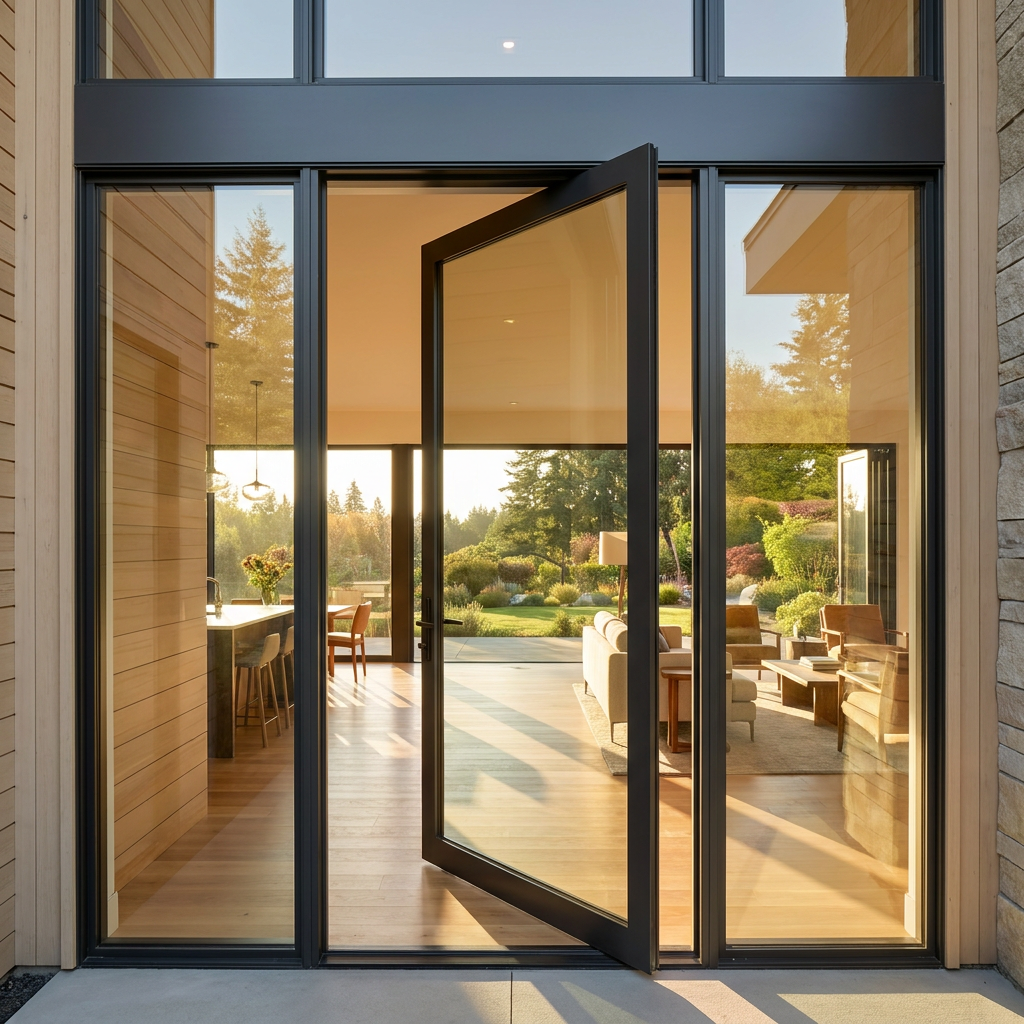
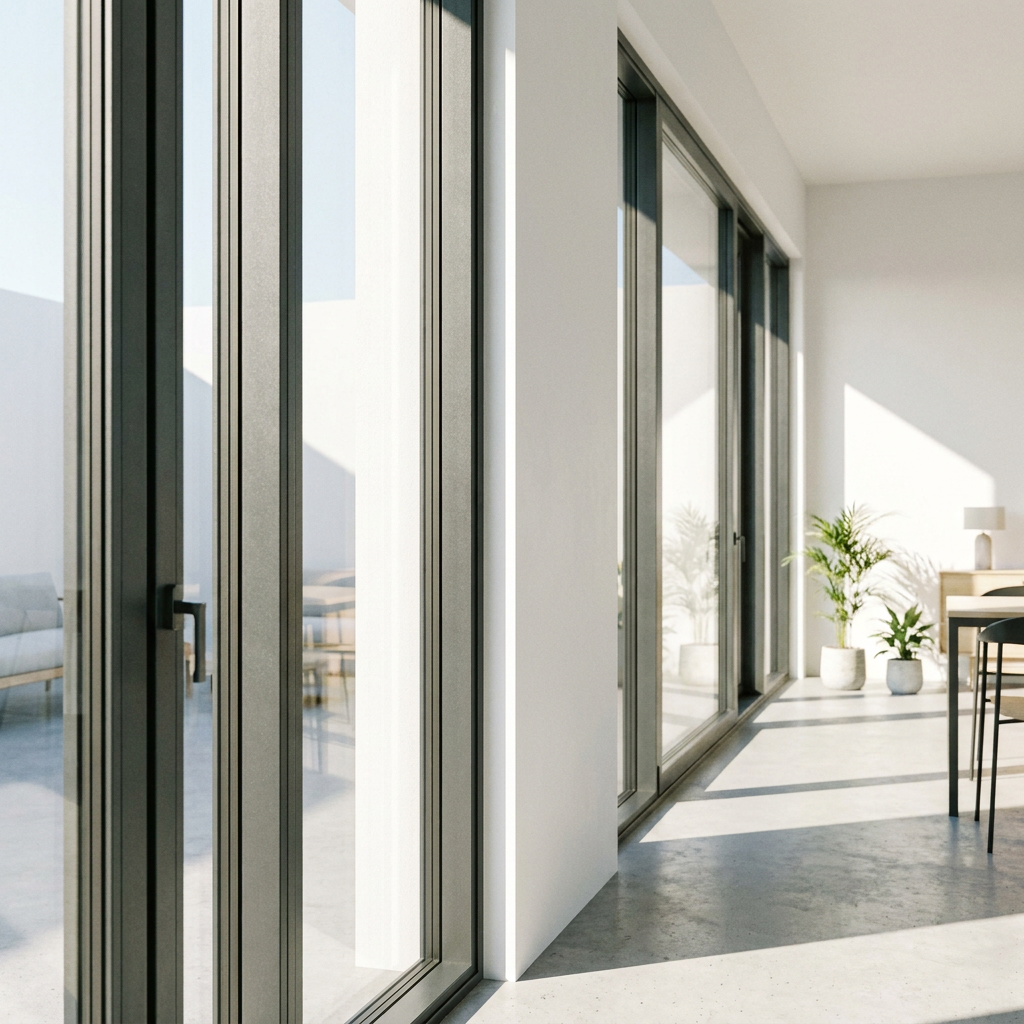
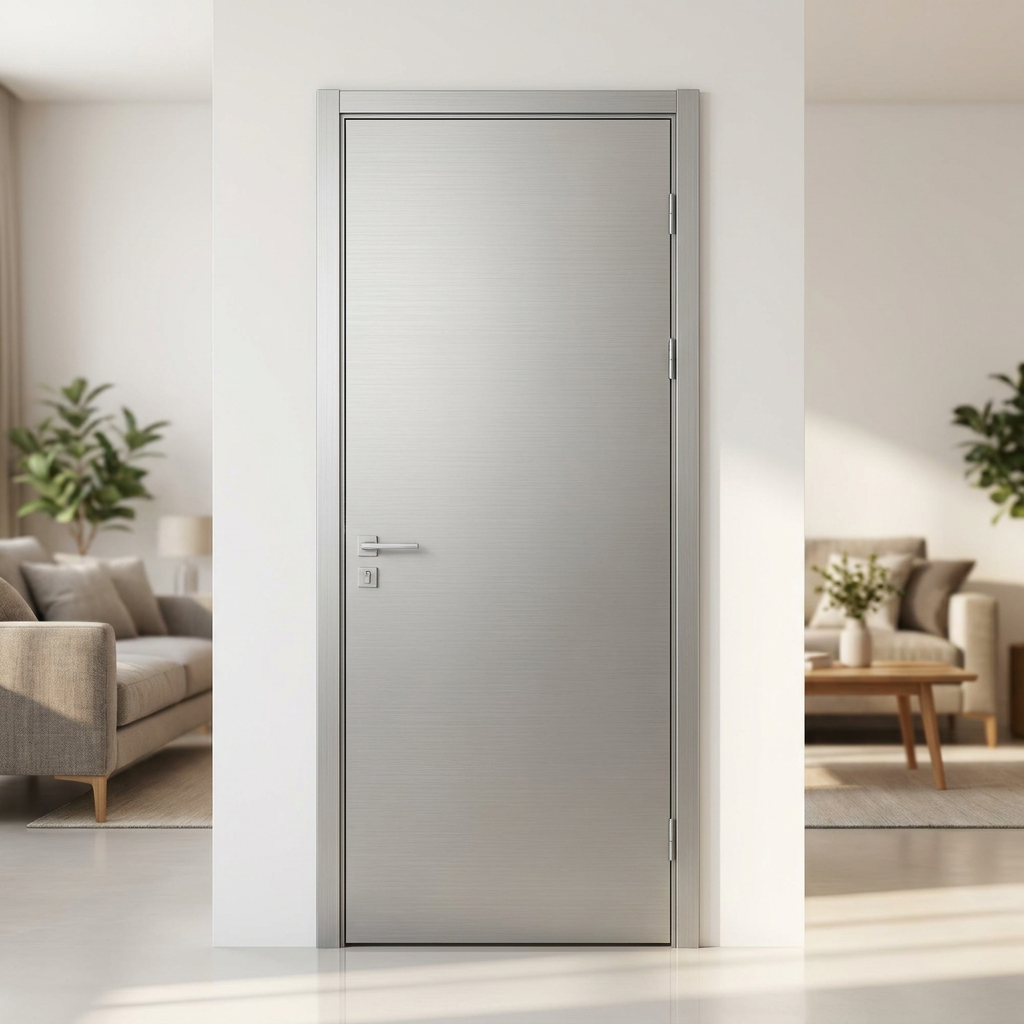

Wall thickness affects strength, screw retention, durability, and cost, but thicker aluminum does not automatically produce a better door or window system.
For technical evaluators, the decisive question is whether the complete profile and assembly can satisfy project loads, operating demands, and applicable performance requirements.
Evaluating aluminum profiles for doors and windows therefore requires checking thickness alongside section geometry, alloy temper, unsupported spans, hardware connections, glazing weight, and manufacturing tolerances.
What Wall Thickness Can—and Cannot—Tell You
Wall thickness describes the material depth at a particular location within an extrusion. One profile can contain several thicknesses across webs, flanges, and screw channels.
A single catalog figure may describe a nominal structural wall, rather than every part of the section. Request a dimensioned drawing identifying critical measurement locations.
Increasing thickness usually adds cross-sectional area and can improve local resistance to bending, denting, or fastener deformation. The benefit depends on where material is added.
However, thickness alone cannot establish wind resistance, water tightness, thermal performance, or service life. Those outcomes depend on the assembled system and installation.
Will a Thicker Profile Reduce Deflection?
Often, yes, but section geometry can matter more. Bending stiffness depends on elastic modulus and the second moment of area about the relevant axis.
For common architectural aluminum alloys, elastic modulus changes little between tempers. A stronger temper can increase strength without delivering a comparable improvement in elastic stiffness.
Moving material farther from the bending axis can improve stiffness efficiently. A deeper hollow section may therefore outperform a shallower section with thicker walls.
For a simply supported member under uniform loading, deflection scales with span to the fourth power. A modest span increase can substantially increase movement.
Under those assumptions, increasing span by 20% approximately doubles deflection if load per unit length and section stiffness remain unchanged. Actual assemblies require appropriate support assumptions.
Request section properties, design pressures, support conditions, and calculated deflections. Check both relevant bending axes, because a profile can perform differently under different loading directions.
Where Does Additional Thickness Deliver the Most Value?
Extra material is particularly valuable around hinges, corner joints, locking points, roller attachments, and screw channels. These locations transfer concentrated loads into the frame.
In casement windows, assess hinge fixing zones against sash weight and operating forces. Large glazing units can increase connection demands even when wind pressure remains unchanged.
Sliding systems need adequate support beneath rollers and along tracks. Local deformation can cause difficult operation before the overall frame reaches its structural limit.
Folding doors combine panel weight, repeated movement, and multiple articulated connections. Evaluate hinge zones, carrier attachments, corner construction, and the load path into building supports.
Handrails require separate assessment of posts, anchors, connections, and barrier loads. A thickness accepted for a window profile does not establish suitability for guarding.
Is There a Minimum Thickness You Can Specify?
There is no universal wall thickness suitable for every opening, system, or market. Required dimensions depend on product standards, local regulations, and engineering calculations.
Figures such as 1.4, 1.8, or 2.0 millimeters are meaningful only when tied to a defined profile location, application, tolerance, and governing requirement.
Specify the required nominal thickness and permitted variation for critical walls. Where necessary, establish a minimum acceptable measured thickness consistent with the applicable specification.
Do not accept a general statement that a profile meets an international standard. Ask for the standard designation, edition, scope, and supporting documentation.
For example, EN 14351-1 addresses window and external pedestrian door product characteristics within its scope. It does not prescribe one universal extrusion wall thickness.
How Should Thickness Be Checked During Supplier Evaluation?
Begin with the approved extrusion drawing. Identify load-bearing walls, hardware fixing zones, and thermal-break interfaces, then agree on inspection locations before reviewing production samples.
Measure accessible walls with calibrated equipment suited to the geometry. Cut-section inspection may be necessary where internal webs cannot be measured reliably from outside.
Distinguish aluminum substrate thickness from coating thickness. Powder coating contributes to the measured overall dimension but should not be counted as structural metal.
Inspect several locations and representative samples rather than relying on one reading. Sampling should follow the agreed quality plan and applicable dimensional tolerance standard.
Also verify alloy and temper certificates, extrusion tolerances, and traceability. Specified thickness cannot compensate for incorrect material, damaged sections, or poorly controlled fabrication processes.
What Performance Evidence Should Accompany the Profile Drawing?
Ask for structural calculations and relevant assembly test reports. Together, they show whether the selected profiles, joints, reinforcement, glazing, and fixings support the intended application.
Check whether tested dimensions, opening configurations, glass weights, and hardware match the proposed supply. A report for a smaller specimen may not support larger openings.
Wind resistance, air leakage, and water penetration require distinct evaluation. Stronger frames can help control movement, while seals, drainage, and fabrication accuracy remain essential.
Where reinforcement is proposed, request its material, dimensions, attachment method, and corrosion protection. Confirm that calculations account for the actual connection between reinforced components.
Anchors and substrate conditions also matter. A sufficiently stiff frame can still perform poorly if perimeter fixings permit excessive movement or transfer loads inadequately.
Does Thicker Aluminum Improve Insulation or Operating Life?
Thicker aluminum does not automatically improve insulation. Aluminum conducts heat readily, so thermal breaks, glazing, spacers, seals, and overall frame design usually deserve greater attention.
Compare whole-product thermal transmittance using consistent dimensions and calculation or test methods. Avoid drawing conclusions from profile thickness or a thermal-break label alone.
Additional thickness may improve resistance to local damage and repeated connection loads. Durability still depends on drainage, surface treatment, environmental exposure, hardware quality, and maintenance.
For coastal applications, specify suitable finishes and compatible fasteners. More aluminum does not independently prevent coating failure, galvanic corrosion, or deterioration around poorly drained joints.
Applying the Same Evaluation to Automatic Aluminum Doors
For a related application, consider the Modern Industrial Overhead Insulating Garage Door with Motor Automatic Aluminum Glass Garage Door for Homes during technical review.
The HS-G026 listing identifies aluminum-alloy construction, customization, remote-controlled operation, and a one-year warranty. These details establish features to investigate, rather than verified structural performance.
Because the listing describes both overhead and rolling terminology, confirm the actual opening mechanism. Its panel joints, guides, lifting arrangement, and required clearances affect evaluation.
Request profile drawings, panel weights, motor duty ratings, and applicable safety evidence. Obtain documented insulation and security performance before relying on those product descriptions.
In motorized assemblies, added profile mass can affect lifting requirements and balancing. Any thickness change should be reviewed with the complete drive and support arrangement.
Choose the Section That Meets the Requirement Efficiently
Compare quotations against the same opening sizes, loads, glazing, finishes, hardware, and acceptance criteria. Otherwise, a thickness comparison can conceal significant differences in system capability.
Weihai Gensheng Trading Co., Ltd. supplies aluminum casement, folding, and sliding doors, among other products. Technical comparisons should begin with drawings and project-specific requirements.
The preferred profile provides adequate strength, controlled deflection, reliable connections, and verified assembly performance at an appropriate cost. Additional thickness should address an identified engineering need.
Specify aluminum profiles for doors and windows through measurable requirements and supporting evidence. Use wall thickness as one important design input within that decision.