


NEWS
Categories List
Recent Posts



A sliding glass door should open without a struggle. When it starts catching halfway or needs a hard pull to move, the problem is often hiding at floor level: grit in the track, a damaged roller, or a panel that no longer sits squarely in its frame. Forcing it can strain the handle and make an existing problem worse.
The good news is that many sticking Sliding Glass Doors respond to a careful clean and a few simple checks. Start with the least invasive steps, then decide whether the door needs adjustment, replacement parts, or an experienced technician.
Find out where the door is catching
Before reaching for a screwdriver, move the door slowly through its full travel. Pay attention to whether the resistance is constant or occurs in one particular spot. A door that is difficult to move everywhere may have dirty or worn rollers; one that catches only at a certain point may be passing over debris or a damaged section of track.
Look at the gap between the moving panel and the frame as the door approaches the closed position. An uneven gap can suggest that the panel is tilted, although a frame that is out of square can produce a similar appearance. If the door moves fairly well but refuses to latch, the latch or strike plate may be misaligned rather than the rollers being the main problem.
Use this quick guide to narrow the possibilities:
- Grinding or a rough rolling sound: Check for grit, corrosion, or damaged rollers.
- A sudden bump in one location: Inspect the track for a pebble, dent, loose fastener, or buildup.
- The panel rubs along the frame: Look for an uneven panel gap, loose hardware, or worn weatherstripping.
- The door moves but will not lock: Check how the latch meets the strike plate before adjusting the rollers.
- The handle flexes or feels loose: Tighten accessible fasteners if appropriate, but investigate the resistance rather than relying on the handle to pull harder.
If the glass is cracked, the frame is badly distorted, or the panel looks unstable, stop using the door and arrange an inspection. Sliding panels are heavy, and a loose or damaged panel should not be treated as a routine cleaning job.
Clean the track before making adjustments
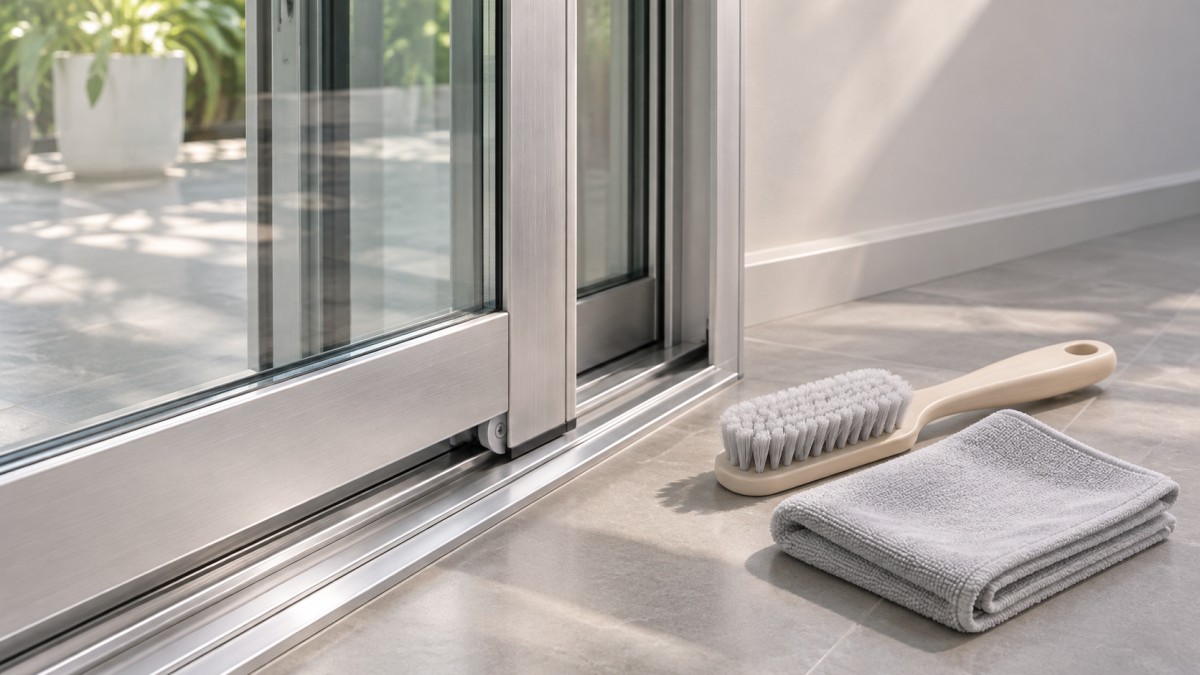
Outdoor dust, pet hair, sand, and leaves can collect in the narrow channels around the rollers. Even a small amount of compacted dirt can make a door feel much heavier than it is. Cleaning is inexpensive, reversible, and often enough to reveal the real cause.
What you will need
- A vacuum cleaner with a narrow attachment
- A soft brush or an old toothbrush
- Warm water, mild dish soap, and a cloth
- A plastic scraper for stubborn buildup
- A dry cloth and, if appropriate, a manufacturer-approved lubricant
Open the panel as far as it safely travels and vacuum the exposed track. Work the brush into the corners, around the raised rail, and near the ends where dirt tends to accumulate. Close the door partway to reach the area that was covered, then vacuum again.
Wipe the track with a cloth lightly dampened with soapy water. For packed-on residue, use a plastic scraper gently rather than a metal tool that could gouge the surface. Avoid flooding the channel: water can reach components that are difficult to dry, and some tracks have drainage paths that should remain clear. Finish by drying the accessible surfaces thoroughly.
While the track is clean, inspect it in good light. A raised screw head or a bent rail can interfere with the rollers even when the channel looks spotless. Tighten an accessible loose screw only if it belongs to the track and can be secured without forcing it. A cracked, severely bent, or loose track may need repair or replacement rather than a heavier application of lubricant.
Lubricate carefully—not everywhere
After cleaning, test the door again. If it still feels dry or slightly resistant, check the door manufacturer’s guidance before applying lubricant. Some systems specify a particular product or advise keeping the track free of lubricant. A product intended for sliding door hardware, often silicone-based, may be suitable when the manufacturer allows it.
Apply a small amount only to the surfaces or components specified in the instructions, then move the panel back and forth and wipe away any excess. More is not better: a wet coating can collect dust and turn into a sticky film. Avoid applying lubricant to the glass, weather seals, or locking surfaces unless the product and door instructions explicitly permit it.
Do not use grease simply because it makes the door feel smoother for a day. Thick products can trap grit, especially on doors that open onto a garden, balcony, or sandy outdoor area. If the door remains noisy or difficult to move after a clean and suitable lubrication, the rollers or alignment deserve attention.
Check the rollers and panel alignment
Rollers support the weight of many sliding glass door panels. When they wear, seize, or collect debris, the panel may drag instead of rolling. Signs include a scraping sound, uneven movement, or a door that sits noticeably lower at one end.
Some doors have roller adjustment screws near the lower corners of the sliding panel, sometimes behind small covers. The exact location and the direction of adjustment vary by design. Consult the manufacturer’s instructions before turning anything; a visible screw may secure the frame or roller assembly rather than adjust the panel.
If the correct adjustment points are identified and the manufacturer permits user adjustment, use the recommended screwdriver and make small, measured turns. Note the starting position so you can reverse the change. Adjust one side at a time, test the movement, and watch the gap between the panel and frame. The aim is a panel that rolls without rubbing and closes evenly—not a door raised as high as it will go.
Stop if the screw resists, the panel becomes unstable, or the adjustment does not improve the movement. Excessive adjustment can interfere with the latch or how the panel sits in its guide. Never remove retaining screws or lift a heavy glass panel out on your own as a way to inspect the rollers. Roller replacement often requires removing and supporting the panel safely, making it a job best left to someone equipped for the task.
Look beyond the bottom track
The lower rail gets most of the attention, but it is not the only place a door can bind. Check the upper guide for visible dirt or loose components, using a stable step stool if needed. Wipe accessible areas without dismantling the guide. If the top of the panel appears to be coming out of its guide, stop using the door and seek professional help.
Weatherstripping can also make a door feel tight. Brush seals and flexible strips should sit in their intended channels, not hang loose or fold into the path of the moving panel. Clean them gently and check for tears or sections that have slipped out. Do not pull them away to make the door easier to move; the seal helps limit drafts and water intrusion. Replace damaged material with a compatible part.
On an aluminum sliding door, inspect the frame and accessible fasteners for looseness or visible distortion. On a wood-aluminum system, also look for damage or moisture-related changes around the wood components. Seasonal movement can affect clearances, but persistent rubbing, leaks, or a visibly distorted frame need a closer assessment rather than repeated roller adjustments.
When the latch is the real problem
A door that glides normally until the final few centimeters may be catching at the lock. Close it slowly and observe whether the latch aligns with the opening in the strike plate. Loose screws, a shifted strike plate, or a tilted panel can prevent the parts from meeting cleanly.
If the strike plate is loose, gently tighten its accessible screws and retest. Some plates offer limited adjustment, but follow the hardware instructions and avoid enlarging holes or bending parts as a quick fix. First confirm that the panel is rolling and sitting correctly; moving the strike plate to compensate for a poorly supported panel can hide the underlying issue.
Make sure the door closes and locks securely after any adjustment. If the lock will not engage reliably, arrange a repair rather than assuming the problem is only cosmetic.
When to repair, replace, or call a technician
Cleaning and minor, documented adjustments are reasonable starting points for an otherwise sound door. Professional attention is the safer choice when:
- The panel must be lifted out to reach or replace the rollers.
- The glass is cracked, the frame is bent, or the door could come out of its guide.
- The track is badly damaged, corroded, or detached.
- The door still drags after cleaning and permitted adjustments.
- The lock no longer engages securely or the door has developed water leakage.
A technician can assess whether the problem is confined to replaceable hardware or whether the track, frame, or installation also needs attention. For older doors, identifying the roller profile and hardware system matters: a visually similar part is not necessarily a suitable fit.
If repeated hardware repairs are no longer practical, assess a replacement door as a complete system. The frame material, roller access, track design, seals, and installation all affect everyday operation and maintenance. Weihai Gensheng Trading Co., Ltd. supplies aluminum sliding doors and wood-aluminum window and door products; when considering a new system, ask about compatible hardware, maintenance requirements, and the specifications suited to the opening.
Keep sliding glass doors moving smoothly
A short cleaning routine can prevent many sticking problems from building up unnoticed. Vacuum the track when dirt becomes visible, clear leaves and debris from drainage areas without blocking them, and wipe away residue before it hardens. Homes exposed to windblown sand, pets, or frequent outdoor traffic may need attention more often.
Every so often, listen as the panel moves and check that the handle, lock, and visible fasteners feel secure. A new scrape or an uneven closing gap is easier to investigate early than after months of pulling harder. If simple cleaning does not restore smooth travel, treat that as useful information: the door may be asking for a roller, track, or alignment repair rather than another dose of lubricant.
Leave A Reply
Need More Details?
Contact me for details on creating and managing design projects, project features, and services and prices