


NEWS
Categories List
Recent Posts
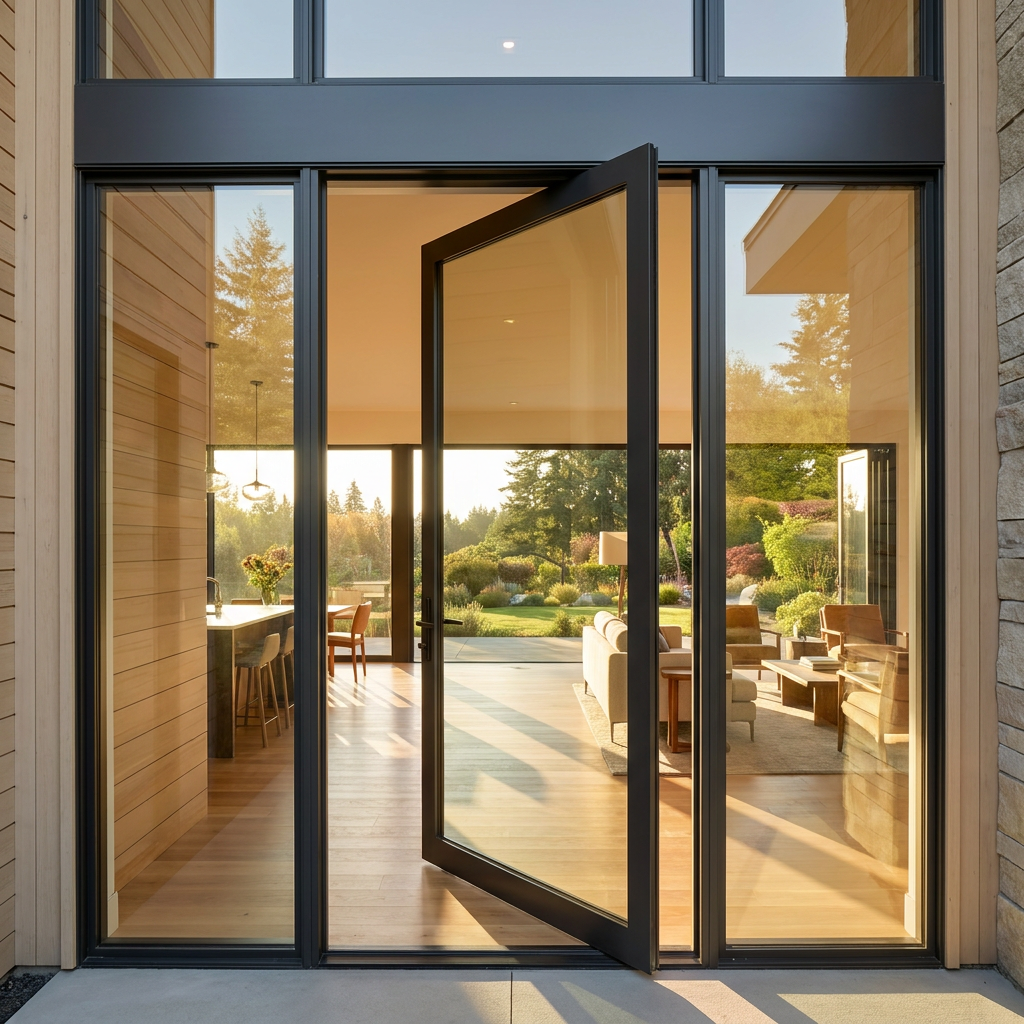
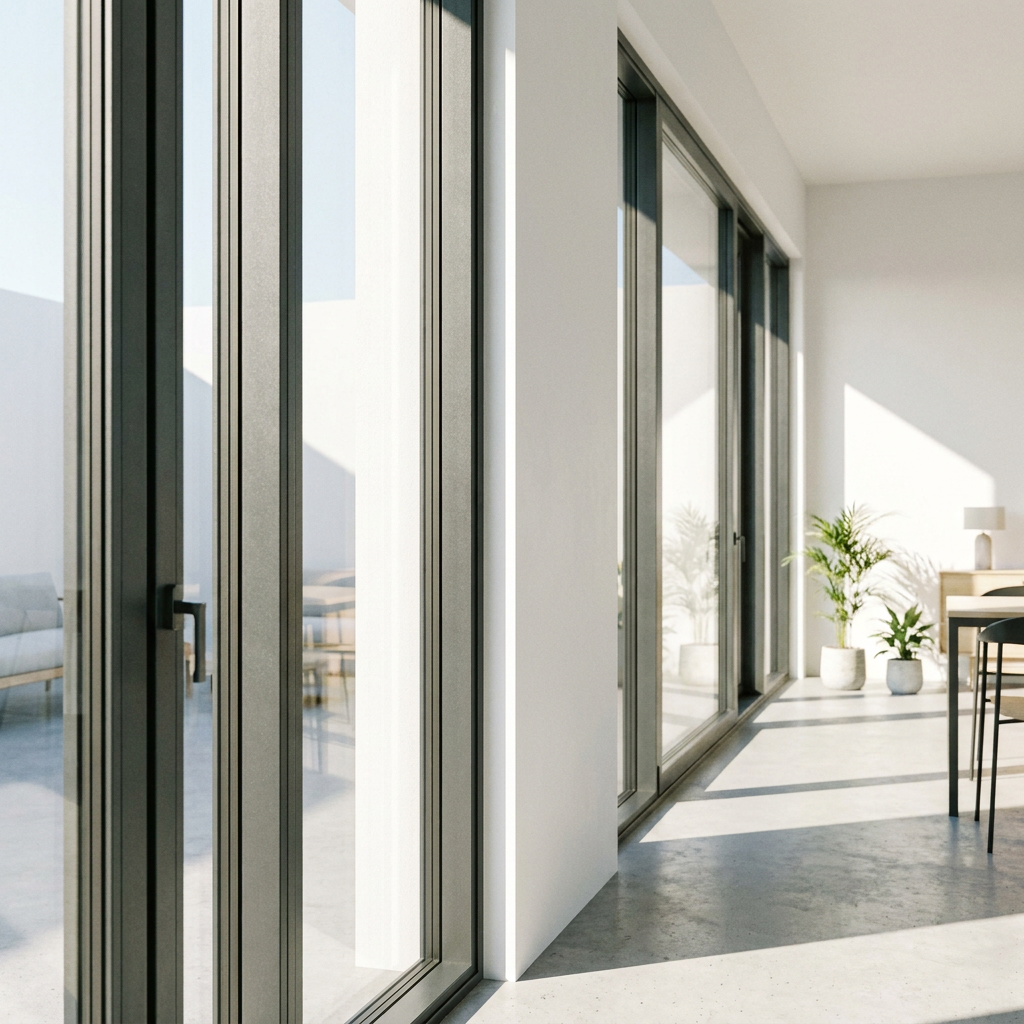
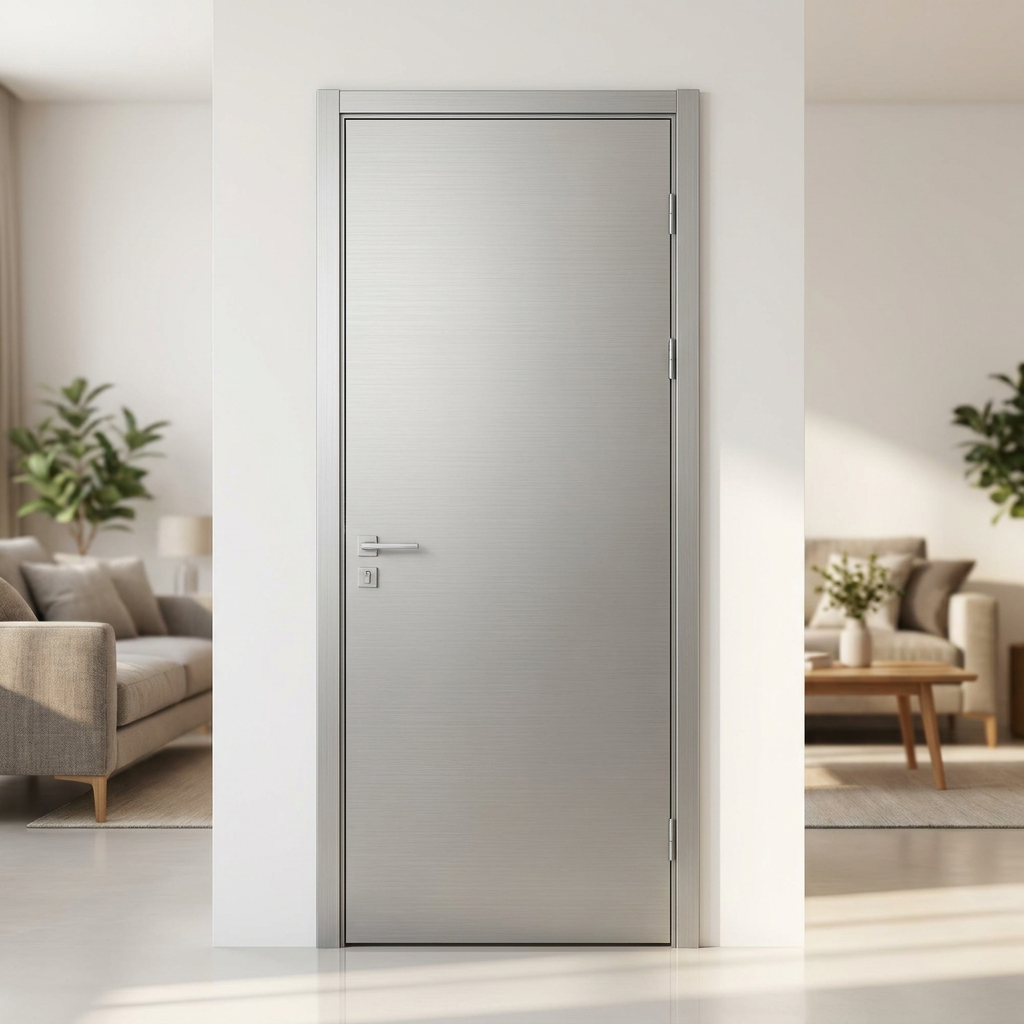

Choose an affordable PVC washroom door by comparing the complete fitted cost, not just the price of the panel. A practical choice has a moisture-suitable frame and edges, enough rigidity for daily use, a reliable privacy latch, and dimensions that fit the existing opening without expensive alterations.
In a small washroom, the wrong door can hit a fixture, leave an uncomfortable privacy gap, or require frame work that erases the initial saving. Start with the opening and the way the room is used, then compare construction and hardware. A plain finish is often a sensible place to save; a poorly fitting frame is not.
Start with the space the door has to fit
Before comparing designs, establish whether you need only a replacement door leaf or a complete door-and-frame set. Reusing an existing frame may reduce work, but only if it is sound, reasonably square, and compatible with the new leaf, hinges, latch and required clearances. A PVC leaf is not automatically a direct replacement for a wooden one.
Measure the opening at more than one point because walls and frames are not always perfectly straight. Record the width at the top, middle and bottom, and the height on both sides. Note whether each measurement refers to the clear space inside an existing frame or to the rough wall opening after the frame is removed. These are different dimensions, and confusing them can lead to an unsuitable order.
Also check wall thickness, finished floor level and the space needed for any trim. If tiles or flooring are still to be installed, allow for their finished position rather than measuring only the unfinished surface. Ask the seller which dimensions they require and what fitting clearances are appropriate for the specific frame system.
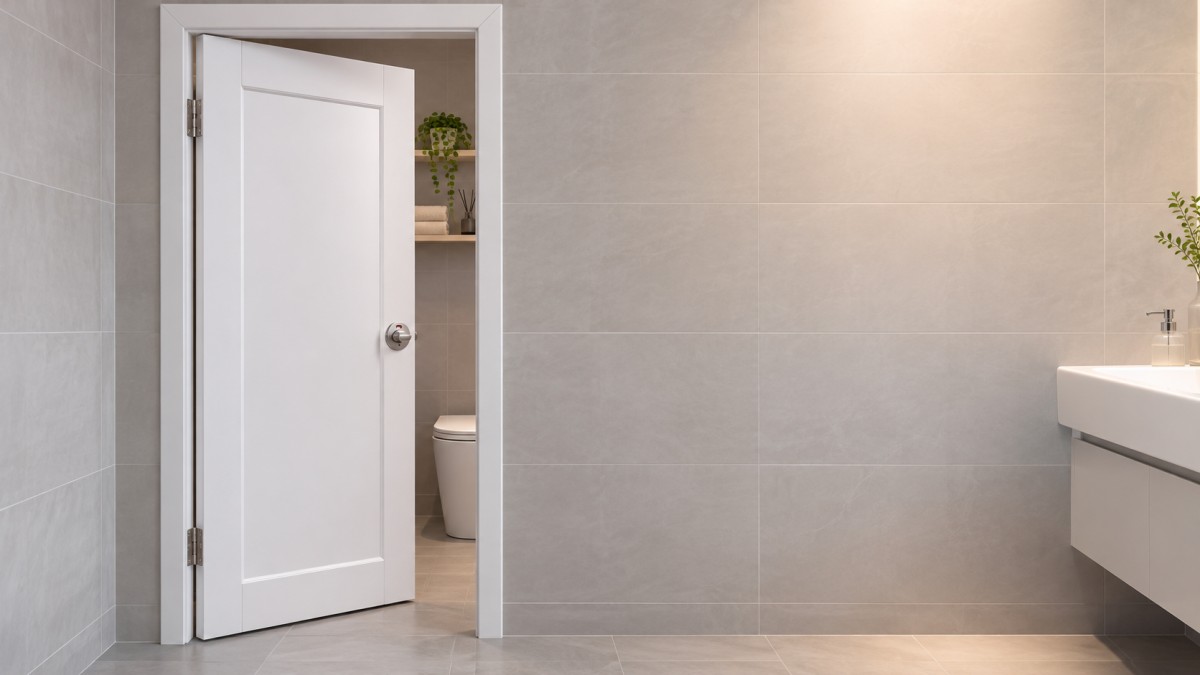
Next, stand at the doorway and consider the swing. An inward-opening door should clear the toilet, basin, shower screen and any nearby cabinets. An outward-opening door needs clear space in the hall and should not obstruct another doorway. Record the hinge side and opening direction in a way the supplier understands; handing terminology can vary, so a simple sketch is useful.
Check what is actually made of PVC
A product described as a PVC washroom door may combine different materials. The visible face, internal core, edges and frame do not necessarily have identical resistance to moisture. Ask for a description of each part rather than assuming the whole assembly is waterproof.
A PVC-faced panel can be easy to wipe clean, but exposed core material or unprotected cut edges may still be vulnerable to repeated wetting. Look closely at the top, bottom and lock area, where construction details may be less visible in a photograph. Ask whether edges are factory finished and how any unavoidable site cuts should be protected. Do not assume that every PVC panel can be trimmed to fit: cutting may expose the core or interfere with its structure.
The frame matters just as much. A moisture-suitable door leaf fitted into a deteriorating frame may not solve the original problem. If an existing frame has soft areas, loose joints or persistent signs of moisture damage, include repair or replacement in the comparison. Where splash water regularly reaches the doorway, ask how the frame-to-wall joint and lower edges should be finished for that exposure.
PVC is useful in humid rooms, but it does not replace ventilation or prevent water damage elsewhere. A door that stays wet because of direct shower spray faces different conditions from one exposed mainly to humid air. Tell the seller about direct splashes when asking whether a particular panel and frame are suitable.
Balance panel rigidity against cost
Low-cost PVC doors may use different panel profiles and internal structures. Some feel light, while others include reinforcement or a more substantial core. Weight alone does not prove quality, but a panel that flexes excessively or feels unstable around its handle may be less satisfying in frequent use.
When viewing a sample, open and close it gently. Check whether the panel moves evenly, whether the latch meets its keeper without lifting or pushing the door, and whether the handle area feels secure. A display door is not proof of how a delivered unit will perform, but it can reveal construction details that a product photo cannot show.
Ask the supplier for the overall panel thickness, construction and recommended door size. Compare these details across quotes rather than choosing solely by appearance. A larger leaf can place greater demands on hinges and the area where hardware is fixed; confirm that the proposed hardware is compatible with the particular panel.
For a frequently used family washroom, it can be reasonable to spend more on a stable panel and dependable hardware while selecting a simple surface. For a lightly used room, a less elaborate construction may be adequate if it fits correctly and meets the same basic privacy and moisture requirements.
Choose an opening style that does not create a new problem
Hinged doors
A hinged door is often the straightforward option when there is enough swing clearance and an existing frame can be used. It gives a familiar closing action and can be fitted with a privacy latch. Compare the cost of the hinges, handle and frame as part of the set; a cheap leaf sold without them may not be the cheapest completed installation.
Folding doors
A folding design can be useful where a full swing would collide with fixtures. Check how much clear passage remains when the panels are folded, and ask whether the track and fittings are included. More joints and moving parts can mean more areas to clean or adjust, so inspect the hardware rather than judging only the folded appearance.
Sliding doors
A sliding door avoids a conventional swing, but it needs usable wall space or a suitable recess, depending on the design. Tracks and rollers should be accessible for cleaning and adjustment. Sliding arrangements can also leave perimeter gaps, so check the closing detail and lock if privacy is important. A sliding door is not automatically quieter or more private than a well-fitted hinged door.
Do not overlook privacy and ventilation
A washroom door needs more than an attractive face. Check whether the panel is opaque when viewed against a bright light, particularly if it contains decorative inserts. Frosted or translucent sections can admit light but may still reveal silhouettes; choose an opaque panel where that would be uncomfortable.
Test the privacy latch if possible. It should engage without forcing the door and release smoothly from inside. Ask whether there is an emergency release from outside and how it operates. Confirm that replacement handles or latches compatible with the panel are available, especially if the door uses an unusual fitting.
Gaps affect both privacy and airflow. A large gap or a poorly aligned edge can make the room feel exposed, while a tightly sealed door may restrict the movement of air needed by the room’s ventilation arrangement. Do not block an existing air path simply to hide every gap. Check the intended bottom clearance and any ventilation provision before ordering, and confirm applicable local requirements where relevant.
Sound insulation is another separate question. A PVC door should not be assumed to block conversation or running-water noise to the same degree as a heavier, well-sealed assembly. If noise is a priority, ask about the complete door and frame, including gaps, rather than relying on the panel material alone.
Compare the full price on the same terms
When searching for “Affordable PVC Washroom Doors with Simple Interior Door” designs, separate the advertised panel price from the amount needed to complete the job. Request an itemized quote so that two options can be compared on the same scope. The lower starting price may exclude essential pieces.
- Door and frame: Confirm the specified dimensions, construction, finish and whether trim or architraves are included.
- Hardware: Check for hinges or rollers, handle, privacy latch, strike plate, track and any fixings required by the design.
- Installation work: Establish whether removal and disposal of the old door, frame adjustment, fitting and basic sealing are included.
- Making good: Ask who is responsible for damage or gaps around tile, plaster or paint when the old frame comes out.
- Delivery and changes: Confirm delivery charges, lead time, and the conditions for correcting an incorrect size or damaged item.
Uncertainty about the opening can make a firm installation price difficult. Share measurements and clear photographs, but avoid assuming that a remote estimate includes hidden frame or wall problems. If the frame may need replacing, ask how the installer will handle additional work before it begins.
Simple colors and panel designs can make it easier to compare like-for-like options. Decorative glazing, special finishes or unusual dimensions may change the quote, so price them separately if they are preferences rather than requirements. Keep the privacy latch and suitable hardware in the base comparison instead of treating them as optional extras.
Before placing the order
Confirm the final measurements, opening direction, color, frame type and included hardware in writing. Identify any site trimming or sealing that the seller permits, and ask for the product’s cleaning and care instructions. Avoid choosing a door that requires alteration the manufacturer or supplier cannot confirm is suitable.
On delivery, inspect the panel edges, frame pieces and hardware before installation. Check that the leaf matches the ordered dimensions and that the surface is free from visible damage. Once installed, the door should move without scraping, the latch should close without force, and the intended clearances should be present. These checks make it easier to distinguish a product issue from a fitting adjustment while the work is still fresh.
Leave A Reply
Need More Details?
Contact me for details on creating and managing design projects, project features, and services and prices