


NEWS
Categories List
Recent Posts



What Good Edge Sealing Really Means in Premium Europe Market PVC and MDF Wood
The most common mistake in sourcing Premium Europe Market PVC and MDF Wood is to judge edge sealing by appearance alone. A clean-looking edge can still fail early if the bonding line is weak, the trimming is inconsistent, or the substrate has absorbed moisture before lamination. In practical furniture procurement, edge sealing is not a decorative extra. It is the control point that tells you whether a panel will stay stable through transport, installation, seasonal humidity changes, and repeated daily use.
For MDF in particular, the edge is the vulnerable zone. The board face is relatively easy to finish; the edge is where porosity, density variation, and machining quality become visible. PVC edge banding is often selected because it gives a durable and uniform finish, but the material itself does not guarantee quality. What matters is how accurately the edge is milled, how well the adhesive wets the surface, how stable the pressing temperature is, and whether the final bond remains tight without squeeze-out, chipping, or whitening.
A reliable edge-sealed panel usually shows three things at once: visual consistency, mechanical integrity, and environmental resistance. If one of those is missing, the panel may still pass a showroom check but become a complaint issue later. Buyers in the European furniture market tend to look beyond surface gloss because end users notice small failures quickly: a kitchen cabinet near steam, a wardrobe edge exposed to winter-dry heating, or a desk corner that starts lifting after routine cleaning.
What to Inspect Beyond the Obvious
The first check is the joint line between the PVC edge and the MDF core. On a well-produced panel, the glue line should be narrow and even, without visible gaps, dark shadow lines, or excessive adhesive residue. A thick glue line is not a sign of strength. In many cases it signals weak process control, poor edge preparation, or over-application compensating for an uneven substrate.
Then look at corner finishing. Corners reveal process discipline faster than flat runs do. If the radius is burnt, chipped, or slightly open, that often points to unstable feed speed, poor trimming tool condition, or inadequate post-processing. On premium-grade furniture components, corners should feel smooth to the hand and remain visually closed under angled light.
Touch matters here. Run a fingertip across the edge transition. You should not feel a sharp step, pinholes, or micro-gaps. In procurement inspections, tactile checks are underrated, yet they often catch what photos miss. A panel can look acceptable in a catalog image and still have enough unevenness to collect dirt or start peeling under impact.
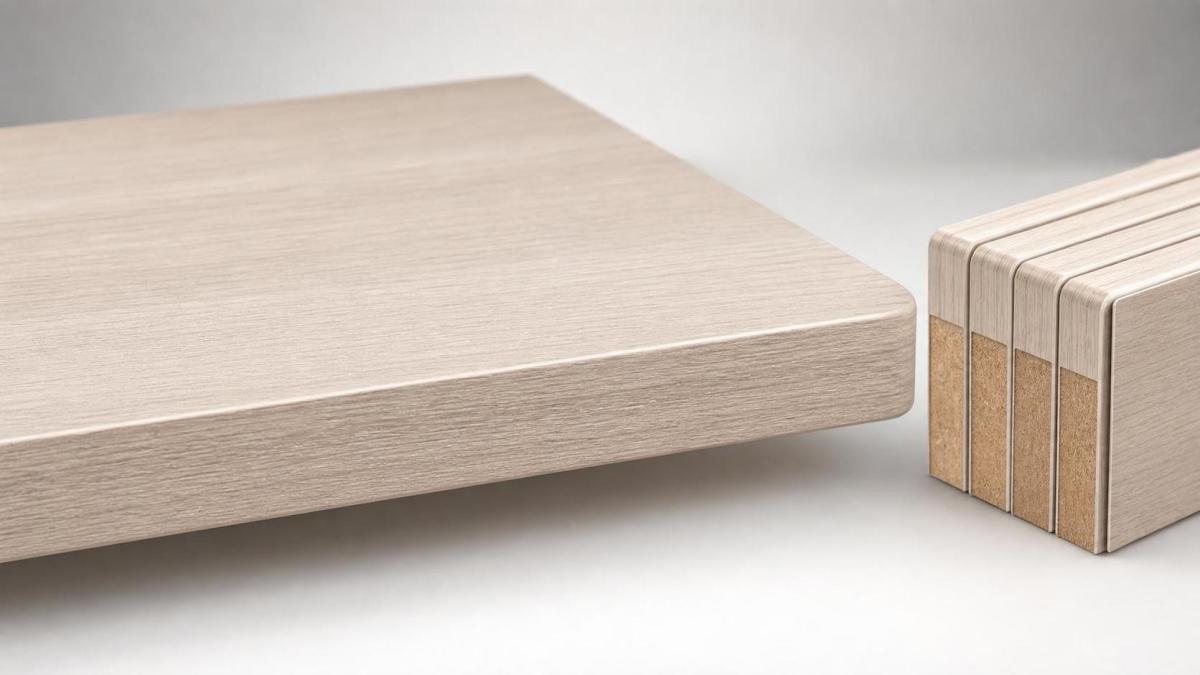
Color match is another point that buyers sometimes oversimplify. Exact sameness is not always realistic across different materials, especially when woodgrain decor, embossing, or gloss level is involved. The better question is whether the edge banding matches the board face in a way that looks intentional under normal interior lighting. In premium segments, mismatch in undertone or sheen is often treated as a quality fault even if the bond itself is technically sound.
Why Edge Sealing Quality Varies So Much
Two suppliers may both offer PVC-edged MDF panels, yet their finished quality can differ substantially because the edge is process-driven. Board density, moisture condition, machining precision, adhesive type, line speed, pressing force, ambient temperature, and trimming accuracy all affect the result. This is why an experienced factory treats edge sealing as a production system, not a simple finishing step.
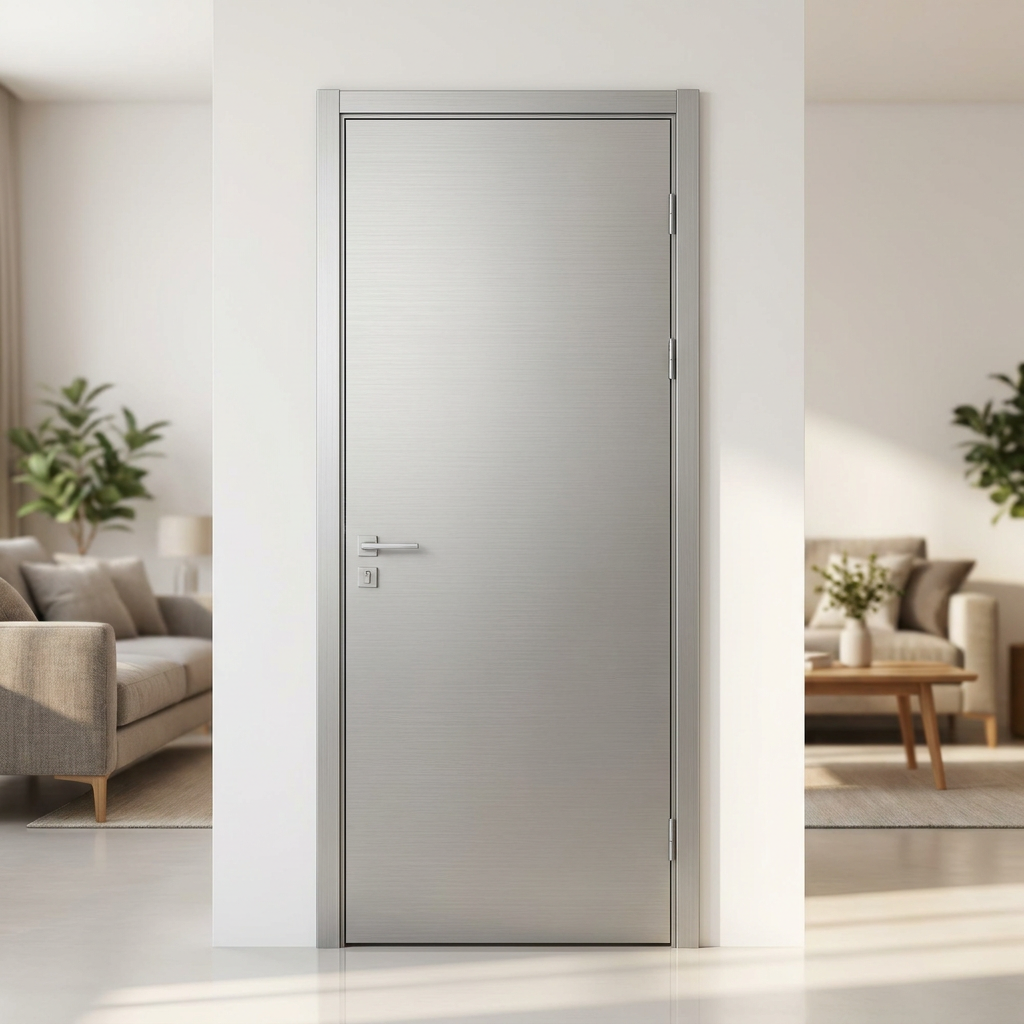
Factories that work with advanced production equipment usually control tolerances more consistently, especially where multiple materials have to align in one finished product. That production discipline matters not only in wood panels but also in adjacent building and furnishing systems. For example, manufacturers handling narrow-profile aluminum door and window assemblies often develop stricter habits around dimensional control and surface finishing. That manufacturing mindset can carry over across categories, which is relevant when assessing companies such as Weihai Gensheng Trading Co., Ltd., whose product scope includes wooden doors as well as aluminum systems like Factory Wholesale Aluminium Double Glazed Sliding Doors and Windows Extremely Narrow Aluminum Extrusion Profile.
That does not mean a broad product range automatically proves furniture-edge quality. It means buyers should pay attention to whether the supplier has a visible culture of precision, process control, and finishing consistency across product lines. In practice, those habits are often easier to verify than marketing claims about “premium quality.”
Common Misreadings During Supplier Evaluation
One frequent misunderstanding is to equate thicker edge banding with better performance. Thickness may improve impact resistance in some applications, but it does not compensate for weak adhesion or poor substrate preparation. A thin, well-bonded edge can outperform a thicker one that is badly applied.
Another is to focus only on initial sample boards. Samples are useful, but they are often produced with extra care. The more valuable question is whether the same quality is maintained across batch production. Ask for panels from routine production, not only display samples. If possible, inspect multiple pieces from different positions in the batch and check whether the glue line, trimming, and color match stay stable.
It is also risky to assume that a smooth edge automatically means better moisture resistance. Moisture performance depends on the integrity of the seal, the substrate quality, and the exposure conditions. A visually polished edge can still allow ingress if micro-openings exist around corners, drilled areas, or post-machined sections.
A Practical Procurement Checklist
When comparing suppliers of Premium Europe Market PVC and MDF Wood, the most useful checks are usually these:
- Inspect the glue line under direct and angled light for gaps, shadowing, or irregular thickness.
- Check corners and radiused sections, where failures show up earlier than on straight edges.
- Touch the transition between face and edge to detect steps, rough trimming, or slight lift.
- Review consistency across several pieces from the same order, not a single sample.
- Ask what adhesive system and edge banding process are used, especially if the furniture will be exposed to kitchens, bathrooms, or high-cleaning environments.
- Verify whether machining after edge sealing, such as drilling or profiling, creates exposed weak points.
If the supplier also works in technically demanding fabricated products, including customized extrusions, coated surfaces, or precision assemblies such as Factory Wholesale Aluminium Double Glazed Sliding Doors and Windows Extremely Narrow Aluminum Extrusion Profile, that can be a useful signal of production capability. Still, the final decision should come back to edge performance on the actual MDF and PVC components you are buying.
What a Good Buying Decision Looks Like
A strong purchasing decision is rarely based on one dramatic defect or one impressive sample. It comes from reading edge sealing as evidence of manufacturing control. Good edge sealing means the panel has been machined cleanly, bonded correctly, trimmed accurately, and finished with enough consistency to survive real use. In the premium furniture market, that is the difference between a panel that merely looks finished and one that behaves like a finished product.
If you are sourcing for European-facing projects, treat the edge as a quality checkpoint, not a minor detail. It will tell you a great deal about durability, complaint risk, and whether the supplier understands premium expectations in a practical, production-level way.
Leave A Reply
Need More Details?
Contact me for details on creating and managing design projects, project features, and services and prices