


NEWS
Categories List
Recent Posts

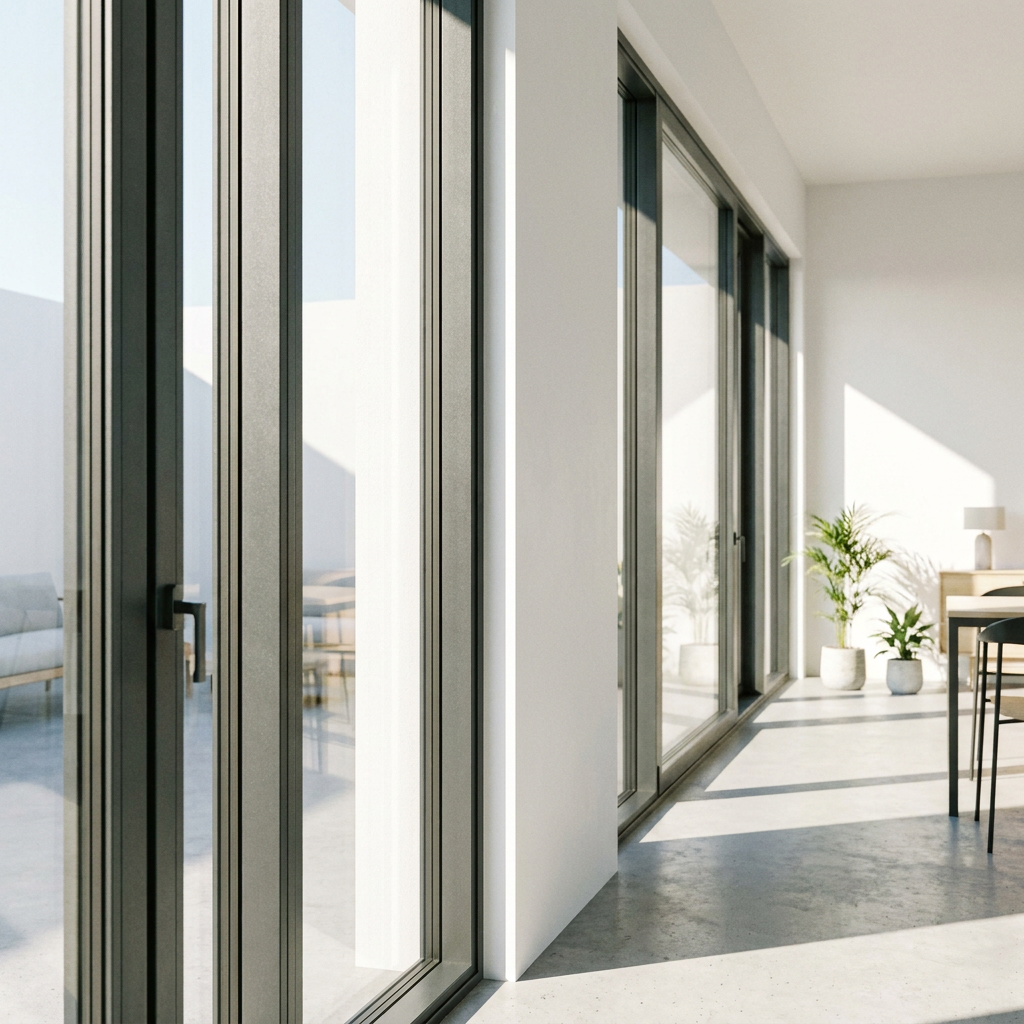
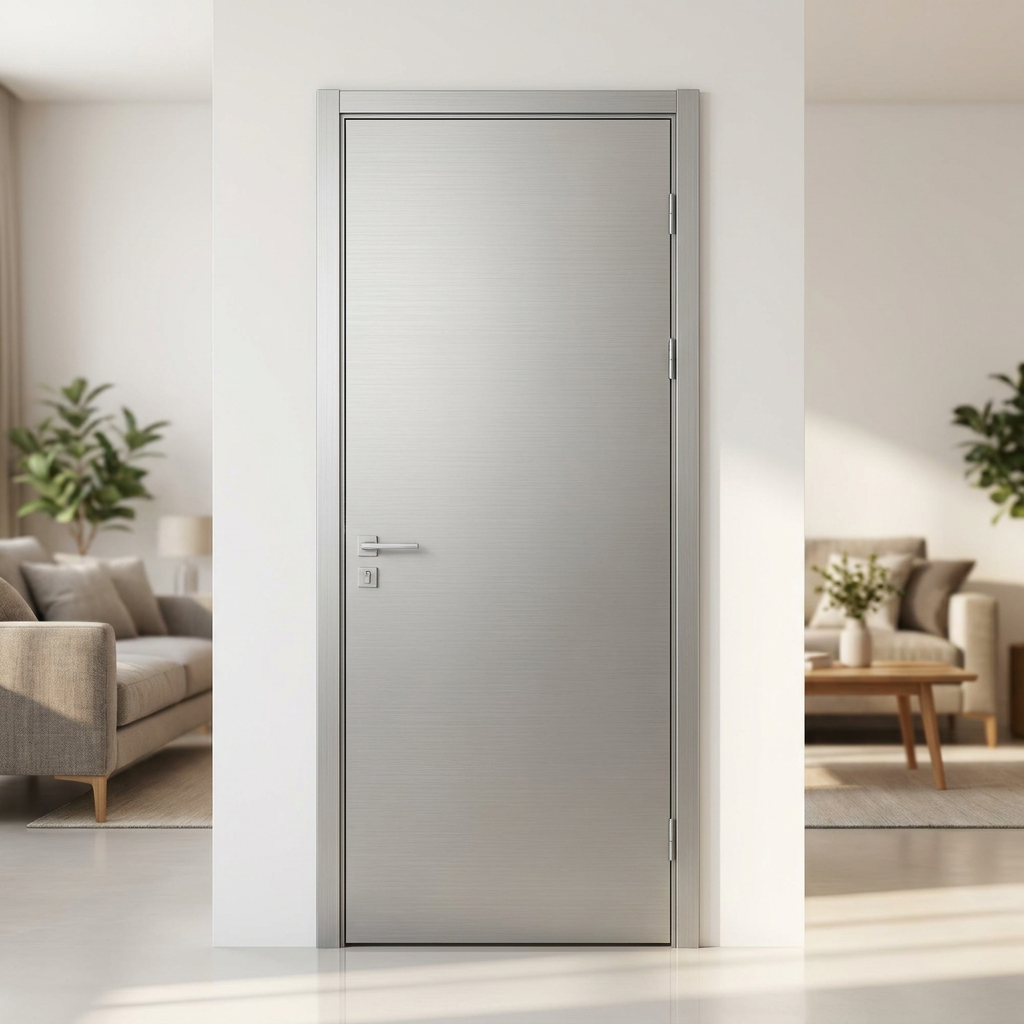

Minimalist Glass Doors provide privacy in a home office when the glazing obscures the right sightlines and the door closes with suitable seals. Frosted or textured glass screens activity while admitting daylight; a properly fitted frame helps control sound passing around the edges. These are separate design decisions. A door that hides a desk does not automatically keep a conversation private.
Start with what needs to disappear from view: a computer screen, seated activity, or the entire room. Then consider where people pass the doorway and how lighting changes after dark. Those details determine whether a frosted band is enough or whether the door needs obscured glazing across its full height.
Match the glass to the privacy you actually need
For an office beside a busy hallway, full-panel frosted glass creates a more consistent visual screen than a decorative strip. It diffuses the view, but close objects can still appear as shadows. A chair pressed against the door or a person standing immediately behind it will be more noticeable than furniture set farther into the room.
Distance therefore matters alongside glass selection. Moving the desk away from the glazed boundary reduces the detail visible through many translucent finishes. Where space is limited, test a sample with an object positioned at the distance it will occupy in the finished office.
Tinted glass reduces brightness but does not reliably obscure a room. Reflective finishes also depend on the lighting difference between spaces. An office that appears screened during daylight can become clearly visible when its lights are on at night. For predictable visual privacy, choose a finish that physically obscures the view.
Set the coverage from real viewing positions
A narrow horizontal band looks discreet, but its position needs to follow the room layout. Mark the proposed coverage on the existing opening with paper, then view it from the hallway, nearby seating, and any staircase. Include the normal standing position at the door. A band that conceals a seated face can still leave a monitor visible through a clear section.
Computer screens deserve a separate test. Through patterned glass, text might become unreadable while large shapes, video images, or bright presentation slides remain identifiable. For sensitive work, turn the display away from the doorway and use broader obscured coverage instead of relying on texture alone.
Repeat the viewing test after dark with the office lights on and the adjacent space dimmed. Place a lamp where it will normally sit. Strong backlighting can make silhouettes more pronounced, even through glass that seemed sufficiently private in a showroom.
If privacy needs change during the day, an interior blind or curtain offers adjustable coverage. Allow room for it beside handles and moving panels. A ceiling-mounted curtain also needs enough clearance to avoid dragging into a sliding track.
The door style determines how much sound escapes
A hinged door with continuous perimeter seals and a suitable bottom seal is generally a stronger starting point for speech privacy than a conventional surface-mounted slider. Hinged hardware can bring the leaf against its seals when closed. Surface-mounted sliding doors commonly retain clearance beside the wall and above the floor, allowing speech to pass through those openings.
Sliding doors still make sense where a swinging leaf would collide with furniture or restrict circulation. For a room used for calls, examine the complete closing arrangement: jamb engagement, meeting edges, head clearance, and the bottom detail. A sliding system designed with effective seals offers different performance from a decorative panel hung on an exposed rail.
Glass thickness alone cannot establish how private a conversation will be. Laminated constructions, including acoustic interlayers where specified, can improve sound control through the pane, but gaps around it can undermine that benefit. Any acoustic rating should identify the tested door assembly and its configuration. A rating for glass alone does not describe the installed doorway.
Sound also travels through surrounding partitions, ventilation paths, and open ceiling spaces. If conversations remain intelligible outside a closed office, the door might be only one part of the route. Tightening the opening also requires consideration of how the room receives its ventilation air.
Keep the aluminum frame slim without sacrificing fit
A restrained aluminum frame gives obscured glass a clean outline and keeps the doorway visually light. Its proportions still need to suit the glass weight, panel size, hardware, and seal arrangement. An extremely narrow profile offers little benefit if the door flexes, rattles, or cannot close consistently.
For a custom sliding assembly, the Custom Aluminum Extrusion Profile for Sliding Interior Window Door Track Window Channel illustrates the type of configurable aluminum component involved in forming tracks and channels. The relevant details are the finished profile geometry, glazing pocket, hardware interfaces, and allowances for seals. Broad extrusion dimensions or finish options alone do not establish whether a completed door will provide privacy.
The visible frame finish also affects the result. A dark frame emphasizes the perimeter; a finish close to the wall color makes it less prominent. Keep handles comfortable to grip and positioned clear of adjacent walls. Recessed pulls save projection on sliding panels, but their shape must still allow the door to close fully without trapping fingers.
Resolve installation details before the glass is made
Measure the finished opening, including floor levels and wall alignment, before finalizing fabrication dimensions. A sloping floor can create an uneven bottom gap, while an opening that is out of square can prevent consistent seal contact. These conditions need an installation detail that accommodates them without leaving an unintended sightline.
Confirm the glazing construction and privacy treatment together. Safety glazing should be selected for the door application and applicable local requirements. Etching, patterns, films, and laminated layers also need to be compatible with the specified glass. Handle holes and hardware cutouts must be settled before toughened glass is manufactured, because it cannot be cut or drilled afterward.
For existing doors, applied film is a practical way to change visual coverage when the glass and film are compatible. Clean the surface carefully and agree on edge clearances before application. Film supplies visual screening; it does not add perimeter sealing or establish acoustic performance.
Once installed, view the closed door from the positions used during planning, with the desk and lighting in place. Listen outside during an ordinary conversation, and inspect whether seals meet evenly. Keeping tracks free of debris and replacing worn seals helps preserve the fit on which everyday privacy depends.
Leave A Reply
Need More Details?
Contact me for details on creating and managing design projects, project features, and services and prices