


NEWS
Categories List
Recent Posts
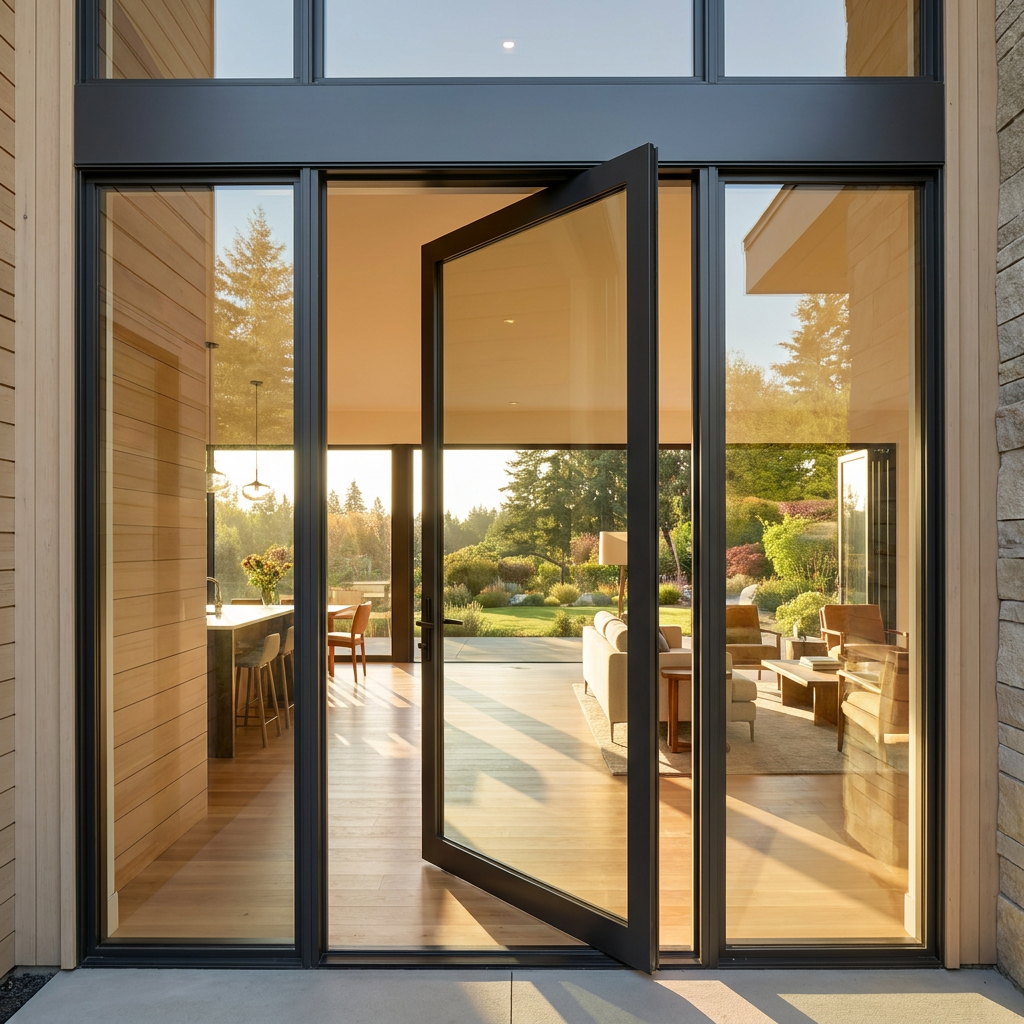
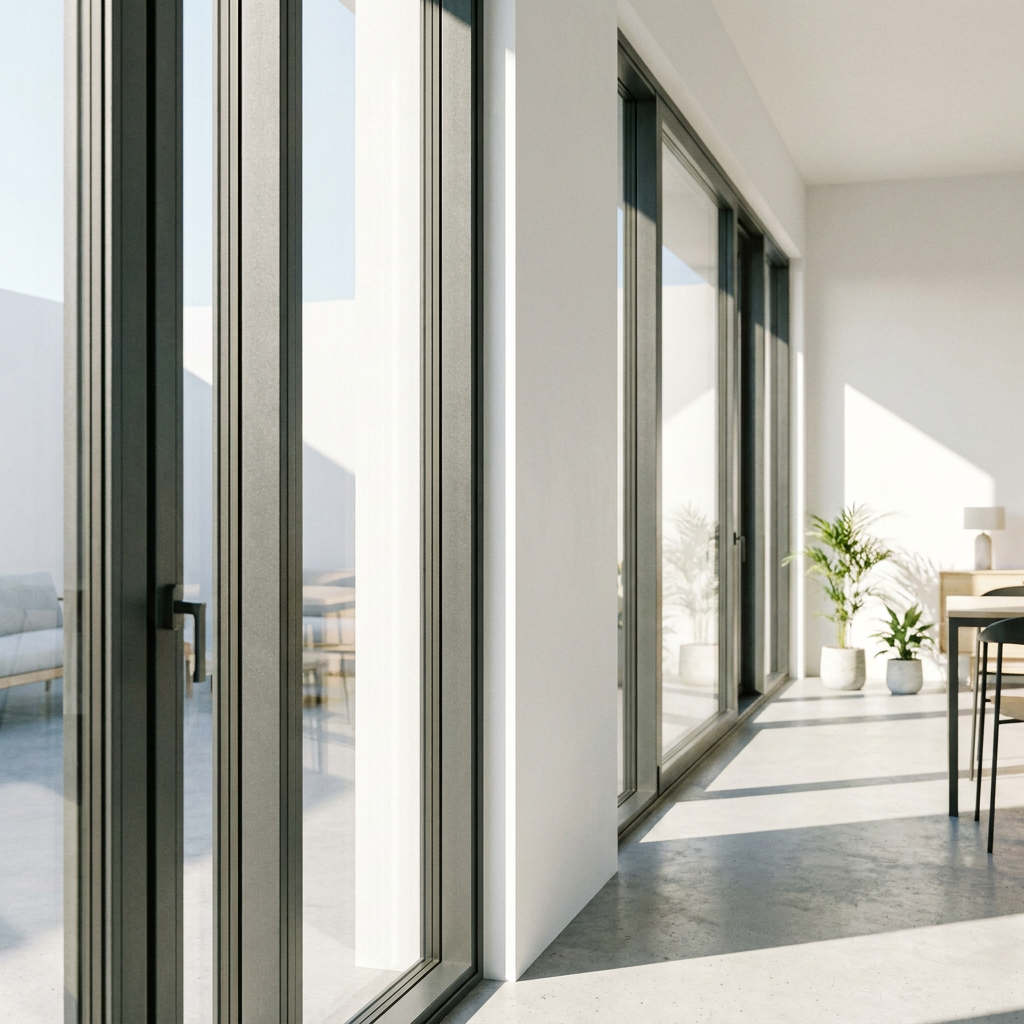
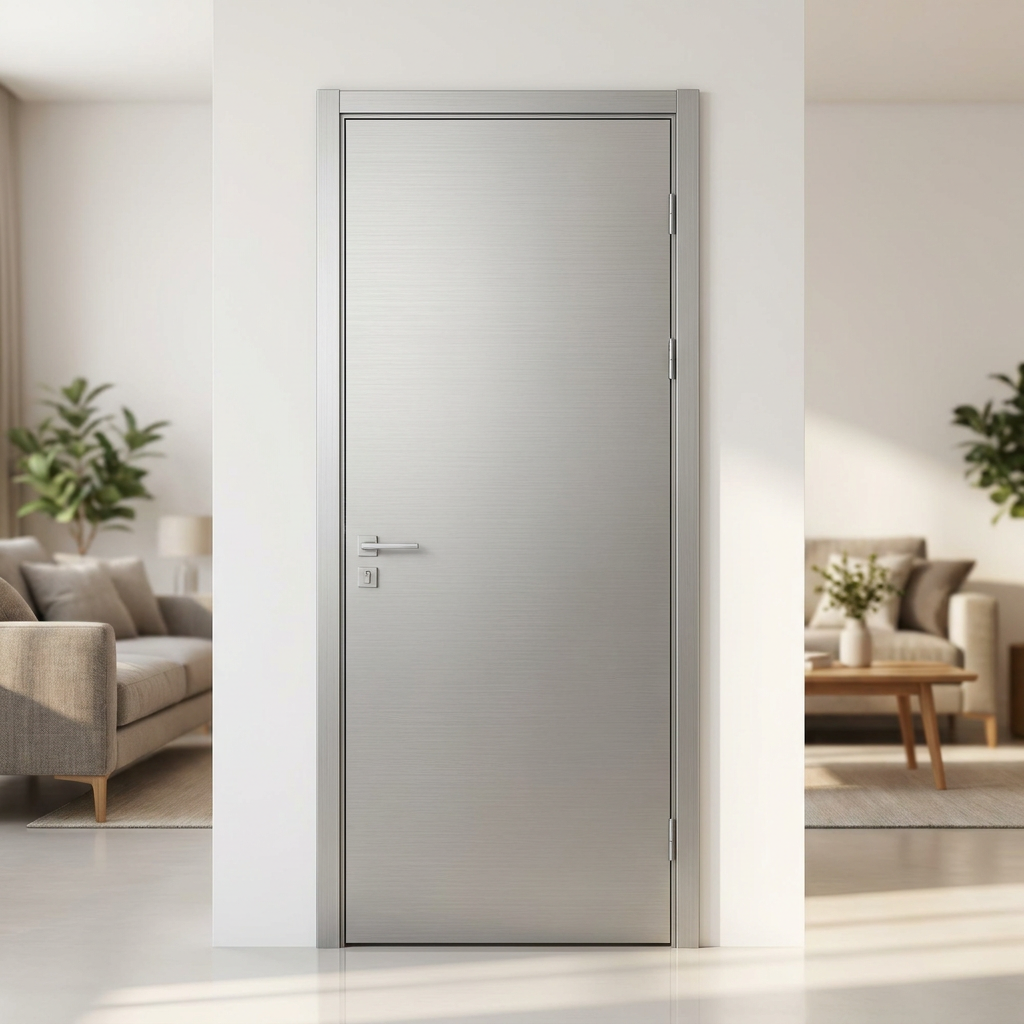

Soundproof Glass Doors can make a home noticeably quieter without turning it into a dim, closed-off space. The key is not simply using thicker glass. Real noise control comes from the combined performance of the glazing, the frame, the seals, the door configuration, and the quality of installation. When these parts work together, daylight can still pass freely through the opening while much less sound passes through it.
This matters in homes facing busy streets, shared corridors, elevators, gardens with frequent activity, or noisy living areas. A glass door between a kitchen and a home office can preserve visual connection and borrowed light, yet reduce the clatter of dishes, conversations, television sound, and appliance noise. The result is rarely complete silence. It is a calmer, more usable room with less intrusive noise.
How Soundproof Glass Doors Actually Reduce Noise
Sound travels through vibration and through air gaps. A door must address both. Glass itself can resist some airborne sound because it has mass, but sound will often find the easiest path around the glass: a loose perimeter seal, an unsealed threshold, poorly joined frame corners, or a gap where the door does not close squarely.
That is why a visually impressive glass panel can perform poorly if it is fitted in a lightweight frame with ordinary weather stripping. Conversely, a carefully sealed door with suitable insulated glass may perform far better than its appearance suggests.
For homeowners, the practical takeaway is simple: do not evaluate sound control by the glass alone. Ask about the complete door assembly.
Glass mass helps, but glass construction matters more
A single pane of glass can reduce some everyday sound, particularly speech and higher-pitched noises, but it has limitations. Road traffic, bass-heavy music, mechanical vibration, and low-frequency noise are more difficult to manage. Adding glass mass generally improves resistance to sound transmission, but identical glass layers can still have a weak point at particular sound frequencies.
Double glazing changes the system. Two panes separated by an air or gas space create an additional barrier, and the cavity helps reduce the direct movement of sound from one side to the other. For improved acoustic performance, manufacturers may use panes of different thicknesses, sometimes called asymmetric glazing. The two panes react differently to sound, which can reduce the dip in performance that occurs when matching panes vibrate at the same frequency.
Laminated glass is another relevant option. It uses an interlayer between sheets of glass. Apart from its safety benefits, that interlayer can help damp vibration. It is often worth discussing for openings exposed to persistent outside noise, although the right glass build-up should be selected for the noise source and the door system rather than chosen by label alone.
Tempered glass is frequently used in doors because it is a safety glass. It should not automatically be assumed to be the highest-acoustic option in every configuration. Safety requirements, local building rules, door size, glazing type, and intended use all need to be considered together.
The seals do more work than many people expect
Air leakage is sound leakage. Even a narrow gap can undermine a good glass specification because sound moves through openings far more readily than through a sealed panel. A sound-conscious glass door needs continuous compression seals around the jamb and head, plus a well-designed solution at the bottom of the door.
On an interior swing door, the lower edge is commonly the overlooked detail. A visible gap under the leaf may be useful for ventilation in some situations, but it is a direct sound path. A drop seal or properly designed threshold can make a meaningful difference when the goal is privacy for a bedroom, study, music room, or home office. It must still allow the door to operate smoothly and meet any ventilation or accessibility needs applicable to the space.
Look at the closing action in person when possible. The door should close evenly, engage the seals without excessive force, and remain aligned. If it rattles, requires slamming, or shows uneven gaps around the perimeter, its acoustic performance is unlikely to match the specification on paper.
Why Natural Light Is Not the Trade-Off
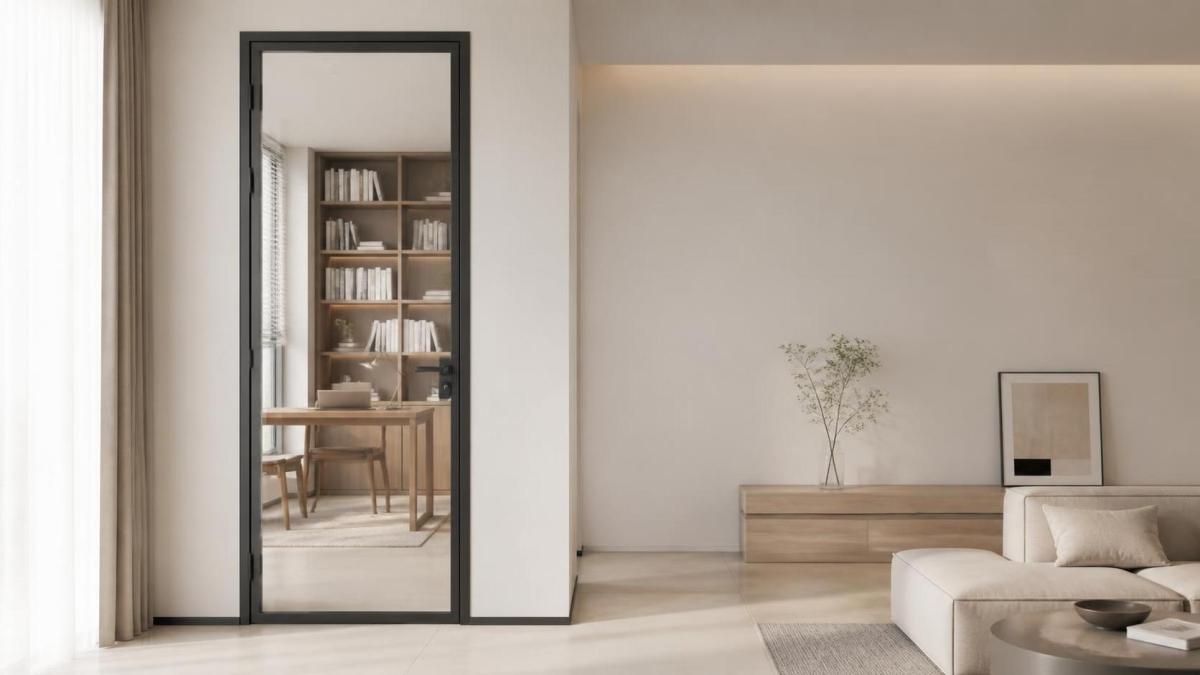
The idea that a quiet room needs a solid, opaque door comes from older design habits. Solid-core timber doors can be effective for interior sound separation, especially when well sealed, but they stop daylight completely. Soundproof Glass Doors solve a different design problem: they create a physical and acoustic boundary while retaining the visual depth and natural light that make smaller homes feel less confined.
Clear glazing admits the most light and gives the strongest visual connection. It is often the best choice for an internal door where privacy is not the primary concern, such as between a bright living area and a hallway. Frosted, textured, or partially obscured glass provides more privacy while still allowing diffuse daylight to travel into a darker room. The right choice depends on what needs to be controlled: noise, sightlines, glare, or all three.
Low-E glass is mainly selected for thermal performance, particularly in exterior-facing doors. It can help manage heat transfer while maintaining useful light transmission, but its exact appearance and daylight effect depend on the coating and glass configuration. Ask to see a real sample rather than judging from a small digital image. Some coatings have a subtle tint or reflectivity that may be welcome on a sunny facade but less desirable in an interior opening.
Matching the Door Type to the Noise Problem
Not every door style is equally easy to seal. This should influence the design choice early, before the opening is built or finished.
Swing doors are usually the most straightforward option when acoustic separation is the priority. Their closing edge can compress against perimeter seals, and a threshold or drop seal can address the bottom gap. This makes them a practical choice for bedrooms, home offices, enclosed dining rooms, and rooms where calls, sleep, or concentration are regularly disturbed.
Sliding glass doors are excellent for saving space and creating wide openings, but their movement requires clearance, which makes airtight sealing more challenging. High-quality sliding systems can reduce noise well, yet a standard sliding door should not be expected to match the acoustic isolation of a well-sealed swing door. They are often suitable when daylight, access, and flexibility are the main priorities and the noise problem is moderate rather than severe.
Folding doors offer large openings and a strong indoor-outdoor effect. Their multiple meeting points introduce more potential leakage paths, so they require particularly careful engineering and installation when noise reduction is a serious requirement. They can be appropriate for an exterior opening, but homeowners should request performance information for the exact configuration, not a general statement that the product is “soundproof.”
A narrow-frame aluminum swing system can be a sensible middle ground for an interior room that needs more light and more privacy. For example, the M06 Minimalist Design Interior Glass Extremely Narrow Frame Aluminum Swing Casement Doors combines an aluminum frame with options including tempered, Low-E, and double-pane tempered glass. Its ultra-slim visual approach is useful where a bulky frame would interrupt sightlines. The final acoustic result, however, still depends on the selected glass build-up, perimeter sealing, bottom detail, and site installation.
What “Soundproof” Should Mean in a Real Home
“Soundproof” is useful everyday language, but it can create unrealistic expectations. In construction, acoustic performance is normally described by a tested rating for a complete assembly under stated conditions. Ratings and test methods vary by market, so it is better to ask a supplier which recognized local or project standard applies, whether the result is laboratory-tested or site-tested, and exactly which glass, frame, seals, hardware, and dimensions were included.
A laboratory value is not a promise that every installed door will perform identically. Site conditions matter. An out-of-square opening, a poorly prepared threshold, gaps hidden by trim, or hardware adjusted incorrectly can all reduce real-world performance. A supplier should be able to explain the construction rather than relying only on broad terms such as “noise-proof” or “quiet glass.”
It also helps to identify the noise before selecting a solution. Intermittent voices from the next room, traffic hiss from a road, a barking dog, a train, and low bass from a neighbor do not behave in the same way. A door may make high-frequency speech much less intelligible yet still allow some low-frequency vibration to be felt. If the wall, ceiling, ventilation duct, or adjacent window is the weak point, replacing the door alone will not solve the entire problem.
Questions to Ask Before Ordering
A good quote should make it possible to compare like with like. Before committing, ask these questions in plain language:
- What glass make-up is included: single, double, laminated, or a combination?
- Are the seals continuous around all sides of the door, and what seals the bottom edge?
- Is the stated acoustic performance for the complete door assembly and this specific opening style?
- Will the door swing, slide, or fold, and what compromises does that choice introduce?
- Who measures the opening, installs the frame, adjusts the hardware, and checks the final seal?
- Does the chosen glass meet the required safety and building requirements for its location?
Do not overlook the frame. Aluminum is durable and stable, but frame design matters. The profiles must be sufficiently robust for the glass weight, correctly joined, and compatible with the required seals and hardware. For exterior doors, thermal breaks, drainage, wind exposure, and water management become part of the decision as well. A door that reduces traffic noise but leaks air or water is not a successful specification.
Weihai Gensheng Trading Co., Ltd. works across aluminum casement, folding, and sliding doors, wood-aluminum window and door systems, wooden doors, louvers, handrails, and related architectural products. For a custom door project, that broader system knowledge is useful because a glazed door should be considered alongside the surrounding wall, window, threshold, and daily use of the room. Production supported by specialized equipment and window software can help with consistent fabrication, but field measurement and installation discipline remain equally important.
When a Glass Door Is the Right Choice, and When It Is Not
A well-sealed glazed swing door is particularly effective for separating a home office from an active living room, adding a quieter boundary to a bedroom corridor, or bringing light into an internal room with no direct window. It also works well where a homeowner wants to supervise children or maintain a sense of space without hearing every conversation clearly.
It may not be the best standalone answer for a recording room, a home theater requiring serious isolation, or a bedroom beside heavy transport noise. Those situations often need improvements to walls, ceilings, windows, ventilation routes, and possibly the floor structure. The door should be treated as one component of a larger acoustic plan.
Privacy is another separate decision. Clear glass can reduce sound while leaving people fully visible. If the room is used for private work, dressing, sleeping, or video calls, consider frosted or patterned glazing, curtains, blinds, or a partial solid panel. Acoustic performance and visual privacy overlap, but they are not the same thing.
FAQ
Can double-glazed glass doors block traffic noise?
They can reduce it, especially when paired with a sealed frame and proper installation. The degree of improvement depends on the glass construction, the noise frequency, and other weak points around the room, including windows and ventilation openings.
Are sliding glass doors as quiet as swing doors?
Usually not at the same quality level, because swing doors are easier to seal under compression. A well-designed sliding system can still be suitable for moderate noise, but a swing door is generally the stronger choice when sound separation is the main requirement.
Will thicker glass always make a door quieter?
No. Thicker glass can help, but gaps, poor seals, and a weak frame can erase much of that benefit. Different pane thicknesses, laminated glass, and a sealed assembly are often more relevant than thickness alone.
Do I need a threshold for an interior acoustic door?
Not always, but the bottom gap needs attention. A suitable drop seal may provide the needed seal while keeping the floor transition cleaner. The choice depends on flooring, accessibility, ventilation, and the desired level of noise reduction.
The best Soundproof Glass Doors are not chosen by a single label or a dramatic thickness claim. Start with the noise you actually hear, choose a door style that can be sealed effectively, verify the complete glazing and frame specification, and insist on careful measurement and adjustment. That approach preserves the daylight and openness of glass while delivering the quieter rooms people expect.
Leave A Reply
Need More Details?
Contact me for details on creating and managing design projects, project features, and services and prices