


NEWS
Categories List
What to Check Before You Compare Fire, Corrosion, and Strength Claims
When decision-makers review Aluminum Doors, the mistake I see most often is treating fire resistance, corrosion behavior, and structural strength as three separate buying points. In real projects, they affect one another. A door with a strong frame but poor coating selection can lose value fast in a coastal or humid setting. A door marketed as durable may still create problems if the glazing, hardware, seals, and frame thickness were not specified for the actual opening, traffic load, or exposure conditions.
For residential furniture and architectural use, the practical goal is not to chase the most aggressive specification on paper. It is to make sure the door system matches the project’s risk profile, maintenance expectations, and service life. Manufacturers such as Weihai Gensheng Trading Co., Ltd., which works with advanced German equipment and production software, are relevant here because precision in fabrication affects how well the finished system holds up over time, especially at joints, corners, and moving parts.
Start with the Fire Performance Question You Actually Need Answered
Do not begin with “Is aluminum fireproof?” That is too broad to help procurement. Aluminum itself is non-combustible, but a door assembly is judged as a system, not just by the base metal. The frame, glazing, seals, hardware, core materials, and installation details all matter.
A better checklist is this:
- Check whether your project requires a fire-rated door assembly or simply a non-combustible framing material.
- Ask for the test report or certification document for the complete door set, not a sales sheet describing the profile alone.
- Verify what exactly was tested: frame, glass type, gasket, lockset, closer, and installation method.
- Make sure the tested configuration matches your opening size and use condition. A report for one configuration does not automatically cover all variations.
This is where procurement teams get caught. A supplier may truthfully state that aluminum is a suitable material for fire-conscious applications, yet the installed door may still fail compliance if the assembly differs from the tested version.
Corrosion Resistance Is Mostly About Environment and Surface Treatment
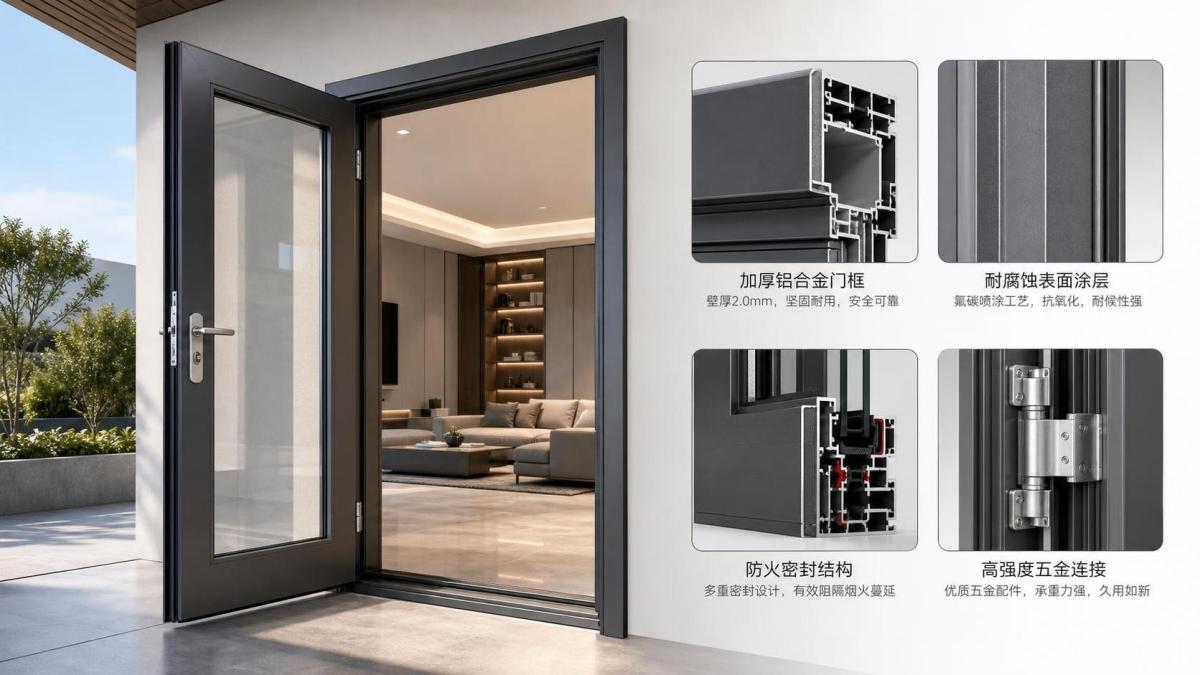
Corrosion claims should never be reviewed in isolation. Ask where the door will live: inland dry climate, humid residential environment, industrial area, or coastal property. The same Aluminum Doors can perform very differently depending on airborne salt, condensation cycles, cleaning chemicals, and drainage design.
Here is the practical review sequence:
- Identify the exposure level. Coastal and high-humidity sites need more attention to finish stability and hardware compatibility.
- Check the surface finish being offered. Powder coating, painting, plating, and polishing are not interchangeable decisions; each affects appearance retention and maintenance needs.
- Look at joints, fasteners, tracks, and corners. Corrosion often starts where water sits, coatings are interrupted, or dissimilar materials meet.
- Review drainage and sealing details. EPDM or silicone-based sealing systems can help, but only if the water path is designed correctly.
One common purchasing error is focusing on the visible frame finish and ignoring the hardware pack. If the rollers, screws, handles, or connectors are a weak match for the environment, the user experiences the failure long before the frame itself becomes the problem.
Strength Depends on More Than Thick Profiles
Buyers often ask for thicker aluminum as if that alone guarantees a stronger door. It helps, but it is only one part of the equation. Strength comes from profile design, span, reinforcement strategy, hardware load capacity, anchoring method, and the weight of the infill.
For example, profile thickness options such as 1.4 mm, 1.6 mm, 1.8 mm, 2.0 mm, or 3.0 mm are meaningful only when tied to door size, opening frequency, and glazing load. A large sliding door with heavy glass needs more than a thicker wall; it needs a system designed to control deflection, keep rollers aligned, and maintain air and water performance after repeated use.
If you are comparing quotations, ask these questions directly:
- What profile thickness is proposed, and for what opening size?
- What glass build-up will be used, and how does that change sash weight?
- What hardware brand or grade supports that weight and cycle demand?
- How is the frame anchored to the surrounding structure?
Those four answers tell you far more than a generic “heavy-duty” label.
Use Adjacent Window Specifications as a Reliability Signal
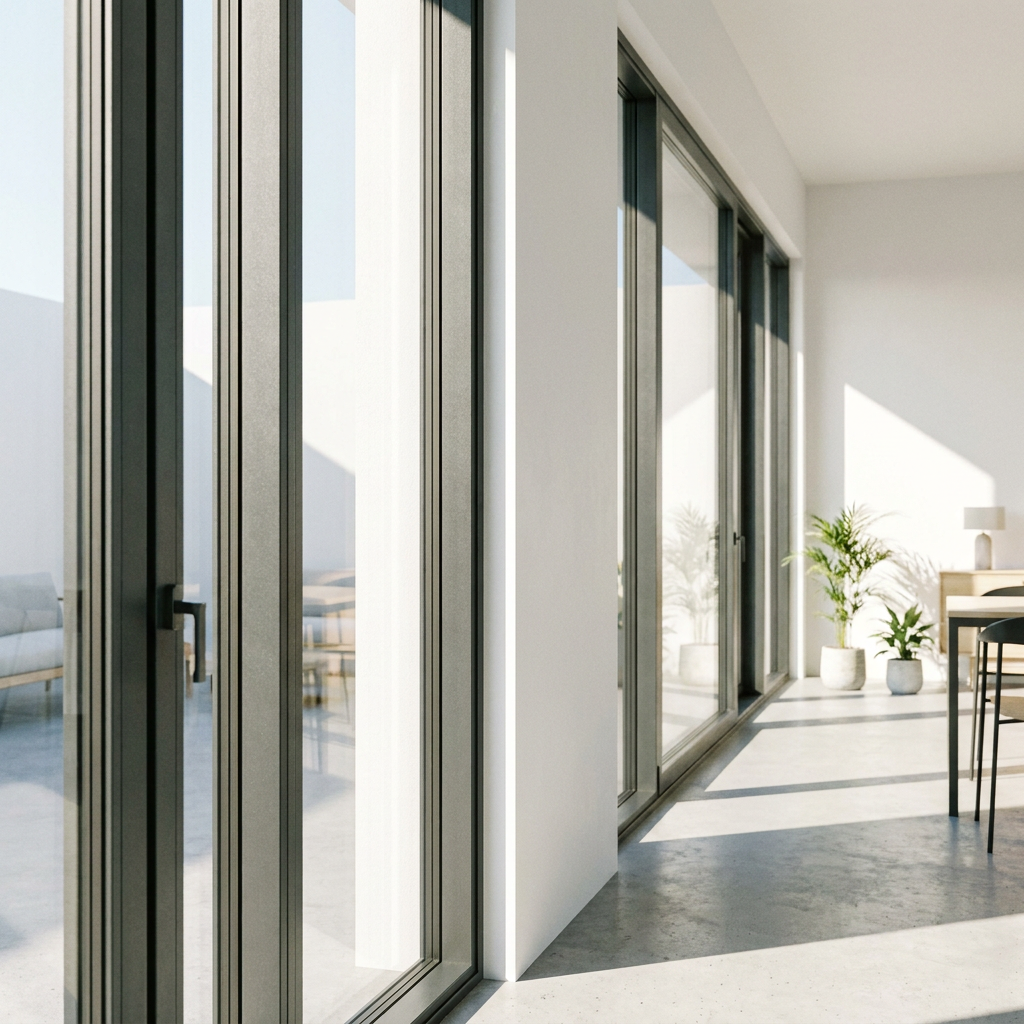
In mixed residential packages, the door supplier is often also handling window systems. That matters because fabrication discipline tends to show up across the whole line. For instance, a product such as Thermally Insulated Frame Double Glazed Low-E Glass Sliding Window points to the kind of specification depth you want to see from the same source: defined profile thickness ranges, double-glazed options like 5mm+12A+5mm or 6mm+12A+6mm, customized sizing, sealing system options, and hardware support. Even when your main purchase focus is doors, that level of detail is a good sign that engineering and production are being treated seriously.
That does not replace project-specific review. It does help you separate suppliers who understand system performance from those selling only appearance.
A Short Comparison Table for Procurement Meetings
Do Not Ignore Fabrication Quality
You can specify a sound material and still receive a weak result if fabrication control is poor. The corners should be clean, the sliding path consistent, the sealing lines continuous, and the hardware installation precise. This is where manufacturing equipment and software matter in a very practical way. Better processing accuracy usually means better fit, less stress on moving components, and fewer small defects that turn into water ingress or operational issues later.
Another detail worth checking is packaging. Multi-layer protection sounds like a shipping concern, but it also affects finish quality at handover. Damaged corners and scratched coated surfaces are not just cosmetic; they can become starting points for corrosion and callbacks.
The Best Order for Decision-Making
Run the review in this order. First, define whether the opening has a formal fire-rating requirement. Second, map the environmental exposure so finish and hardware choices make sense. Third, match profile thickness, glass, and hardware to actual size and usage. Only after that should you compare appearance options, customization, and commercial terms.
That sequence prevents a common procurement trap: selecting a visually attractive aluminum system, then discovering late that the tested configuration, corrosion package, or structural setup does not fit the project. In practice, the strongest buying position comes from reviewing Aluminum Doors as complete systems, with documents and component logic that line up from frame to finish.
Leave A Reply
Need More Details?
Contact me for details on creating and managing design projects, project features, and services and prices