


NEWS
Categories List
Recent Posts


Start with the risks that actually damage a purchase
When buyers source Premium Europe Market PVC and MDF Wood doors, the hard part is rarely getting a quote. The hard part is making sure the door that arrives matches the door that was approved, fits the project, meets the target market expectation, and does not create hidden cost after installation. On paper, many suppliers look similar. In production, they are not.
If your buying decision is driven only by unit price, the usual problems show up later: inconsistent surface finish, unstable core material, weak edge sealing, packaging damage, delayed replacement parts, or documents that do not line up with what was shipped. For procurement teams, that turns a door order into a margin problem very quickly.
A practical review usually comes down to a short list: what the door is made of, how consistently it is produced, what the supplier can prove, and what it will cost when something goes wrong.
Check whether the material spec is real or just sales language
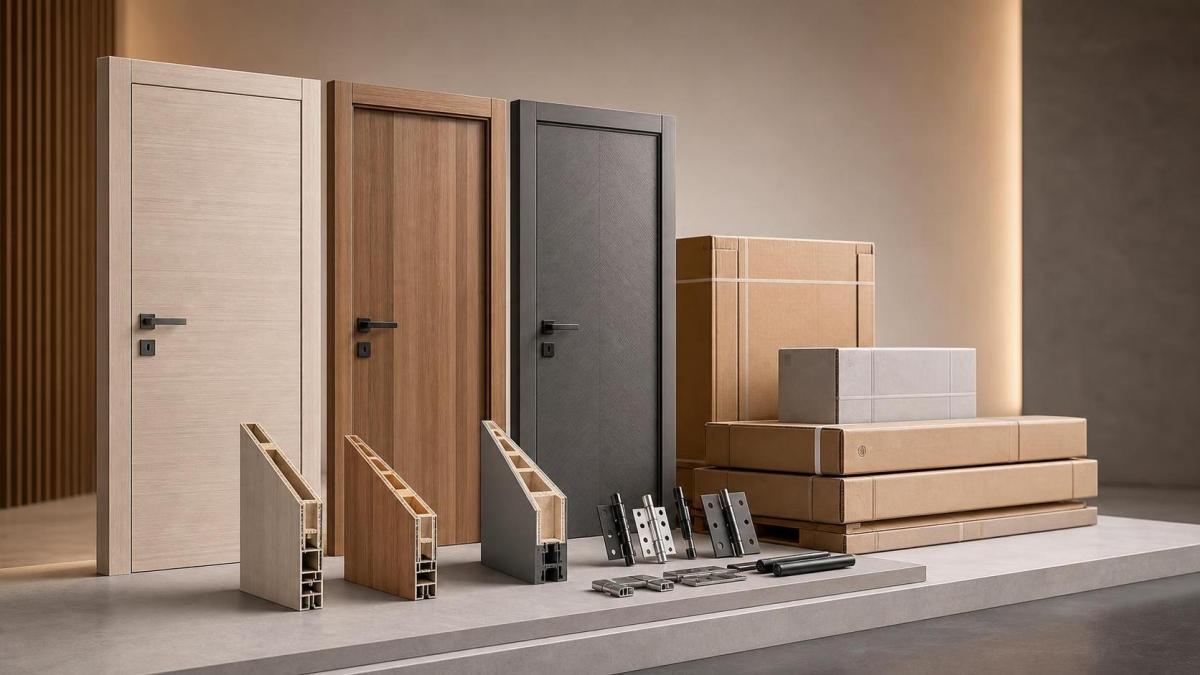
This is where many sourcing mistakes begin. “PVC door” and “MDF wood door” are broad labels, not enough for a purchasing decision. For premium European projects, you need the exact build-up: face material, core structure, edge treatment, frame material, surface finish, and hardware brand or grade if hardware is included.
A supplier may show a good-looking sample but quote against a simplified internal structure. That difference is not always obvious in photos. Ask for a written construction sheet tied to the quotation and sample approval. If the core, skin thickness, or edge sealing method is missing from the document, the offer is still too vague to compare.
- Check whether the approved sample and the production spec carry the same code or reference.
- Review surface consistency under natural light, not only showroom lighting.
- For MDF wood doors, look closely at moisture-sensitive areas such as bottom edges, lock areas, and hinge positions.
Do not treat compliance paperwork as a formality
For the European high-end market, documentation risk is purchasing risk. The point is not collecting as many files as possible. The point is matching the document to the actual door type, intended use, and shipment scope.
If a door is for interior residential use, the document set can be different from an exterior or commercial application. The mistake buyers make is accepting generic certificates or test pages without checking product description, model linkage, issue date, and who the document belongs to. A file related to another construction, another factory, or another application does not protect your order.
Ask the supplier to identify which exact document supports which product feature. That forces clarity. It also exposes when a quotation is being supported by unrelated paperwork.
Inspect the finish like an end customer would
In premium segments, visual defects create disproportionate cost. A door can be structurally acceptable and still fail commercially because of color variation, uneven grain effect, edge mismatch, glue marks, or poor touch-up work. This is especially common when buyers approve a small sample and then order mixed sizes or multiple finish batches.
Do not review appearance as a pass/fail item only. Review it as a batch consistency issue. Ask how the supplier controls finish between production runs, especially if your order will be split across time. If they cannot explain their control point, you should expect variation.
Lead time risk usually starts before production starts
Late delivery is often blamed on the factory floor, but the real cause is usually earlier: incomplete drawings, unresolved hardware details, missing approval steps, or changes after deposit. Premium Europe Market PVC and MDF Wood door orders often include more finish and style sensitivity than standard commodity orders, so approval discipline matters.
A workable checklist before production release looks like this:
- Final drawing or size schedule locked.
- Material construction confirmed in writing.
- Color and finish sample approved.
- Hardware scope defined.
- Packaging standard agreed.
- Inspection point and defect standard agreed before shipment.
If any of these sits in email discussion instead of approved order documents, you are carrying avoidable delay risk.
Compare total landed cost, not just ex-factory price
Cheap door pricing can become expensive through rework, claims, replacement freight, packaging failure, or installation delays. This is where experienced buyers separate useful offers from risky ones.
Look at the factory’s process discipline, not only the catalog
A broad product range can be useful if the supplier has real production control behind it. Some manufacturers work across wooden doors, aluminum systems, louvers, handrails, and wood-aluminum window and door products. That can be an advantage for project buyers who need coordinated sourcing, but only if engineering, drawings, and production records are handled carefully.
For example, a supplier equipped with modern production equipment and window software may manage custom specifications more cleanly, but the buyer still needs to test the process with actual documents: revision control, bill of materials accuracy, and production sign-off. Capability is only useful when it shows up in order execution.
Watch for cross-category assumptions
One common sourcing error is assuming performance logic transfers from one door category to another. It does not. A buyer reviewing interior MDF wood doors should not apply the same decision criteria used for an exterior aluminum folding system, and the reverse is also true.
That said, cross-category references can still help when they are used properly. For instance, if you also buy exterior systems, a product like New Model Aluminum Accordion Victorian Fashion Bi Folding Glass Doors for Balcony belongs to a different application set: aluminum alloy construction, folding opening style, exterior position, and double tempered glass. It is relevant as a reminder that application, material, and performance expectations must stay aligned with the actual door type being sourced. Buyers get into trouble when they compare products across categories using appearance only.
Plan the claim path before the order ships
After-sales support sounds secondary during quotation stage. It is not. When a shipment arrives with finish defects, missing items, or dimension mismatch, response speed matters more than polite communication.
- Define what evidence is needed for a claim: photos, pallet marks, quantity count, installation report, measurement record.
- Agree on the response window and replacement method before payment terms are finalized.
- Confirm whether spare parts or extra leafs can be ordered with the main shipment.
This is especially important for premium projects where matching color and finish later can be harder than replacing standard stock items.
A better buying sequence
A solid procurement sequence is simple. Lock the construction spec first. Match the documents to the actual product and use case. Approve finish against a clear reference. Then compare total cost including packaging, replacement exposure, and delivery reliability. Only after that should price decide the winner.
That order matters. In this segment, most expensive mistakes happen when buyers do it in reverse.
Leave A Reply
Need More Details?
Contact me for details on creating and managing design projects, project features, and services and prices