


NEWS
Categories List
Recent Posts

Common Installation Mistakes With Affordable PVC Washroom Doors
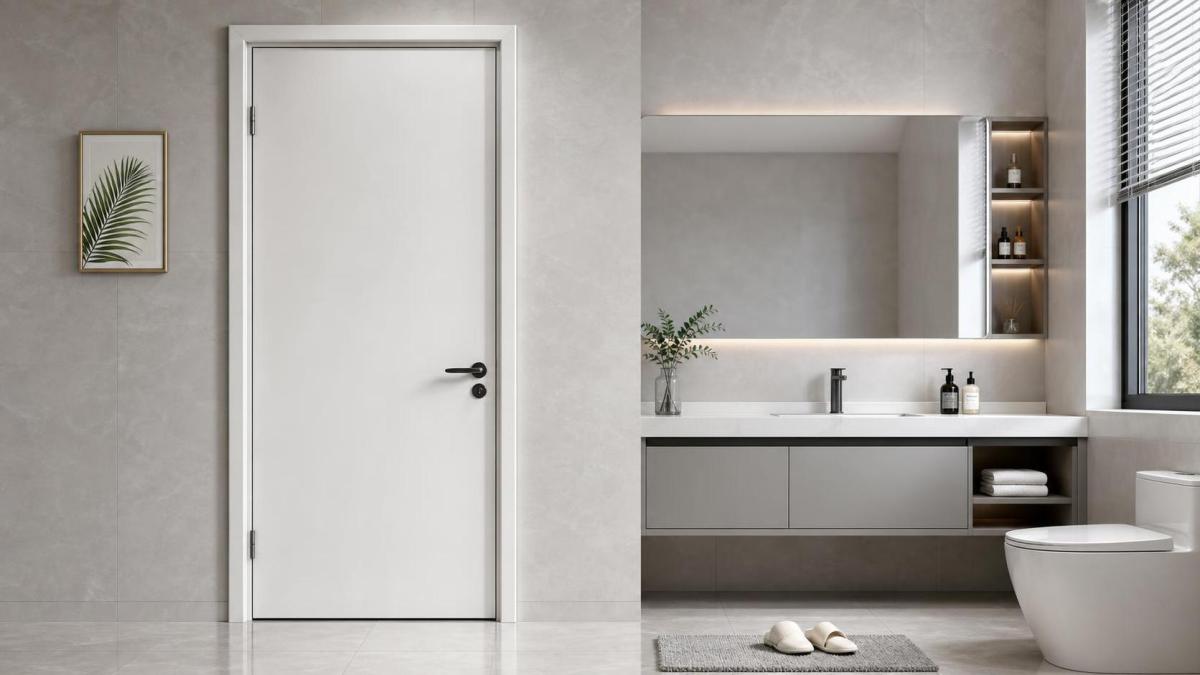
The biggest problems with Affordable PVC Washroom Doors with Simple Interior Door styling usually do not come from the panel itself. They start at the opening. In small residential bathrooms, installers often focus on getting the door leaf into place quickly, but ignore the wall condition, finished floor level, and moisture behavior around the frame. That is where a budget-friendly door can either perform well for years or begin swelling, rubbing, leaking sound, or loosening within a short time.
A washroom is harsher than a bedroom or study even when the layout looks similar. Steam, cleaning chemicals, standing water near the threshold, and poor ventilation all work against weak installation practice. PVC doors are often chosen because they are practical, easier to maintain, and more forgiving in humid interiors than some untreated materials. But installers sometimes make the wrong assumption that a moisture-resistant leaf means the entire assembly is moisture-proof. It does not. The frame fixing points, sealant quality, and gap tolerances still decide whether the installation behaves like a proper bathroom door or just a low-cost interior door placed in the wrong environment.
One common mistake is measuring the rough opening before wall tiles and floor finishes are fully established. On site, that usually leads to a frame that looks square during dry fitting but ends up tight at the bottom once tile adhesive, floor slope, or threshold trim is complete. In bathrooms, floor levels are not always perfectly flat because drainage slope may be intentional. If the installer uses standard interior-door assumptions, the leaf may scrape the floor, or the bottom gap may become uneven enough to affect privacy and airflow. A careful installer checks the final floor datum, not just the raw opening size.
The second issue is over-reliance on foam as a structural fix. Foam can help fill voids, but it should not compensate for a twisted frame or poor anchoring. On masonry or lightweight partition walls, the frame needs reliable mechanical fixing suited to the substrate. If the frame is forced straight only by expanding foam, it may shift slightly over time, especially in homes where doors are opened hard or where daily humidity cycling is strong. That is when homeowners start noticing latch misalignment and doors that no longer close cleanly.
Hinge positioning is another detail that gets underestimated. Lightweight PVC washroom doors are often treated as simple fit-and-forget units, yet repeated exposure to moisture and frequent use can magnify small alignment errors. If hinges are installed without checking the door’s weight distribution, or if screws are poorly seated into the frame reinforcement, the top edge may begin to drop. This is especially common in renovation work where the existing opening is out of plumb and the installer tries to “split the difference” visually. It may look acceptable on day one, but a bathroom door gets used too often for that shortcut to stay hidden.
Where Simple Styling Creates Confusion
The appeal of a Simple Interior Door look is that it blends into modern homes without drawing attention. Flush surfaces, clean edges, and light visual weight work well in apartments, guest bathrooms, and compact family houses. The mistake is assuming that a minimal-looking door should be installed with minimal detailing. In washrooms, simple styling still needs practical allowances: proper bottom clearance, edge sealing where required, and hardware selected for humid use.
This comes up often in homes where the bathroom opens directly to a hallway or bedroom. People want a neat appearance, so they reduce visible gaps as much as possible. But when the gap at the bottom is closed too aggressively without considering ventilation, condensation can linger in the room longer. On the other hand, leaving a large, uneven undercut to compensate for installation errors can weaken acoustic privacy. The right answer depends on the room’s ventilation setup, not just aesthetics.
Another frequent misjudgment is using standard interior hardware with limited corrosion resistance. Handles, screws, latch bodies, and strike plates may look fine during handover, then degrade quickly in a damp room. In factory-led door production, the leaf quality is only one part of the result. Companies with broader door and window experience, such as Weihai Gensheng Trading Co., Ltd., usually understand that hardware matching matters as much as surface appearance because real performance depends on the whole assembly rather than one visible component.
What Changes Between New Homes and Renovation Jobs
In new construction, the main risk is sequencing. Door measurements may be taken too early, or different trades leave the opening slightly out of square. In renovation, the problem is usually the opposite: installers try to fit a new affordable door into an old opening with hidden irregularities. Existing jambs may have moisture damage, tile edges may not be straight, and wall thickness may vary from top to bottom. That is why replacement work needs more verification than many homeowners expect.
A practical site check should include:
- Whether the wall is plumb enough for a straight frame installation
- Whether finished floor levels are already fixed
- Whether shower spray or regular mopping will reach the door base directly
- Whether the bathroom relies on mechanical ventilation or natural airflow
- Whether nearby walls can securely hold frame anchors
If any of those conditions are unclear, the final fit can suffer even when the door itself is correctly manufactured. That distinction matters. People often blame the product category when the real issue is that the installation method never matched the room condition.
This is also why experience across multiple door systems can be useful. A manufacturer or supplier that works not only with PVC-related interior applications but also aluminum casement, folding, sliding systems, louvers, handrails, and wood-aluminum doors tends to read site constraints more realistically. The decision logic changes from room to room. For example, where a washroom opens toward a semi-outdoor service area or a utility zone with stronger exposure to water and noise, some projects shift to more robust assemblies. In those adjacent-use situations, solutions such as Best Selling Custom Doors Waterproof Soundproof Roll-up Door Aluminum Garage Door may be considered for separate service enclosures, not as a direct substitute for a bathroom leaf, but as part of a broader moisture and acoustic control strategy in the same property.
The Mistakes That Cost More Later
Silicone sealing is one of them. Too little sealant at wet-side joints allows moisture migration into wall edges or behind trim. Too much, applied carelessly, traps dirt and looks crude around a door that was chosen for its clean interior appearance. More important, the sealant type should suit damp interior use. Installers sometimes treat this as a cosmetic finish item, but around bathrooms it is part of the performance layer.
Threshold decisions also deserve more attention. In homes with older occupants or children, a raised threshold may create a trip point, yet removing threshold definition completely can expose the lower frame area to more wash water during cleaning. There is no universal detail that works best everywhere. The right choice depends on how the bathroom is used, how often water reaches the entrance, and whether the shower zone is separated effectively.
Then there is the tendency to choose purely on initial price. Affordable PVC Washroom Doors with Simple styling make sense when the opening is stable, the ventilation is reasonable, and the installation is disciplined. They are a less forgiving choice when the site has chronic dampness, severe wall movement, or constant direct water impact at the doorway. In those conditions, the installer should say so early rather than forcing a low-cost door to solve the wrong problem.
The better rule is simple: judge the opening before judging the door. Check moisture path, floor level, anchoring condition, and hardware suitability. If those basics are handled properly, an affordable PVC bathroom door can look clean, work quietly, and stay practical for daily home use. If they are skipped, the complaints that show up later are usually predictable and expensive in a way the original budget never accounted for.
Leave A Reply
Need More Details?
Contact me for details on creating and managing design projects, project features, and services and prices