


NEWS
Categories List
Recent Posts


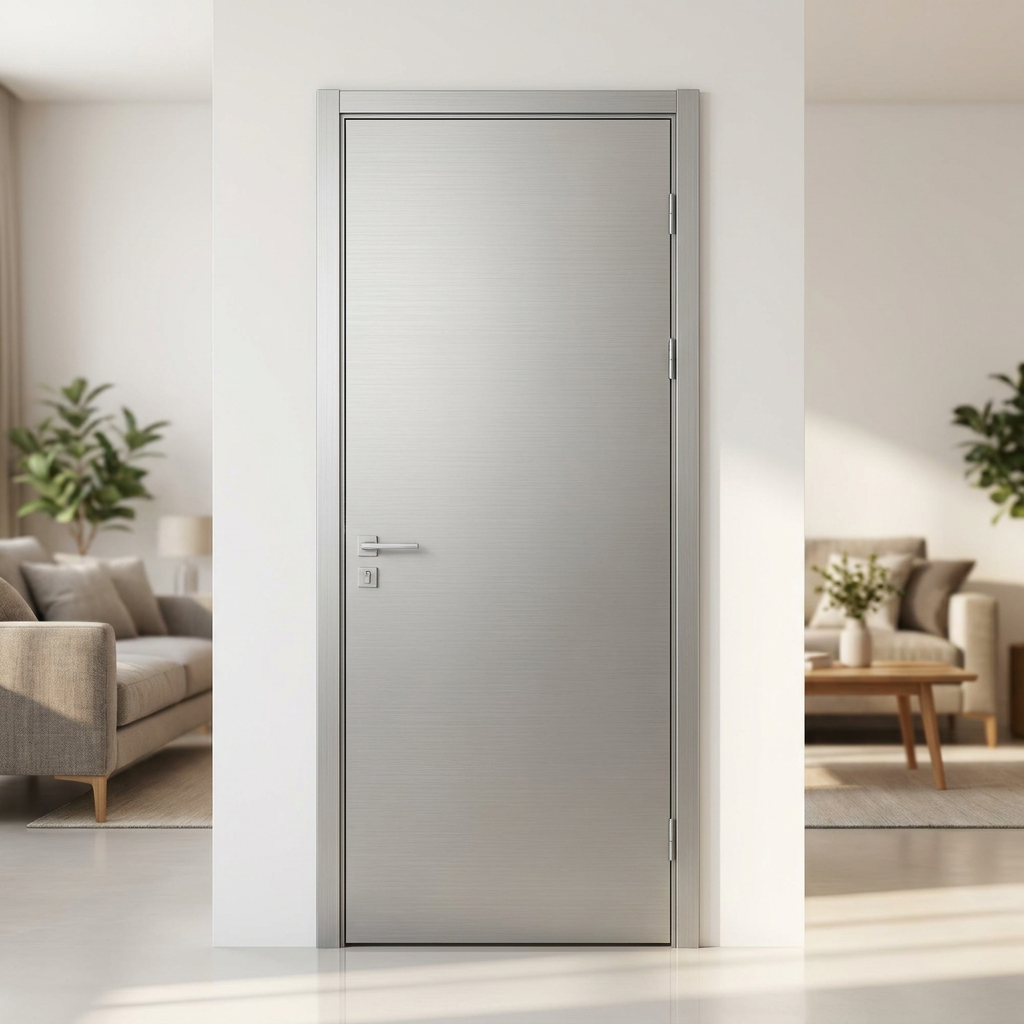

Yes, Accordion Glass Doors can reduce noise between living spaces when closed, provided the complete assembly has effective seals and suitable glazing. They offer a practical way to separate television sound, conversation, and everyday activity while keeping rooms visually connected. However, a folding glass partition should not be assumed to provide speech privacy or block deep bass simply because it uses thick glass.
The deciding factors are the joints between panels, the perimeter seals, the glazing specification, and the surrounding construction. For a living room beside a dining area, reducing distraction may be enough. For a home office where conversations must remain private, the required performance is more demanding and needs evidence from a tested door assembly.
Start with the sound you need to control
Speech and television dialogue travel through both the door materials and any openings around them. Closing a well-sealed glass partition interrupts the direct airborne path, making adjacent activity less intrusive. Speech can remain audible even after its clarity decreases, so “quieter” and “private” are different outcomes.
Low-frequency sound presents a tougher problem. Music bass and subwoofer output are difficult to isolate, and vibration can travel through shared floors, walls, and ceilings. A folding partition alone is unlikely to resolve that disturbance. Moving a speaker away from the shared boundary or reducing bass at the source may achieve more than upgrading the glass.
Also distinguish sound isolation from echo control. Rugs, curtains, and upholstered furniture reduce reflected sound within a room. They can make conversations more comfortable, but they do not seal a gap under a door. If noise becomes much clearer near the track or panel edges, sound leakage deserves attention before adding soft furnishings.
Panel joints often decide the result
Accordion doors have several moving leaves, creating more meeting edges than a single hinged door. Every joint must close consistently. Even substantial glass offers limited benefit if sound has an easy route through gaps at the hinges, threshold, or closing jamb.
Compression gaskets work by pressing against a mating surface when the door closes. Their effectiveness relies on alignment and adequate closing pressure. Brush seals accommodate movement and help control drafts, but their porous construction should not be treated as equivalent to a continuous acoustic compression seal.
The floor connection deserves particular scrutiny. A flush passage is convenient, yet an unsealed clearance beneath the panels remains an airborne sound path. Some systems address this with a recessed track, a sealed threshold, or automatic drop seals. The appropriate detail depends on the folding mechanism and floor conditions; adding an improvised seal later can interfere with movement or prevent proper closure.
Ask to see a section drawing showing how the head, floor, jambs, and folding joints seal. A description such as “tight fitting” provides less useful information than a clear drawing of the closed assembly.
Glass specifications need context
Glass mass, pane construction, and damping influence sound transmission. Thicker glass generally improves isolation across parts of the frequency range, but performance does not increase uniformly at every frequency. Laminated glass incorporates an interlayer that can improve acoustic behavior, especially when the interlayer is designed for sound control.
Double glazing introduces an airspace between panes. Its acoustic performance depends on pane thicknesses, cavity depth, and the complete construction. Two identical panes in a narrow cavity should not automatically be considered superior to a suitable laminated pane. Unequal pane thicknesses can help address weaknesses occurring at particular frequencies, but the proposed configuration still needs supporting performance data.
Safety glazing requirements also remain relevant in a moving door. Tempering addresses breakage behavior; it does not by itself establish a superior acoustic rating. The glazing selection must satisfy the applicable safety requirements as well as the intended sound reduction.
Thermal breaks do not establish acoustic performance
A thermal break interrupts heat conduction through an aluminum profile. It is useful for temperature control, but its presence does not prove that a folding door will isolate sound effectively. Frame cavities, glazing retention, gaskets, and joint design still determine how the assembled product behaves.
For example, the Hot Sale Powder Coating 110 Series Thermal Break 6063 Aluminum Casement Window Alloy Extrusion Profile is described as a thermal-break aluminum profile for window and door applications. That component description does not establish the acoustic performance of an accordion door built from it. Its stated “Lower Than 40 Decibels” sound specification requires clarification: without a defined metric, test method, and tested assembly, it cannot be interpreted as a verified amount of sound reduction.
Read acoustic ratings as assembly evidence
STC and Rw are single-number ratings used to describe airborne sound insulation under defined test methods. Higher values generally indicate better performance within the respective rating system, but neither number describes every sound equally. Bass control and speech privacy require more context than a headline rating.
Request a report for the complete operable door assembly. A glass-only result excludes leakage through panel joints and perimeter seals. A fixed window test also does not demonstrate the performance of a folding door, even when both use similar profiles or glazing.
Compare the tested configuration with the proposed installation:
- The report should identify the glazing build-up, frame, seals, threshold, and locking arrangement.
- Panel count and opening dimensions matter. A smaller specimen with fewer joints may not represent a wide folding partition.
- Confirm that the test used normal closure conditions. Temporary sealing around moving joints would not reflect everyday operation.
Laboratory results describe controlled conditions. Sound can bypass the installed partition through ceiling voids, ventilation paths, lightweight walls, or adjacent openings. There is no universal deduction that converts a laboratory rating into the result in a particular home.
Choose the configuration around the room
For occasional separation between a dining room and living room, convenient opening and moderate noise reduction may justify a folding arrangement. For regular calls beside an active television, prioritize continuous seals and documented assembly performance. Where confidential conversations are essential, a fixed glazed partition with a well-sealed hinged access door is worth comparing because it has fewer moving joints.
A doorway display can reveal whether panels align and latches pull the seals into contact. It cannot establish the result in another room. A simple listening comparison is useful for noticing obvious leakage, but background noise, room furnishings, and speaker position make it unsuitable as a substitute for acoustic testing.
Consider how the doors will actually be used. If someone frequently leaves an access leaf partly open, the intended isolation disappears. A smaller, easily operated access leaf can make full closure more practical, provided its meeting edges receive the same attention as the folding joints.
Installation and adjustment preserve the benefit
The opening must provide stable support and allow accurate frame alignment. A bowed head or uneven floor can leave inconsistent seal contact even when the panels look acceptable from a distance. The frame-to-wall perimeter also needs a continuous sealing detail; decorative trim alone does not close concealed sound paths.
Before accepting the installation, operate the entire partition several times and inspect it fully closed. Look for visible gaps, uneven gasket compression, and leaves that require lifting or unusual force to latch. Keep tracks clean and replace damaged seals with compatible parts. If noise later becomes more noticeable, inspect alignment and seal wear before assuming the glass needs replacement.
Leave A Reply
Need More Details?
Contact me for details on creating and managing design projects, project features, and services and prices