


NEWS
Categories List
Recent Posts
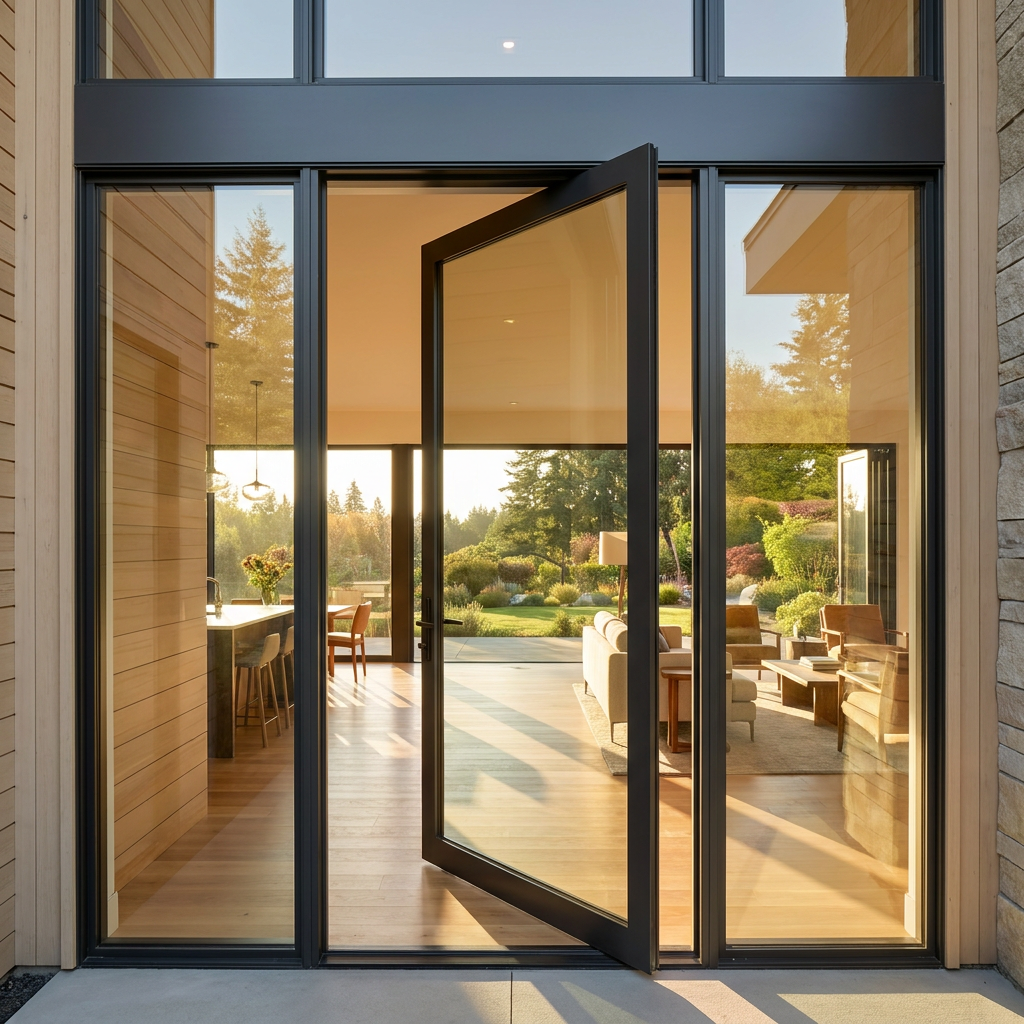
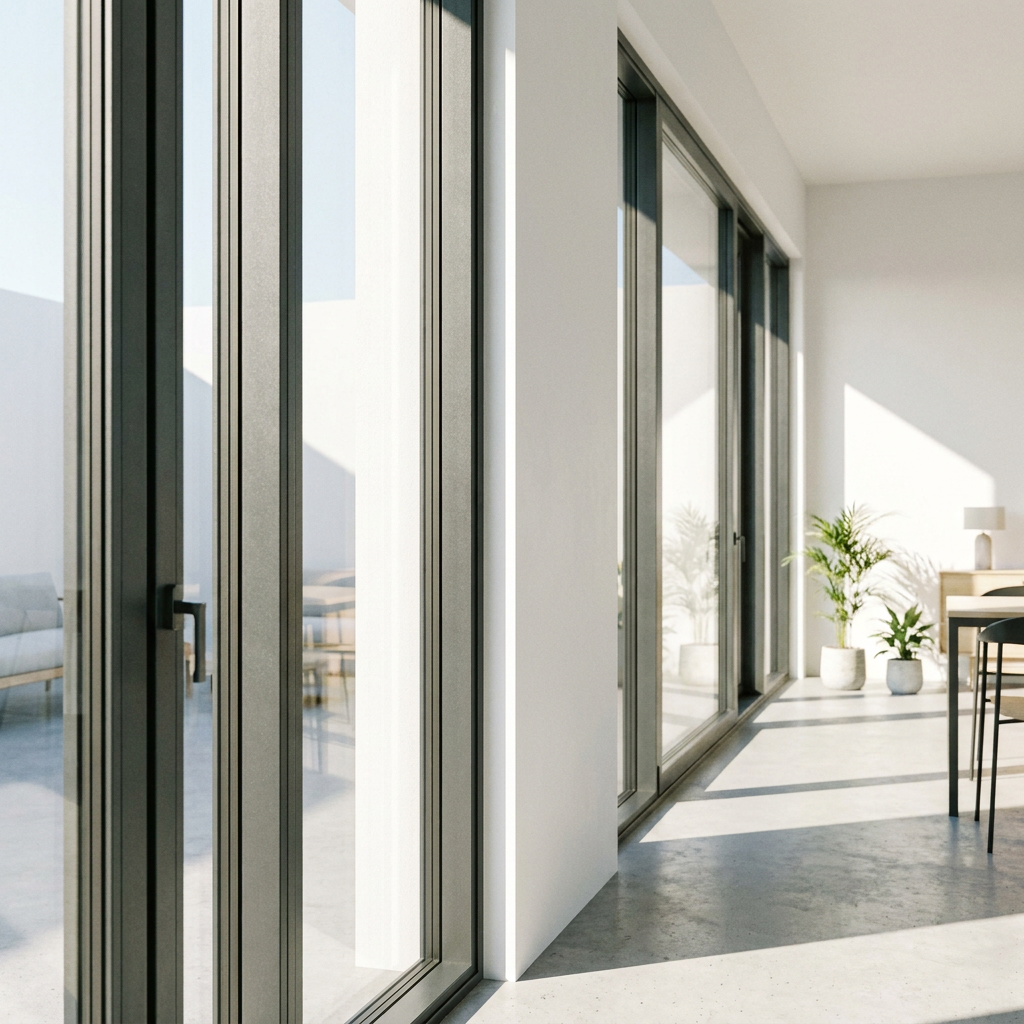
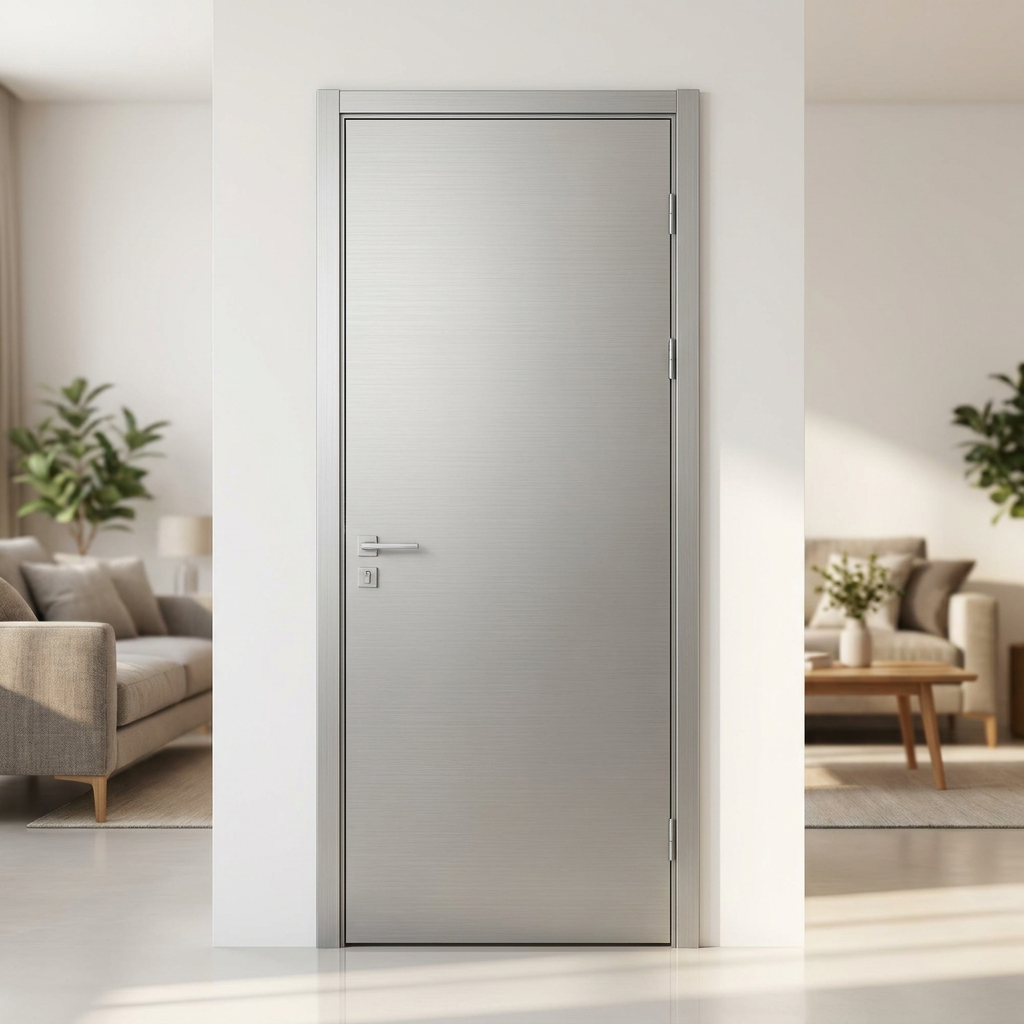

Aluminum doors can be a good choice for coastal homes, particularly where homeowners want large glazed openings, slim frames, and less maintenance than exposed timber. Aluminum does not rust like ordinary steel, but that does not make every aluminum door suitable for a seaside location. Salt, moisture, wind-driven rain, and sun can still damage finishes and hardware or expose weaknesses in the installation.
The decision depends on the whole door assembly: its protective finish, hinges and rollers, weather seals, drainage, glazing, and the way it is fitted to the building. A sheltered entrance several streets from the water may have different needs from a sliding door facing breaking waves. Before choosing a style, consider how exposed the opening is and how much cleaning and maintenance you are prepared to do.
Why aluminum works well by the sea
Aluminum forms a protective oxide layer when exposed to air. That gives the metal a useful degree of corrosion resistance, and it avoids the red rust associated with unprotected steel. It is also dimensionally stable in damp conditions: unlike wood, an aluminum frame will not absorb moisture and swell in the same way.
For a coastal home with a view, another attraction is design flexibility. Aluminum frames can support substantial glazed areas while keeping sightlines relatively slim. Sliding, folding, and hinged configurations offer different ways to connect living spaces with a terrace or garden.
Maintenance can be manageable, provided the door is specified for its environment and cleaned regularly. Aluminum does not need the same repainting routine as many exposed timber doors, although its finish still needs care. The hardware, seals, and drainage channels also need attention; a low-maintenance frame is not a maintenance-free door.
There are trade-offs. Aluminum conducts heat readily, so a basic frame can feel cold and contribute to heat loss or condensation in a cooler climate. It can also become hot in direct sun. A thermally broken frame, which separates the inner and outer aluminum sections with an insulating material, can improve performance, but the complete door and glazing should be assessed together.
Salt resistance starts with the finish
Salt deposits hold moisture against surfaces, especially in sheltered corners that do not receive enough rain to wash them clean. Over time, a damaged or unsuitable finish can allow localized corrosion. Look for white, powdery deposits, bubbling, pitting, or discoloration around joints and fasteners. These signs deserve attention even though the frame itself cannot develop red rust.
Powder coating and anodizing are both used to protect and finish aluminum. Neither label alone tells you whether a particular door is appropriate for a highly exposed site. Ask the supplier what finish is offered for coastal exposure, how the aluminum is prepared before finishing, and what care the finish requires. A warranty can help clarify the conditions, but read its exclusions and maintenance requirements rather than treating its length as proof of performance.
Pay attention to cut edges, joints, drainage openings, and areas around fixings. These details can be harder to inspect than the broad faces of the frame, yet they are places where water can collect or protective layers can be interrupted. Scratches should be dealt with according to the manufacturer’s instructions; an improvised touch-up may not provide the same protection or appearance as the original finish.
Color matters mainly as a matter of appearance and maintenance. Salt residue and dirt may be more visible on some finishes than others, while sun exposure can affect how a finish looks over time. Choose a finish you like, but give its documented suitability for the location more weight than its color.
Check the parts around the frame
A door can have a durable aluminum frame and still cause trouble if its smaller components are poorly matched to salt exposure. Hinges, handles, locks, screws, rollers, and tracks all have jobs to do in a wet, salty environment. Corroded hardware can make a door difficult to operate long before the frame itself needs replacement.
Ask what materials and protective treatments are used for exposed hardware, including fasteners that may be hidden once the door is installed. Stainless steel is often specified for coastal conditions, but its suitability depends on the grade, the exposure, and the maintenance routine. It should not be assumed that every stainless component offers the same resistance.
Contact between different metals can also create a corrosion risk when salt water acts as an electrolyte. Appropriate isolation, compatible components, and careful assembly help reduce that risk. This is a useful question to raise with the supplier, especially if the specification mixes aluminum with stainless-steel fasteners or other metal fittings.
Weather seals deserve a closer look as well. They need to remain continuous, properly seated, and replaceable when worn. On a frequently used door, a damaged seal can lead to drafts or water penetration even when the frame and glass remain in good condition. Ask whether replacement seals and moving parts will be available and how they can be accessed.
Wind and rain are separate tests from corrosion
A corrosion-resistant door is not automatically a door that will keep wind-driven rain outside. For an exposed opening, request performance information for the complete door assembly, not just the aluminum profile or glass. The relevant requirements depend on the location, building design, door size, and local rules.
Look for documented ratings or test results appropriate to the installation for structural wind resistance, air leakage, and water penetration. Large panels and wide openings may require different configurations from smaller doors. If the home is in an area with specific storm or impact requirements, check the applicable local requirements before ordering; ordinary glazing or a sturdy-looking frame should not be assumed to satisfy them.
The threshold is a common point of compromise. A low threshold can make movement between indoors and outdoors easier, but its suitability depends on the door design, exposure, drainage, and local accessibility needs. Ask how the proposed threshold handles wind-driven rain and where collected water goes. A sheltered patio door and a door directly facing prevailing weather may call for different solutions.
Installation matters just as much as the selected product. The opening must be prepared, flashed, sealed, and fixed in accordance with the door manufacturer’s instructions and applicable local requirements. An installer should also account for drainage paths so that water reaching the frame can escape rather than collect inside the wall. Sealant alone should not be treated as the entire water-management strategy.
Which door style suits the opening?
The best configuration depends on how the space is used and how exposed it is. Each type has practical advantages, but the performance of a specific product should be checked rather than inferred from the opening style.
- Hinged or casement doors: A single or paired hinged door can suit entrances and smaller patio openings. Check the swing direction, available clearance, hinge specification, and how securely the door can be held when open in windy conditions.
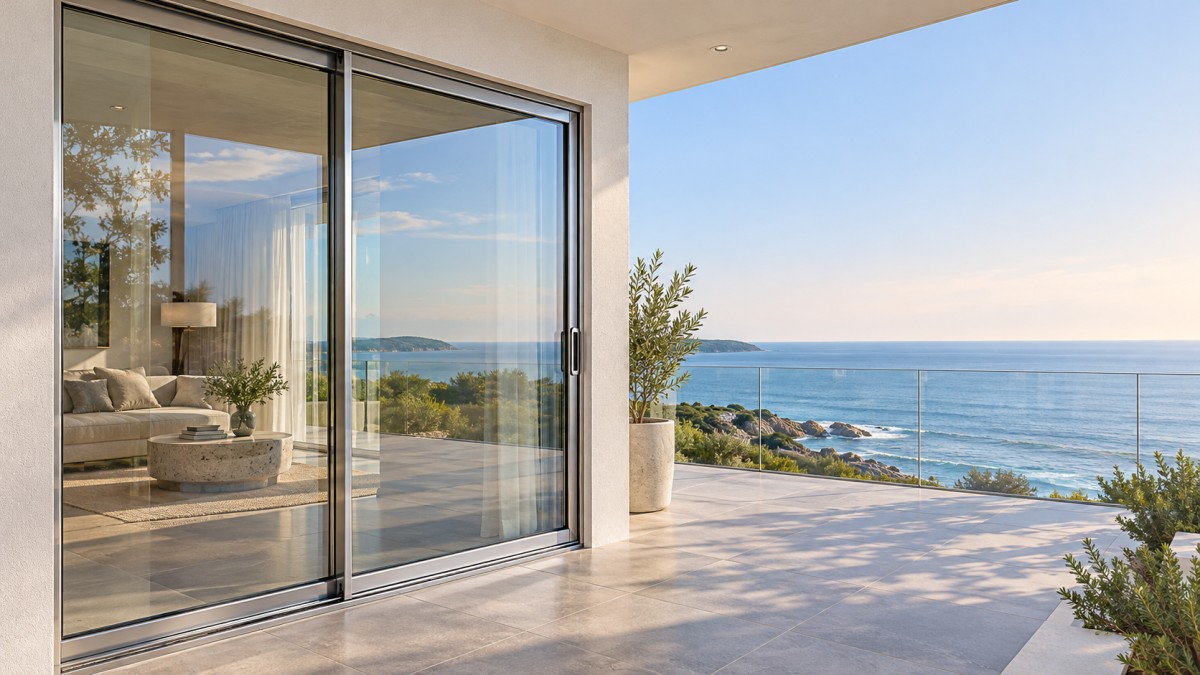
- Sliding doors: These save swing space and work well for wide views. Tracks and drainage channels need regular cleaning, particularly where sand and salt accumulate. Ask how easily rollers can be adjusted or replaced.
- Folding doors: These can open a large portion of a wall for indoor-outdoor living. They also have multiple panels, hinges, seals, and tracks to maintain. Confirm the tested performance for the intended size and exposure, and consider where the panels will stack when open.
For any style, think about daily use as well as the occasional fully open view. A large folding system may be attractive for entertaining, but a frequently used access door can be more convenient for everyday trips outside. On a windy terrace, the ease of securing an open panel may matter more than the maximum opening width.
What ownership looks like
Expect to rinse and clean the door regularly using the manufacturer’s recommended method. A mild cleaner, fresh water, and a soft cloth are commonly suitable, but follow the instructions for the specific finish and hardware. Avoid abrasive pads or harsh chemicals unless the manufacturer explicitly permits them. Cleaning frequency depends on exposure: a door directly facing salt spray may need attention more often than one protected by a porch.
Do not overlook surfaces that rain misses, such as the underside of frames, recessed tracks, and sheltered hardware. Remove sand and debris from tracks and drainage openings without blocking or damaging them. Periodically check that seals are intact, handles and locks operate smoothly, and any protective finish remains sound. Use only the lubricants recommended for the hardware.
For a homeowner comparing quotes, the useful question is whether each proposal addresses the same conditions. Ask for the door configuration, finish, hardware specification, glazing, performance information, installation scope, and maintenance requirements in writing. A lower-priced door may be entirely reasonable for a sheltered opening, but it may not be an equivalent choice for a wall exposed to salt spray and storm-driven rain.
Aluminum is a strong candidate when the complete assembly is suited to the site and its upkeep fits the household. If a supplier cannot explain how the proposed door handles the home’s exposure, the finish, hardware, and installation details deserve a closer look before the order is placed.
Leave A Reply
Need More Details?
Contact me for details on creating and managing design projects, project features, and services and prices