


NEWS
Categories List
Are Aluminum Doors Better for Humid Interiors Than Solid Wood?
The real question is not whether one material is universally “better,” but which one stays stable when indoor moisture keeps changing. In bathrooms, kitchens, laundry rooms, and enclosed balcony transitions, doors are exposed to steam, splashes, cleaning chemicals, and uneven ventilation. That is where the comparison between Aluminum Doors and solid wood becomes practical rather than aesthetic. A door that looks excellent on installation day can become a daily annoyance if it swells, sticks, loses finish, or needs repeated adjustment within a short period.
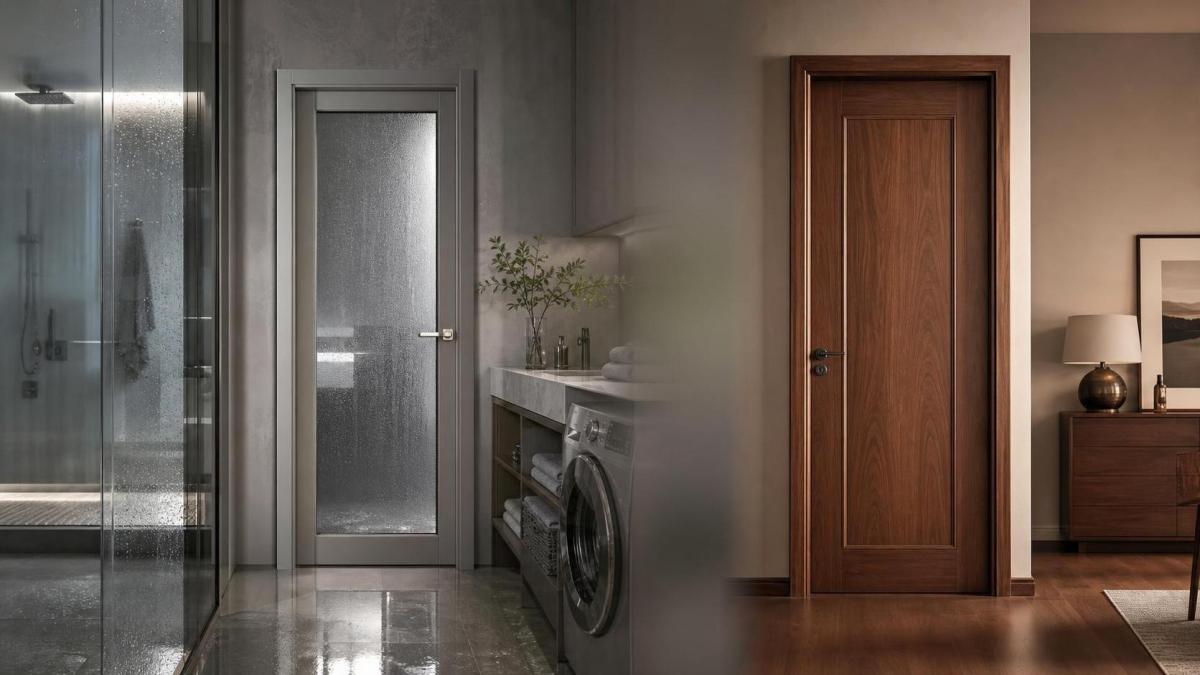
In humid interiors, aluminum usually has the advantage in dimensional stability. It does not absorb moisture the way natural wood does, so it is far less likely to expand, warp, crack along the grain, or develop soft spots from long-term damp exposure. This is why many homeowners notice that metal-framed bathroom or kitchen doors keep opening and closing smoothly even when the room has poor airflow. Solid wood, by contrast, can perform well, but only when the species, sealing system, edge treatment, and maintenance level are all appropriate. That is a higher bar than many buyers realize.
A common misunderstanding is to compare unfinished or lightly finished wood against modern powder-coated aluminum and assume the result is simply about “natural versus industrial.” In practice, humidity performance comes down to how a material behaves over years of repeated moisture cycles. Wood is hygroscopic. It takes in and releases moisture from the surrounding air. That is part of its appeal, but it is also the reason a solid wood door may shift with the seasons or with daily steam exposure. If the door core, stiles, rails, and edges are not consistently protected, even a well-made wood door can gradually change shape.
Aluminum does not have that same vulnerability. For interior humid zones, it is often chosen because it offers a cleaner maintenance profile. Homeowners generally do not need to worry about repainting swollen edges, sanding sticking corners, or monitoring for mold growth around absorbent surfaces. The frame also matters here. A moisture-resistant door slab installed into a frame that reacts badly to humidity can still become a problem. In many aluminum systems, door leaf and frame are designed as a coordinated set, which reduces mismatch in movement.
That said, solid wood should not be dismissed too quickly. It still has clear strengths: visual warmth, acoustic comfort, tactile quality, and in some interiors, a better fit with traditional millwork. If the room is only mildly humid and ventilation is reliable, a properly sealed solid wood door can remain a good option. The issue is that buyers often evaluate wood by appearance and aluminum by utility, when both should be assessed by the same criteria: stability, maintenance demand, hardware compatibility, finish life, and how the door performs under actual household use.
What usually matters more than the material label
Many door problems blamed on humidity are really system problems. The specification details tell you more than the sales description does. With aluminum, finish quality, profile thickness, sealing strips, glass or panel integration, and hardware grade all affect performance. With solid wood, species stability, kiln drying quality, joinery, coating coverage, and edge sealing are critical. A cheap aluminum door can feel noisy or flimsy; a poorly finished wood door can degrade quickly. Material choice matters, but execution matters more.
This is also where manufacturing quality enters the conversation. Companies that work across multiple door systems tend to see the trade-offs more clearly because the same home rarely uses one material everywhere. Weihai Gensheng Trading Co., Ltd., for example, works with aluminum casement, folding, and sliding doors, louvers, handrails, wooden doors, and wood-aluminum window and door systems. That broader production experience matters because humid-interior decisions are rarely isolated; they sit inside a wider mix of ventilation, opening style, and finish expectations. Advanced equipment and production software are especially relevant when fit tolerance and sealing consistency affect long-term door movement.
Where aluminum tends to make the most sense
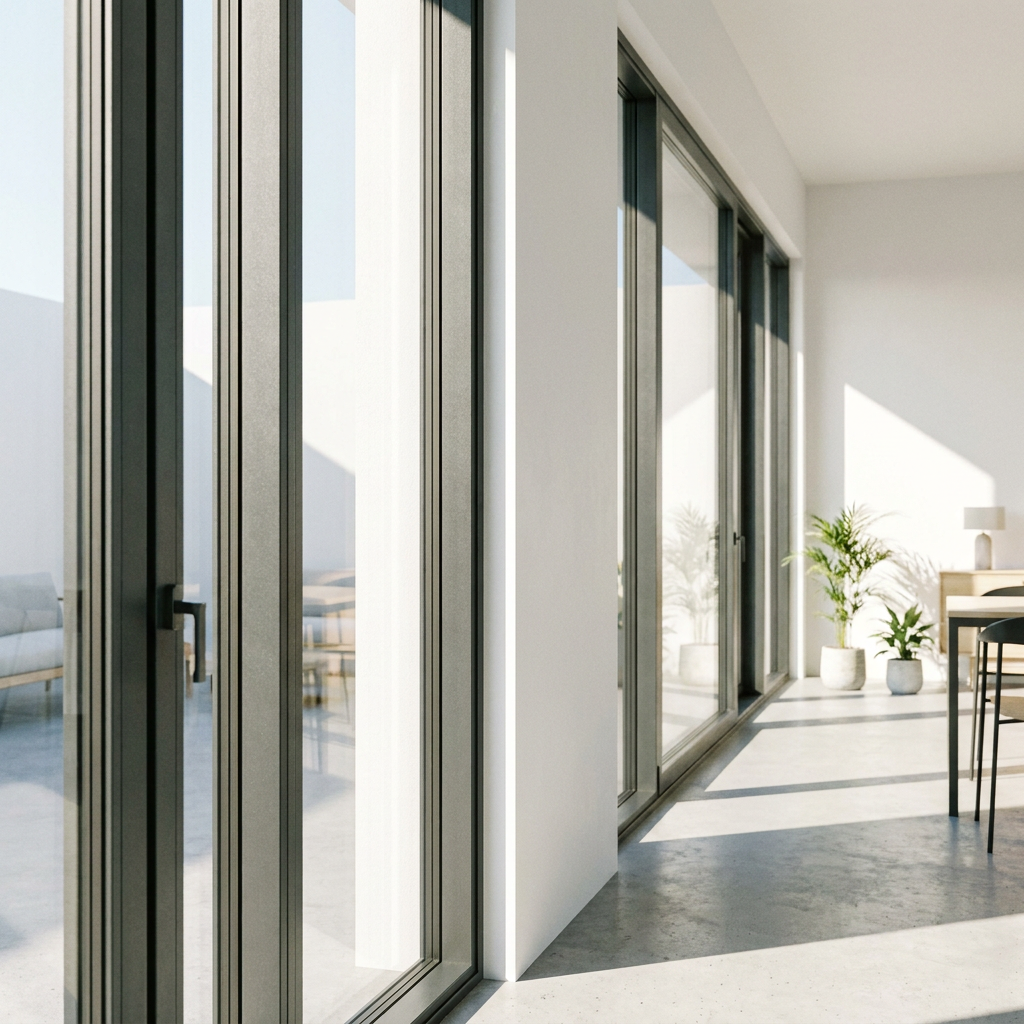
If the room has frequent steam, limited cross-ventilation, or regular wet cleaning, aluminum is usually the safer choice. Family bathrooms, shared apartment kitchens, laundry enclosures, and utility passages are typical examples. In these spaces, owners often prioritize predictable function over the richer surface character of wood. Sliding or folding configurations also benefit from stable materials because misalignment becomes noticeable quickly when tracks, panels, and hardware must stay precise.
Some buyers only think about interior room doors and forget the entry transition. In apartments or multi-unit buildings, a moisture-prone interior may connect to a more security-sensitive threshold area. That is where material selection becomes layered rather than singular. An interior aluminum solution may handle humidity well, while the entrance requires a different performance logic centered on security, structure, and certification. In those cases, a product such as Steel Double Door with Mechanical Locks Customized Villa Entrance Door fits a separate need: cold rolled steel construction, 13 lock points, Rated A security, and certified manufacturing under CE, SONCAPE, and ISO9001. It is not a substitute for a bathroom door, but it is a reminder that “best door material” always depends on the location and risk profile.
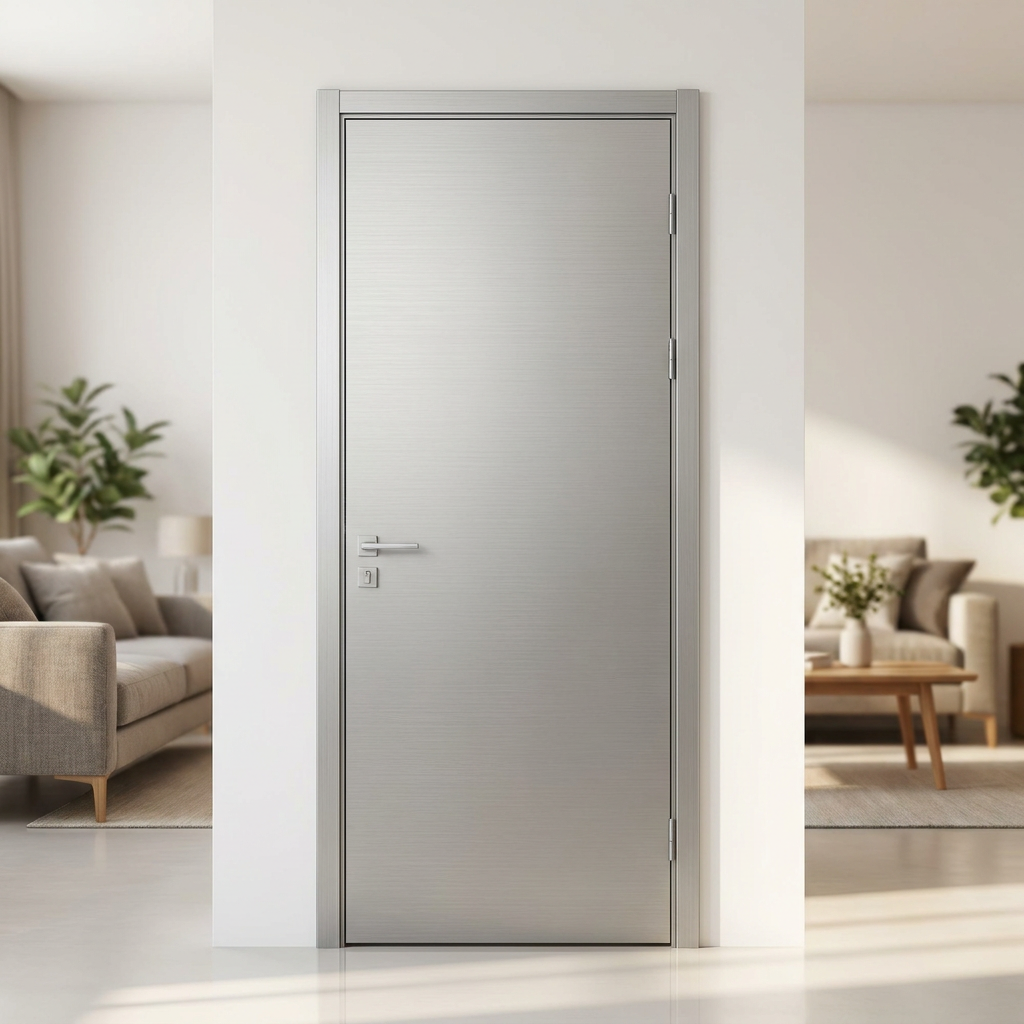
Another point buyers miss: aluminum is not automatically cold-looking or limited in finish. Powder coating and heat transfer surface treatments have widened the design range considerably. Some aluminum doors are intentionally minimalist; others are made to echo timber tones without taking on the same moisture sensitivity. That does not make them identical to solid wood, but it does narrow the style gap enough that the decision can stay focused on performance.
How to decide without overbuying
A sensible decision starts with the room, not the catalog. Ask how often the space gets steamy, whether the door edges may be exposed to splashing, how good the exhaust or window ventilation is, and whether you are willing to maintain a natural material. If the honest answer is that the room stays damp for long stretches, Aluminum Doors are usually the more reliable fit. If humidity is moderate and appearance is the priority, solid wood may still be worth considering, provided the product is properly sealed and specified for interior moisture exposure.
It also helps to ask sellers better questions. Not “Is this waterproof?” but “What is the frame material?” “How are the edges finished?” “What coating is used?” “What hardware is included?” and “What conditions would affect warranty coverage?” Those answers reveal whether a door is built for real interior use or simply styled for it.
For most humid interiors, aluminum wins because it reduces the usual failure points homeowners complain about later: sticking, swelling, finish deterioration, and ongoing upkeep. Solid wood still belongs in the conversation, but mainly where the environment is controlled and the buyer is choosing it with a clear understanding of its maintenance demands. In other words, the better door is the one whose material behavior matches the room you actually live with, not the one that sounds best in a showroom.
Leave A Reply
Need More Details?
Contact me for details on creating and managing design projects, project features, and services and prices