


Aluminium Doors for Multi-Unit Projects: Comparing Finish Durability and Lead Times
For procurement teams managing multi-unit residential or commercial projects, selecting Aluminium Doors involves more than matching aesthetics and budgets.
Finish durability affects long-term maintenance, occupant satisfaction, and lifecycle value, while lead times can directly influence construction schedules and handover commitments.
The best procurement decision usually balances environmental exposure, finish specification, profile complexity, hardware requirements, approval timing, and the supplier's verified production capacity.
Buyers should prioritize documented finish performance and a realistic manufacturing plan over the lowest initial quotation or a generic delivery promise.
Start With the Project Risks, Not the Colour Chart
In multi-unit projects, aluminium door selections are repeated across dozens or hundreds of openings, so a minor specification weakness can become a significant project-wide problem.
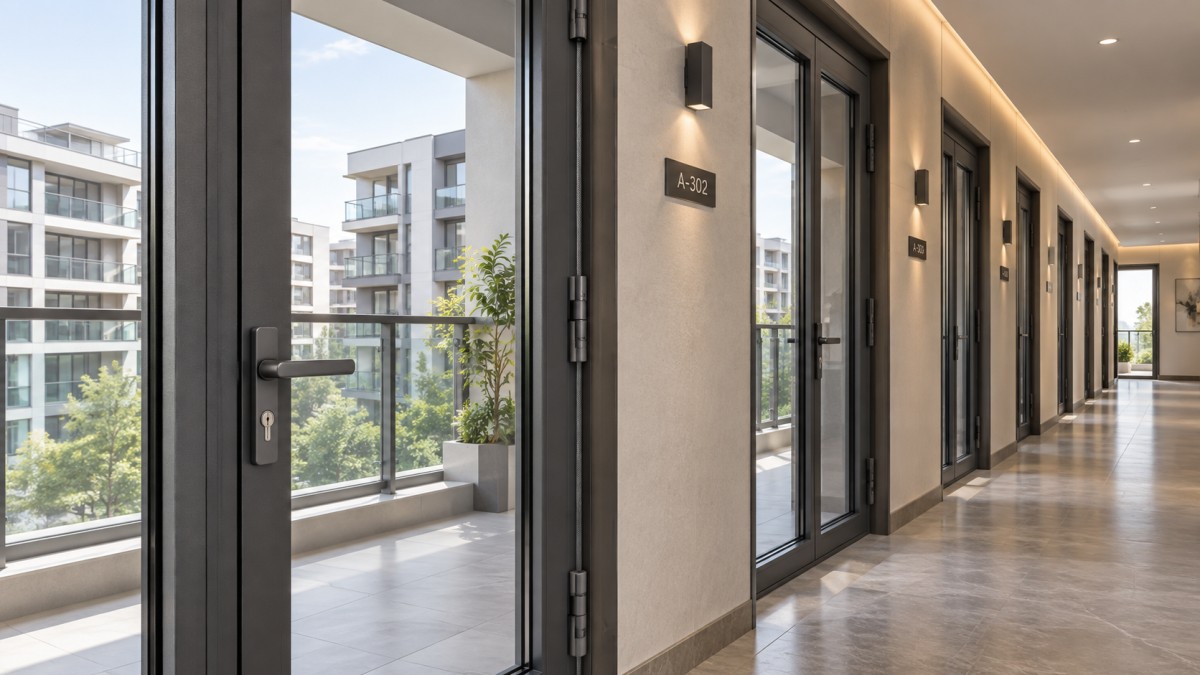
Procurement teams should first map where each door will be installed, including balconies, corridors, entrances, retail frontages, service rooms, and internal apartment divisions.
Exterior Aluminium Doors face ultraviolet exposure, rain, pollutants, temperature changes, and frequent cleaning, while interior doors may face higher traffic and impact risks.
Coastal developments require particular attention because salt-laden air can accelerate corrosion around cut edges, drainage points, fasteners, and incompatible metal connections.
For each opening type, identify the expected operating frequency, security requirement, fire or smoke regulations, acoustic needs, glazing configuration, and maintenance access.
This early segmentation prevents a common purchasing mistake: using one attractive finish specification everywhere despite substantially different performance conditions across the building.
How Common Aluminium Door Finishes Compare
Powder coating is widely specified for Aluminium Doors because it offers broad colour choice, consistent appearance, efficient application, and practical repair options during installation.
A high-quality powder-coated finish can perform well for most residential and commercial applications, provided the pretreatment, coating thickness, curing process, and quality controls are reliable.
Ask suppliers to confirm the coating system, pretreatment process, nominal film thickness, colour standard, gloss level, and applicable testing or warranty documentation.
Standard polyester powder coatings may be suitable for protected urban environments, but more demanding exterior exposure often justifies super-durable powder coating specifications.
Super-durable coatings generally retain colour and gloss better under prolonged sun exposure, making them a stronger choice for facades, balcony doors, and highly visible entrances.
PVDF-coated aluminium can provide excellent weather resistance and colour stability, especially on premium commercial projects or severe climatic exposures requiring long-term visual consistency.
However, PVDF systems can increase material cost, minimum order requirements, colour approval time, and coordination complexity, so they should be selected for a clear performance reason.
Anodized finishes create a metallic appearance integrated with the aluminium surface rather than a separate coloured film, offering a refined option for specific architectural designs.
Anodizing can be durable, but visual consistency depends heavily on alloy quality, extrusion batches, surface preparation, and controlled handling during fabrication and installation.
For procurement teams, the comparison should include not only laboratory durability but also scratch visibility, touch-up limitations, batch variation risk, and cleaning requirements.
Specify Durability Beyond a Generic Finish Description
A purchase order stating only “black powder-coated aluminium” leaves too much room for variation in coating grade, surface quality, chemical pretreatment, and inspection standards.
Instead, define the approved colour reference, finish type, gloss range, coating class, minimum film thickness, corrosion resistance expectations, and acceptable cosmetic tolerances.
Require finish samples before mass production, particularly when the project includes bronze, metallic, textured, wood-grain, or low-gloss colours that can vary between batches.
Samples should be assessed under practical daylight conditions, not only under factory lighting, because perceived colour and texture can change significantly after installation.
For exterior Aluminium Doors, request details about profile drainage, joint sealing, glazing compatibility, fastener materials, and isolation between dissimilar metals.
Durability is not determined by coating alone; water retention, poor drainage, damaged edges, and unsuitable hardware can undermine an otherwise capable finish system.
Factory quality checks should cover raw profile condition, pretreatment records, coating thickness, curing verification, adhesion, colour consistency, packaging, and final visual inspection.
Include an agreed method for handling finish defects found on site, including photographic evidence, replacement lead times, repair approval authority, and responsibility for access costs.
What Actually Determines Lead Time
Published lead times for Aluminium Doors are often incomplete because they may begin after shop drawings, finish approvals, deposits, technical clarifications, and material availability are confirmed.
Procurement schedules should separate the process into design approval, extrusion sourcing, surface finishing, fabrication, glazing, hardware assembly, inspection, packing, and shipment.
Standard sliding or casement door systems using stocked profiles and common powder colours can move faster than custom folding systems, oversized panels, or specialty finishes.
Custom profile dies, non-standard thermal break configurations, concealed hardware, large-format glass, and project-specific testing requirements can add weeks before fabrication even starts.
Colour approval is another frequent schedule constraint, especially when architects request custom matched colours, metallic tones, wood-effect finishes, or multiple finish combinations.
Suppliers should provide a critical-path timeline identifying long-lead items rather than a single final delivery date that conceals dependencies and approval risks.
For large developments, phased production and delivery may reduce storage pressure and support installation sequencing, but each phase needs clear quantity locks and release dates.
Verify whether the supplier can manufacture the required daily volume without reducing inspection quality, particularly when several building blocks require simultaneous delivery.
Build a Procurement Comparison That Reflects Lifecycle Value
A meaningful supplier comparison should evaluate total project risk, not simply unit price, because replacement work on occupied or glazed openings can be expensive and disruptive.
Create a scorecard covering finish system, door performance, profile thickness, glazing capacity, hardware brand, fabrication quality, warranty terms, packaging, documentation, and production schedule.
Ask bidders to distinguish clearly between included and excluded items, such as glass, locks, handles, insect screens, installation anchors, transport insurance, and site unloading.
Door hardware deserves close scrutiny because rollers, hinges, closers, locks, handles, and restrictors strongly affect daily usability and long-term maintenance costs.
For high-traffic entrances and communal areas, specify cycle performance, corrosion resistance, replacement availability, and compatibility with access-control or panic-exit systems where required.
Where a project combines aluminium external openings with interior timber doors, buyers should coordinate schedules, handing, frame dimensions, finishes, and fire-rating responsibilities early.
For example, interior packages may include Goldea Wholesale Price China Factory UL 30mins/60mins Fire Rated Swing Wooden Interior MDF Solid Wood PVC Entrance Main Door Design where certified fire-rated swing doors are required.
Its stated production cycle of approximately 25 days for 500 sets illustrates why procurement teams should compare capacity and certification documentation alongside visual specifications.
Questions to Ask Before Releasing the Order
Before issuing a purchase order, confirm that all opening schedules, handing directions, sill details, glass make-ups, hardware sets, and finish codes are fully coordinated.
Request approved shop drawings showing frame dimensions, drainage paths, reinforcement locations, mullion connections, threshold details, opening clearances, and installation fixing positions.
Ask the supplier which components are stocked, which are custom ordered, and which approvals must be completed before the production clock formally begins.
Confirm the inspection process before shipment, including quantity checks, operational testing, finish inspection, glass protection, labeling, crate design, and photographic reporting.
Packaging is especially important for Aluminium Doors because corner damage, rubbing between frames, moisture exposure, and inadequate crate support can create avoidable site claims.
Finally, align shipment dates with site readiness, installation crew availability, temporary storage capacity, and the sequence for glazing, waterproofing, and final access hardware installation.
Conclusion: Choose Evidence, Not Assumptions
For multi-unit developments, durable Aluminium Doors require a finish specification matched to exposure conditions, backed by controlled fabrication and documented quality assurance.
Lead time should be managed as a chain of approvals, materials, production steps, and logistics commitments rather than treated as a simple supplier promise.
Procurement teams that define finish performance, verify capacity, approve samples early, and compare lifecycle risks can protect both construction schedules and long-term building value.